


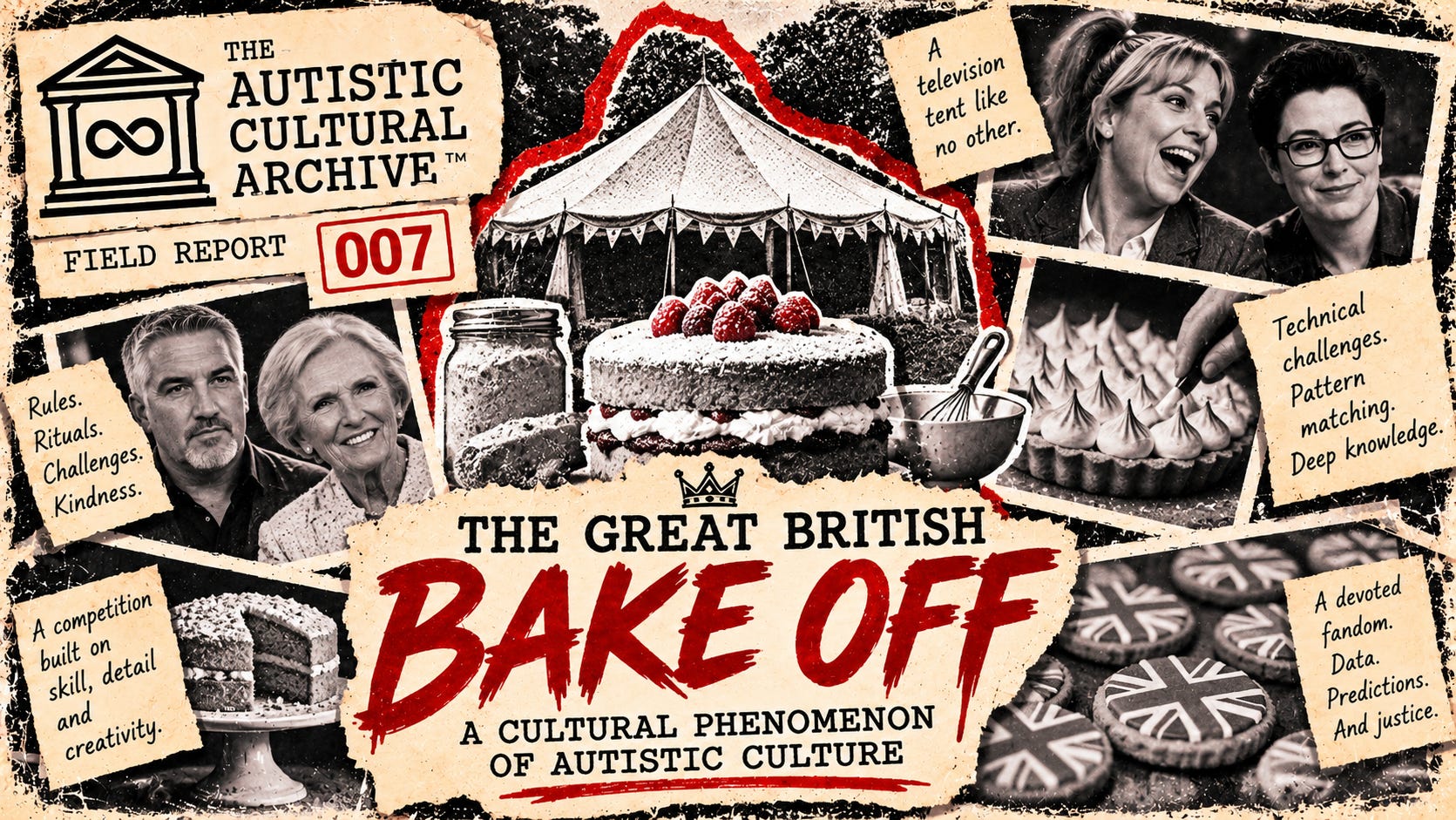
FIELD REPORT [007]
THE AUTISTIC CULTURAL ARCHIVE
ARTIFACT: The Great British Bake Off (2010–present)
ARCHIVE NO.: ACA-007-BAKEOFF
PERIOD: 2010 / Continuing Cultural Legacy
CLASSIFICATION: AUTISTIC CULTURE
PRIMARY PILLARS: Predictably Comforting · Justice Seeking · Pattern Matching
ADDITIONAL TRACES: World Building · Norm Challenging · Passionate Superfanning · Bottom-Up Processing · Rhythmic Communicating · Boldly Creating
LEAD EXCAVATOR: Dr Angela Kingdon
ACCOMPANYING EXCAVATOR: Simon Scott
LISTEN TO THE EXCAVATION
This Field Report accompanies our excavation of The Great British Bake Off on This Week in Autistic Culture.
The Archive segment presents the case.
The Field Report contains the evidence locker.
Listen to the full excavation on the Autistic Culture Podcast Network.
Watch the excavation on our YouTube channel.
THE DISCOVERY
What is it about a television programme where people make cakes that has captured the hearts of millions of viewers worldwide?
Is it the baking itself, the competition, the extraordinary creations, or is there something about The Great British Bake Off that makes it particularly comforting to watch?
On paper, Bake Off is a rather unusual television programme. Every week, a group of amateur bakers gather in a tent to complete three challenges. Somebody becomes Star Baker, somebody goes home, and the following week they do it all again. The format rarely changes, the rituals are familiar, and we generally know what to expect.
Yet millions of people return year after year, becoming invested in the contestants, their creations, and the smallest details of what happens inside that tent.
When I began researching The Great British Bake Off for the Autistic Cultural Archive, I was particularly interested in its relationship with Predictably Comforting. Something fascinates me about a programme that can be so familiar while also so entertainingly surprising to its audience.
But as the excavation developed, I began finding connections to several other Pillars of Autistic Culture.
The attention to detail and specialist knowledge involved in baking revealed interesting examples of Pattern Matching and Bottom-Up Processing, while the programme’s devoted audience had developed its own language, traditions and even statistical systems for predicting the results.
I also discovered an extraordinary example of Norm Challenging that helped establish the kindness for which Bake Off has become so well known.
And then there were the people themselves.
Several contestants and presenters have publicly discussed their experiences of autism or other forms of neurodivergence, while others have used baking as a way to express their creativity, communicate their experiences and build connections with their communities.
What began as an investigation into why Bake Off might be comforting to Autistic viewers gradually became something much more interesting.
So the question I wanted to explore wasn’t simply whether Autistic people might enjoy The Great British Bake Off. It was whether the things that make the programme so distinctive might also reveal something important about Autistic Culture itself.
THE ARTEFACT
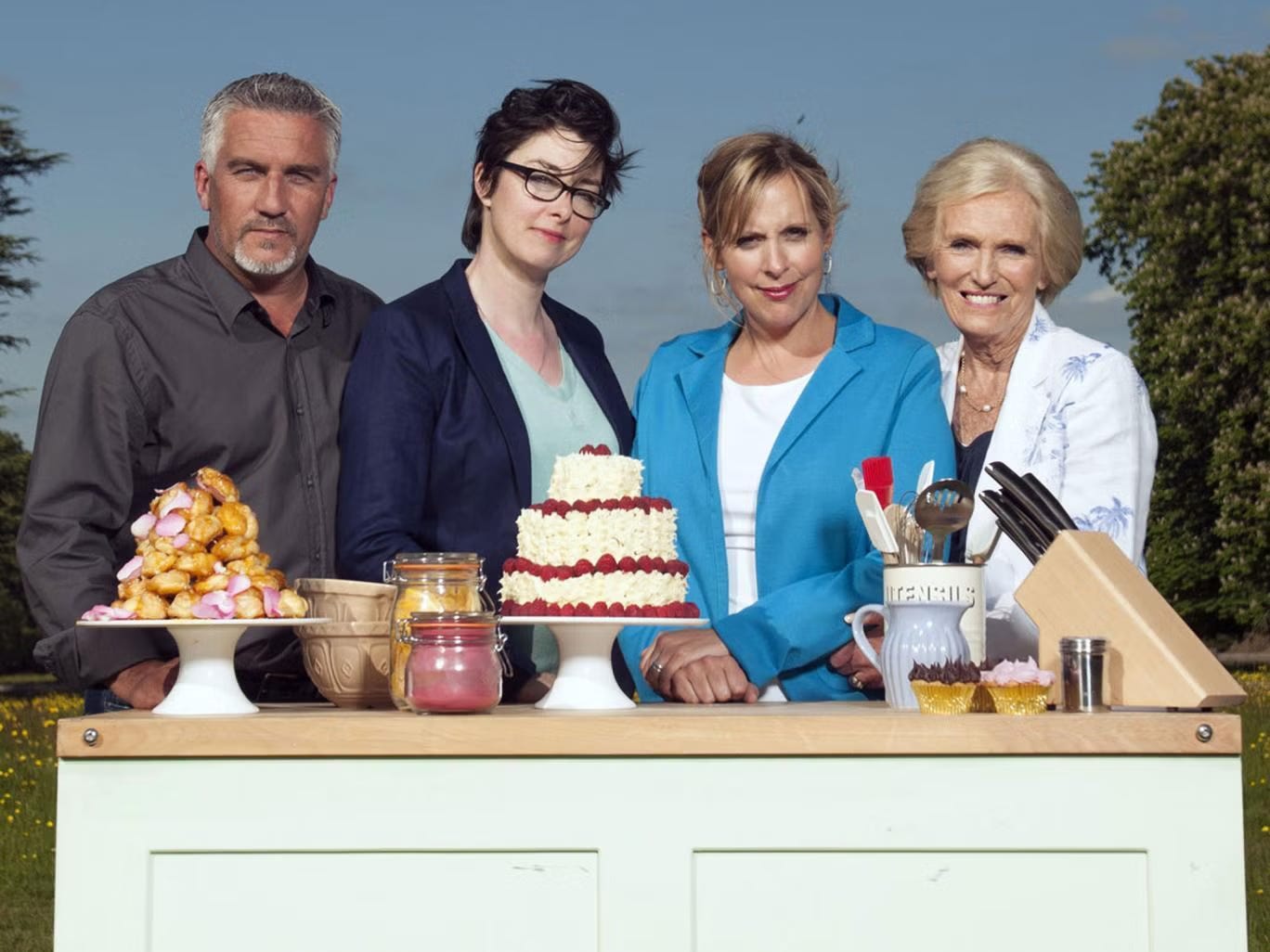
The Great British Bake Off first aired on BBC Two on 17 August 2010.
Developed by Love Productions from an idea by television producer Anna Beattie, it brought together the competitive structure of American baking programmes and the distinctly British tradition of the village fête. At a village fête, people arrive with homemade cakes, biscuits, pastries and bread, which are carefully arranged, examined and judged.
Prizes are awarded, and an extraordinary amount of attention can be paid to the smallest details of a sponge cake. Bake Off took that familiar tradition and turned it into a national television competition.
The original working title was The Million Pound Bake Off.
When the programme first appeared, Mel Giedroyc and Sue Perkins presented, Mary Berry and Paul Hollywood judged, and a group of amateur bakers competed to demonstrate their skills.
Its format was remarkably straightforward and has remained recognisable ever since: every episode features a Signature Bake, a Technical Challenge and a Showstopper.
For the Signature Bake, contestants prepare something they have been told about in advance, giving them time to practise and refine their recipes.
The Technical Challenge is quite different: everyone receives the same task, often with very limited instructions, and must draw on their existing knowledge to work out how to produce the required bake. Their creations are then judged blind.
Finally, the Showstopper asks contestants to produce something elaborate enough to demonstrate their technical skill, imagination and creativity.
At the end of the episode, somebody becomes Star Baker, somebody leaves the competition, and the following week the process begins again.
There is something rather satisfying about that structure.
The programme became an enormous part of British television culture.
Just over two million people watched the first episode, while the 2016 final attracted a reported consolidated audience of more than 16 million. It subsequently moved from the BBC to Channel 4 and developed an international following, including viewers in the United States, where it is known as The Great British Baking Show.
By 2026, Noel Fielding and Alison Hammond were presenting, with Paul Hollywood and Nigella Lawson judging. Hollywood remains the only original member of the presenting and judging team.

Despite those changes, the programme retained something immediately recognisable: the tent, the bakers, the three challenges, the familiar rituals and the extraordinary attention paid to cakes.
The entire format revolves around watching people perform a highly specific activity, with increasingly elaborate technical requirements, and assessing their work in remarkable detail. For many Autistic people, that description could just as easily apply to a favourite pastime. And I think that’s where our excavation begins.
THE EXCAVATION
THE TENT: A WORLD DESIGNED AROUND PREDICTABILITY
PREDICTABLY COMFORTING · WORLD BUILDING
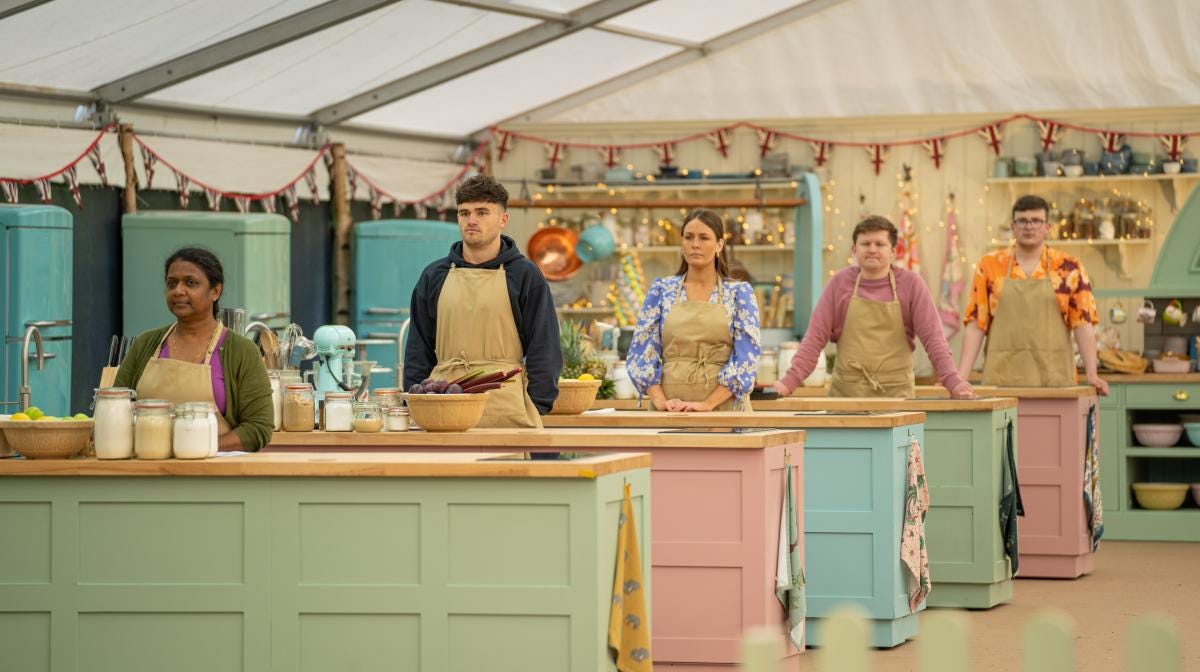
There is something almost magical about the Bake Off tent. Think about how many television programmes change their settings, locations, themes, rules, characters and expectations.
Bake Off has built a recognisable world around a tent. In the very first series, the programme travelled between different locations. From series two, it settled into a single marquee for each series.
The bakers change, and occasionally the judges and hosts change too, but you still know what kind of experience you are going to have. There’s even a certain amount of predictability within the unpredictability. You know that the Technical Challenge will be a surprise.
So you can prepare yourself to enjoy a surprise. I think that’s a fascinating distinction!
Unpredictability can be difficult for many Autistic people, particularly when we do not know what somebody expects, cannot understand the rules or are suddenly confronted with a situation requiring an unfamiliar response.
But Bake Off gives us a familiar structure within which unpredictable things can happen. We know the Showstopper will probably involve somebody trying to construct something much more elaborate than they should reasonably attempt in four hours.
The uncertainty is contained within a system we understand. And that system has become remarkably comforting.
THE DETAILS BEHIND THE TENT
During my research, I found some extraordinary little production details.
The production team has used Victoria sponges to check the consistency of the ovens. Ingredients are purchased in advance, with brand labels removed. Contestants coordinate important moments, such as opening their ovens, with the production crew so the cameras can capture them. And the washing-up is done by hand rather than using noisy dishwashers that would interfere with recording.
What looks like a pleasant afternoon in the countryside is actually an extraordinarily carefully managed television production.
None of these decisions establishes that the programme was deliberately designed for Autistic viewers. But they do demonstrate how much effort goes into constructing the familiar world we experience on screen. And that world has a very particular atmosphere.
The pastel colours, countryside, village fête aesthetic, gentle music and familiar workstations combine to make it feel like a place we already know.
A VISUAL WEIGHTED BLANKET
In November 2020, Will Gleason wrote about the comforting qualities of Bake Off for Time Out Magazine. He described each episode as a “visual weighted blanket”.
I LOVE that metaphor.
Because there’s something very recognisable about the experience of returning to a familiar television programme. It isn’t necessarily that nothing happens.
Quite a lot happens on Bake Off. Cakes collapse, bread refuses to rise, ice cream melts, and somebody inevitably discovers that their elaborate construction is not structurally sound.
But these things happen in a world whose rules we already understand. And there is some interesting psychology behind the appeal of familiar entertainment.
In 2012, psychologist Jaye Derrick published research examining how returning to familiar fictional worlds could help people recover depleted mental energy.
Her studies found benefits associated with familiar entertainment following effortful tasks. The research was neither about Autistic people nor specifically about Bake Off.
But it gives us a useful way of thinking about why familiar programmes can feel restorative. Sometimes we don’t want to learn the rules of a new fictional world. We want to return to one we already understand. During our recording, Simon and I discussed how easily Bake Off fits into everyday life. You can watch it while doing the laundry or baking something yourself, and even miss part of an episode without completely losing the thread.
The programme doesn’t demand that we constantly reconstruct an elaborate narrative. It gives us a familiar place to return to. And I think that is an extraordinary example of Predictably Comforting television.
THE TECHNICAL CHALLENGE: THE HIDDEN CURRICULUM IN CAKE FORM
BOTTOM-UP PROCESSING · PATTERN MATCHING
The Technical Challenge offers another interesting connection. I genuinely think this is one of the funniest parallels between Bake Off and the experience of being Autistic in an allistic world.
Everyone gets the same task and is expected to follow the same rules, only to discover that nobody has actually explained all of them. Sometimes they’re given little more than ingredients and a few instructions.
In the first episode of the 2026 series, Nigella Lawson asked the bakers to produce a coffee and walnut cake using an illustration rather than a conventional written recipe. The bakers had to work out the method. They had to draw on everything they knew about baking, examine the details, recognise patterns and construct a successful result.
And then their cakes were judged blind.
To me, this is what it feels like when you start a new job, and somebody tells you to use your initiative. There are expectations and standards, and somebody knows the correct answer, but you have to discover it without being told.
During our excavation, Simon compared the experience to trying to build a Lego set without the instructions, only to discover that one of the bags of pieces is missing.
It is a remarkably good description of the Technical Challenge.
The interesting thing is how different bakers solve the same problem.
This is where Bottom-Up Processing and Pattern Matching overlap.
A contestant might recognise a familiar combination of ingredients, or remember a technique from something they’ve made before.
They might examine the individual pieces of information and work out how those pieces fit together, only to discover that the pattern they thought they recognised was completely wrong.
I think that’s part of what makes the Technical Challenge so entertaining. It’s also where contestants who have been relatively quiet during the competition can suddenly demonstrate extraordinary expertise. Somebody who struggled with the Signature Bake might recognise the Technical Challenge immediately. And somebody who appeared confident might discover they have absolutely no idea what they’re doing.
I wouldn’t claim that the Technical Challenge is inherently Autistic.
What interests me is how clearly it illustrates the process of working from incomplete information, trying to understand expectations, recognising patterns and constructing a solution when the instructions don’t tell you everything you need to know. Because that can feel remarkably familiar.
Technical bakes Archives
BINGATE: WHEN THE NATION DEMANDED JUSTICE
JUSTICE SEEKING
One of the most revealing examples of Justice Seeking in Bake Off is the controversy surrounding a baked Alaska. The story is even more interesting once you examine what actually happened. In August 2014, during the fourth episode of series five, the contestants were making baked Alaska in a very hot tent.
One of the bakers, Iain Watters, is trying to get his ice cream to set. Another contestant, Diana Beard, briefly removes his dessert from the freezer. His ice cream becomes runny. He’s furious. He throws the entire dessert into a bin. And the judges have nothing to assess.
What happened next was extraordinary. Viewers accused Diana Beard of sabotage. The hashtag #JusticeForIain started circulating. The BBC received 811 complaints. Ofcom received thirteen, including twelve about the alleged sabotage.
Think about that.
Hundreds of people were so concerned about the fairness of a baking competition that they formally complained.
Sue Perkins eventually intervened publicly.
She said the dessert had been out of the freezer for about forty seconds and denied that there had been sabotage. Iain himself said he had no hard feelings towards Diana. And Diana became the subject of accusations over something she said had been misrepresented by the editing.
So this is a complicated justice-seeking story.
People saw what they believed was a violation of the rules, and they wanted accountability and a correction. And yet, the available evidence did not establish that anybody had deliberately sabotaged Iain.
WHEN THE SEARCH FOR JUSTICE BECOMES UNFAIR
This is where I think the cultural analysis gets interesting.
Justice Seeking involves examining the facts, understanding the rules and recognising when the same standards have been applied differently. But it also requires correcting ourselves when new evidence emerges. And Bingate demonstrates why that matters.
The viewers were responding to an edited television programme. They didn’t have access to everything that happened in the tent. They were interpreting the situation through the information they had been given.
And some people became so certain that an injustice had occurred that they began treating Diana unfairly.
I think there’s an important distinction here. Wanting fairness doesn’t automatically mean that our interpretation of a situation is correct. And the same concern for justice should apply to the person being accused.
During our conversation, Simon reflected on how strongly people can react when somebody appears to have interfered with something they were entitled to use.
And I think that’s part of what makes the controversy so interesting.
Bake Off has established a world in which fairness matters. The contestants are supposed to compete according to shared rules. They are supposed to treat one another decently.
And when the audience believed those expectations had been violated, the reaction was extraordinary.
But the controversy also demonstrates that Justice Seeking needs evidence. Otherwise, our attempts to correct one perceived injustice can create another.
THE HOSTS WHO REFUSED TO BE CRUEL
NORM CHALLENGING · JUSTICE SEEKING
Now, this might be my favourite discovery in the entire excavation.
One of the things everybody associates with Bake Off is kindness.
The contestants help one another. The hosts encourage people. People cry because their cakes collapse, or because they have achieved something extraordinary. And there’s a remarkable reason the programme developed that atmosphere.

Mel Giedroyc and Sue Perkins were deeply unhappy with the way producers treated contestants during the first days of filming.
They believed that the production was pushing people into distress for entertainment. And they challenged it.
In March 2020, Sue Perkins recalled their objections in an interview reported by Radio Times. She said:
“We resigned, basically. Because it was not a kind show.”
Mel revisited the story in August 2026 on Elizabeth Day’s How to Fail podcast.
She described being shocked by the approach during the first day of filming. She remembered cameras being directed towards contestants who were crying or experiencing emotional distress. And she phoned her agent to say she wanted to leave.
I think this is such an important example of Norm Challenging.
Because Mel and Sue were working in an industry where emotionally intrusive reality television was already an established formula.
Conflict and humiliation were treated as good television, and watching somebody have a breakdown could become part of the entertainment.
But Mel and Sue objected.
They pushed for another approach. And that approach helped become one of the programme’s defining cultural characteristics.
KINDNESS AS A CULTURAL VALUE
I find this particularly interesting because we often talk about Autistic Norm Challenging as something that gets people into trouble.
Someone questions a rule, refuses an expectation or asks why a system has to work in a particular way, and other people interpret that as being difficult.
But sometimes the established rule is the problem.
Mel and Sue weren’t simply asking for a different kind of television programme. They were questioning whether people’s distress should be treated as entertainment. I think there’s a profound cultural story here.
Bake Off became associated with a form of reality television in which kindness, cooperation and encouragement were central to the experience.
It would be too strong to say that it invented kind television.
But it helped demonstrate that a competition could become enormously successful without relying primarily on humiliation. And that changed what audiences could expect from a programme like this.
Kindness became part of the rules of this world because people were willing to challenge the rules of their industry.
THE FANDOM THAT TURNED BAKING INTO DATA
PASSIONATE SUPERFANNING · PATTERN MATCHING
Now, if there’s one thing I love about Autistic fandoms, it’s that somebody will inevitably create a spreadsheet. And Bake Off fans have gone much further.
There is actually an R programming package called bakeoff. R is a programming language used for statistical analysis. And somebody has created a dataset specifically for people who want to analyse The Great British Bake Off.
One version contains data on 120 bakers, 1,136 baker-episode records and 94 episodes.
That means you can examine who became Star Baker. How contestants performed in the Technical Challenge. Who was eliminated. And how the results changed across the series.
Somebody looked at a television programme about making cakes and decided to turn it into a statistical dataset. I absolutely love that. And someone went even further.
THE GREAT BRITISH BAYES-OFF
In 2015, Annie Herbert wrote an article for the statistics magazine Significance called The Great British Bayes-off: How Much Difference (Statistically) Does a Soggy Bottom Make?
She used Bayesian classifiers based on the first five series to try to predict what would happen in series six. Now, Bayesian analysis involves using existing information to estimate the likelihood of something happening. And then updating that estimate as new information becomes available.
So imagine you’re trying to predict who will become Star Baker.
You begin with an estimate of each contestant’s chances.
Then you watch the Signature Bake.
You collect more information.
You consider how they perform in the Technical Challenge.
You examine what the judges say.
You revise your predictions.
As the series progresses, you have more information to work with. And the predictions become more informed.
That’s the idea.
Somebody collected years of baking data, applied statistical models and tried to work out whether the competition could be predicted.
And of course, the programme remained difficult to predict.
Because human beings aren’t always consistent. Somebody can be brilliant one week and have a disaster the next. And sometimes the contestant who seems least likely to win produces something extraordinary. But the attempt to analyse it is fascinating.
WHEN WATCHING BECOMES ANOTHER ACTIVITY
There are also fantasy Bake Off competitions.
Fans choose contestants and score points according to their performances.
People compare technical rankings.
They debate the judges’ decisions.
They analyse which bakers have performed most consistently.
They create their own systems for understanding the programme.
This is an elaborate fan culture built around the pleasure of watching, comparing, calculating and knowing. And to me, that is a beautiful expression of Passionate Superfanning.
Autistic fandoms frequently develop their own vocabularies, shared expertise, traditions, collections and systems for organising knowledge. Bake Off gives people an enormous amount of material to work with.
There are repeated challenges, comparable results and recognisable patterns, all contained within a stable structure that makes analysis possible. The programme rewards attention to detail. Its fandom has turned that attention into an activity of its own. And I think that is worth preserving in the Archive.
SOGGY BOTTOMS, HOLLYWOOD HANDSHAKES AND THE JOY OF REPETITION
RHYTHMIC COMMUNICATING
We also need to talk about the language of Bake Off.
This programme has developed an entire vocabulary.
Soggy bottoms.
Star Baker.
Showstopper.
On your marks, get set, bake.
And, of course, the Hollywood Handshake.
Paul Hollywood first gave one of his famous handshakes to Ryan Chong in series three. Over time, it became an increasingly recognisable ritual. The baker produces something exceptional. Paul tastes it. He pauses.
And then he extends his hand. The entire tent understands what that means. And so does the audience.
There’s anticipation.
There’s a shared understanding of what comes next.
There is a whole little language surrounding the moment. And I find that fascinating.
Because Rhythmic Communicating isn’t necessarily limited to repeating spoken phrases. A familiar gesture can communicate something. A repeated sequence can create anticipation. A shared catchphrase can connect people who understand its meaning.
The Hollywood Handshake doesn’t need an explanation for somebody who knows Bake Off. They recognise the gesture, understand its significance and participate in the excitement.
It’s another example of the programme creating its own cultural language. One that its audience learns through repetition.
AUTISTIC AND NEURODIVERGENT PEOPLE IN THE TENT
BOLDLY CREATING · PREDICTABLY COMFORTING · PASSIONATE SUPERFANNING
This is where our excavation becomes especially interesting.
We have been examining the culture created by the programme. Its rules, rituals and audience are all part of that culture.
But some people have participated in that culture and publicly discussed their experiences of autism or other forms of neurodivergence. And some of their stories are extraordinary.
MATT LUCAS
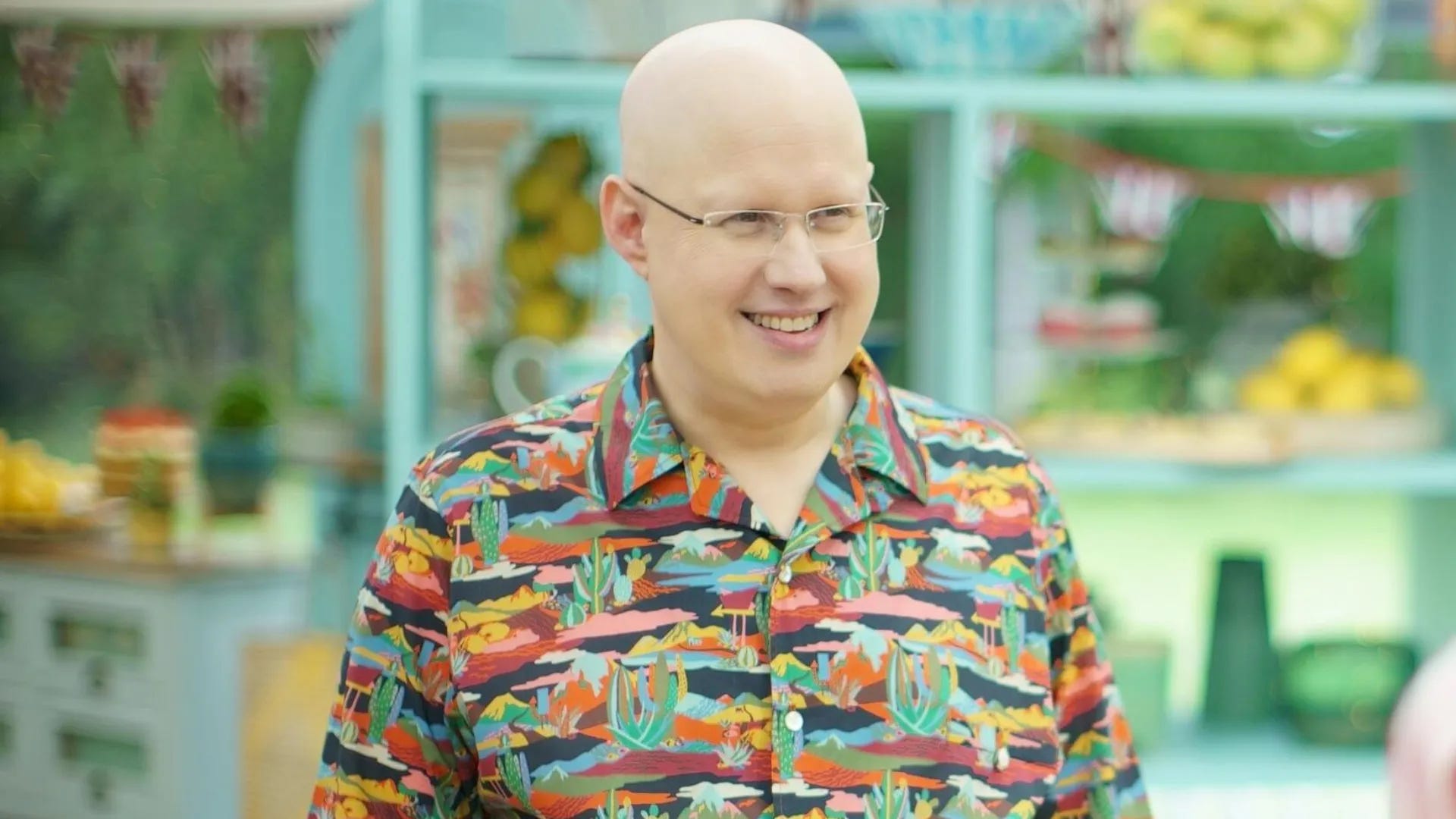
Matt Lucas co-hosted Bake Off with Noel Fielding from 2020 through 2022.
Then, in August 2026, he appeared on Romesh Ranganathan’s BBC Radio 2 programme.
During a conversation about theatre, writing and his need for time alone, he publicly identified as Autistic. He described needing solitude after social interaction. I think that’s an important reminder.
Because somebody can appear confident, funny and sociable on television while having very different needs when the cameras stop recording. We shouldn’t assume that the way somebody presents themselves publicly tells us everything about their experience.
GEORGIE GRASSO
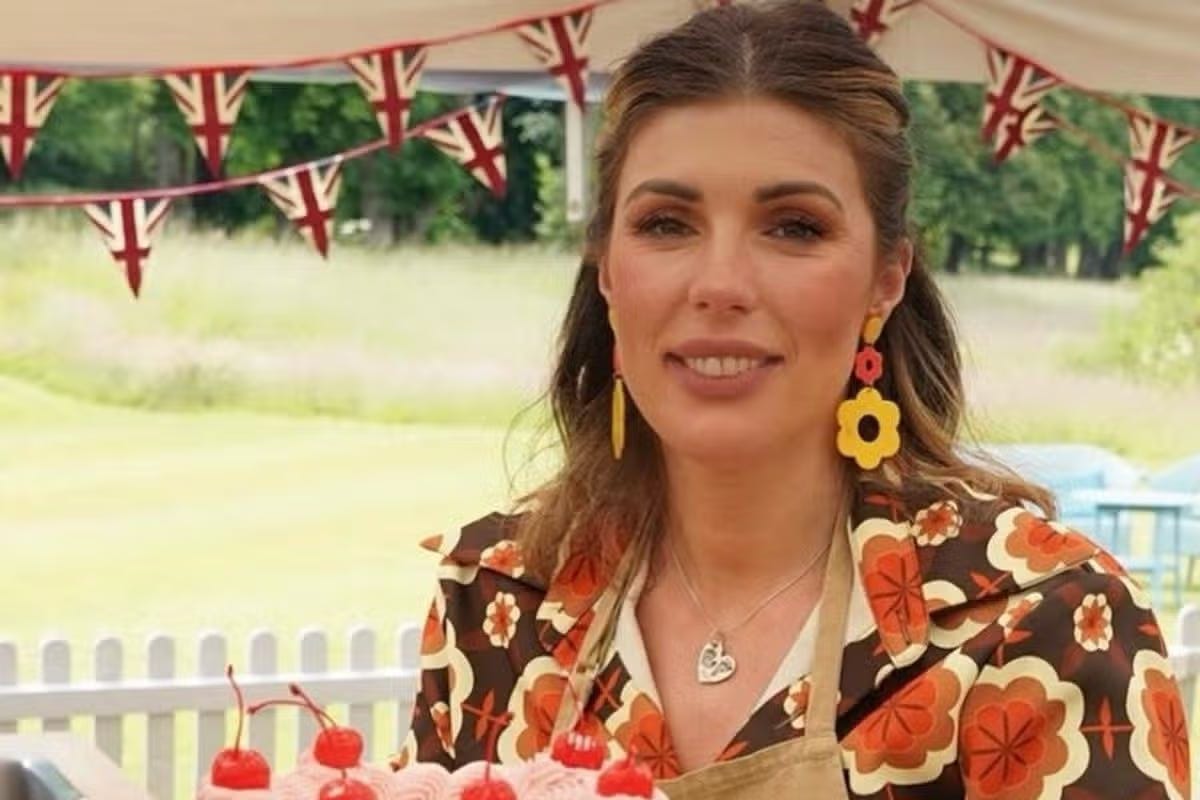
Georgie Grasso won the 2024 series.
She became the programme’s first Welsh winner. During her time on Bake Off, she spoke openly about ADHD and how it affected her baking.
Then, in August 2026, she publicly discussed receiving new diagnostic information concerning autism and bipolar II disorder. She described feeling uncertain about what that information meant for her identity.
And I think that uncertainty deserves to be taken seriously. Understanding our neurotype can be an enormously complicated process. A diagnosis may provide answers. But it can also raise new questions. And when somebody is well known, those questions may become part of a very public conversation. Georgie’s experience reminds us that identity doesn’t always arrive as a neat, completed explanation.
Sometimes it’s something we continue working out.
KIM-JOY HEWLETT
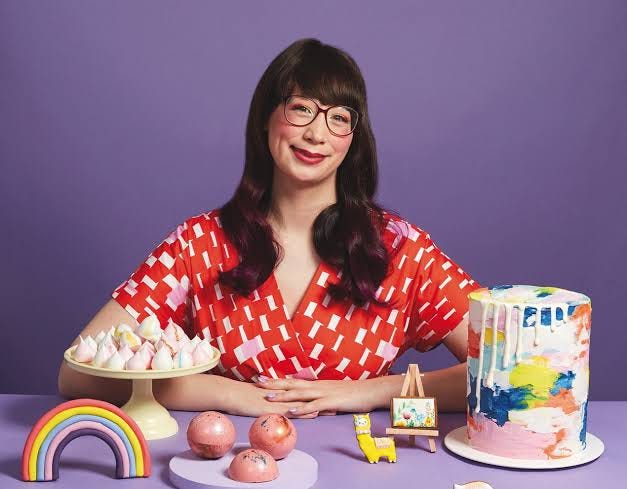
Kim-Joy Hewlett was a finalist on Bake Off in 2018.
You may remember her extraordinary cakes covered in little animals, flowers and whimsical decorations. She created these elaborate miniature worlds out of cake.
In August 2026, Kim-Joy published an essay on her Substack about being Autistic and ADHD. She described receiving both diagnoses in 2025, after years of recognising patterns in her own experiences.
She also discussed experiencing selective mutism while growing up and spending years studying other people to understand how social interaction worked. And here’s something I find especially interesting. She explained that Bake Off changed the way people responded to her differences.
People began appreciating aspects of her personality that had previously made her feel unusual.
I find that incredibly moving.
Because Kim-Joy’s baking wasn’t simply technically impressive. It was unmistakably hers. The little animals, elaborate decorations and imaginary worlds were all part of her distinctive style. She was creating something that reflected her own interests and imagination. And millions of people got to see it. That’s a wonderful example of Boldly Creating.
STEPHI BLACKWELL
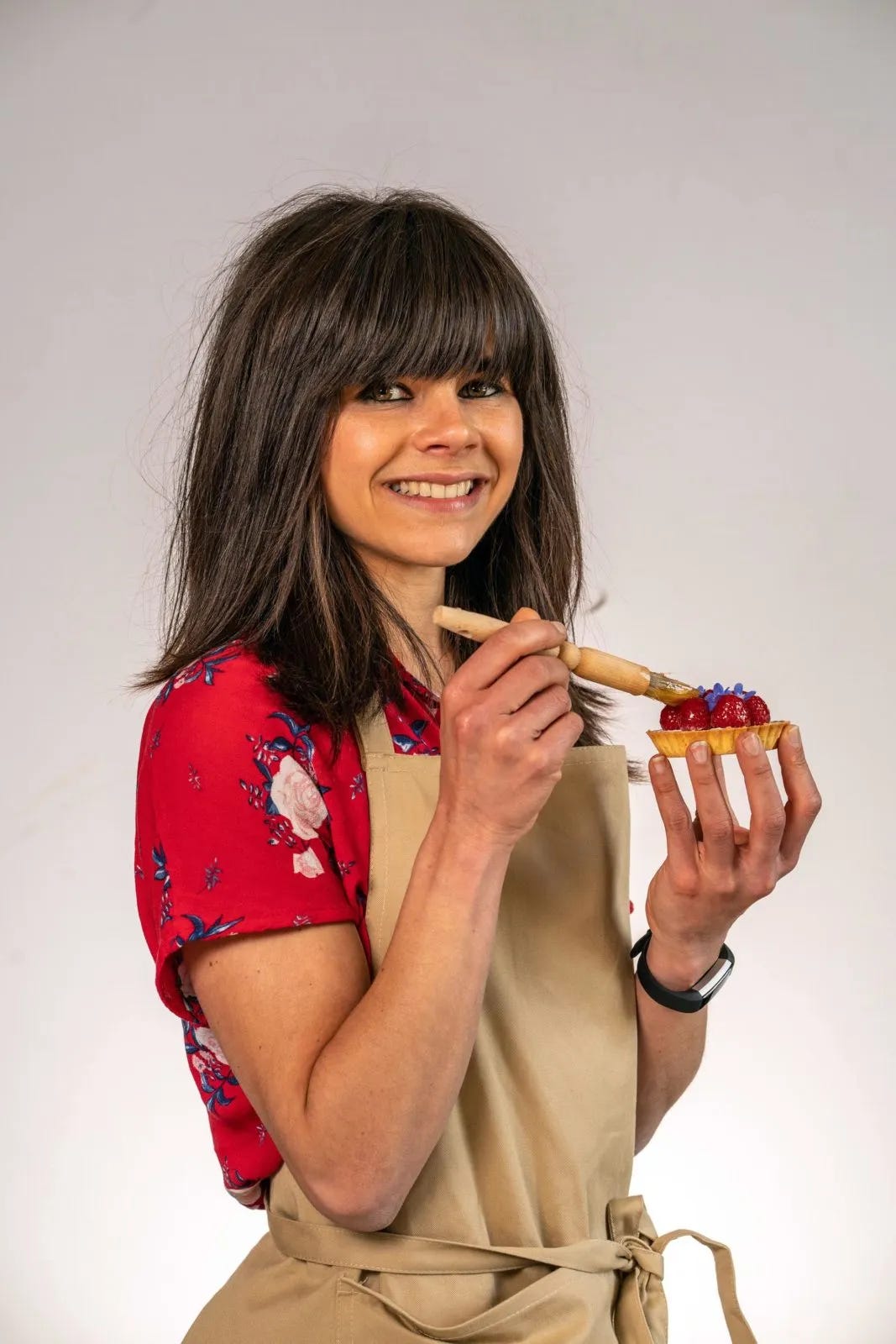
Stephi Blackwell was a finalist on Bake Off in 2019.
In 2024, she publicly discussed receiving an autism diagnosis. She writes about baking and her experiences through her Substack, The Comfort Chronicles.
And I found something particularly interesting in an essay she wrote about why baking works so well for her. She described the importance of feeling safe, understanding what she’s doing and having the support and structure she needs. She also discussed becoming deeply absorbed in the smallest details of baking.
I think that’s a fascinating example of Predictably Comforting and Passionate Superfanning working together.
Because sometimes structure doesn’t restrict creativity.
Sometimes structure is what makes creativity possible.
If you understand the environment, the expectations and the activity, you may have more capacity to explore the details. And for somebody who loves baking, those details can become an extraordinary source of pleasure.
LIZZIE ACKER
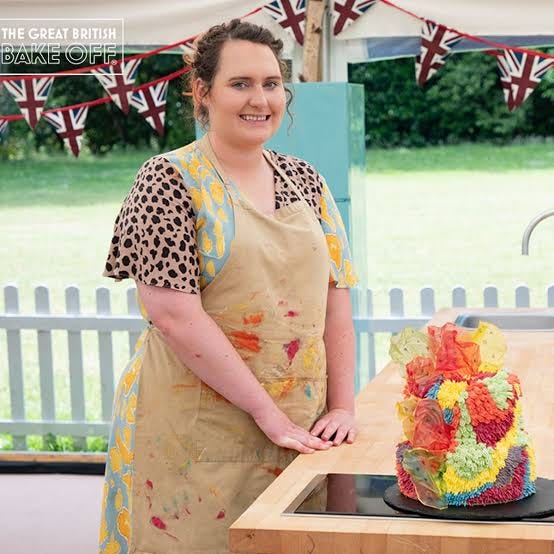
Lizzie Acker appeared on Bake Off in 2021.
She spoke openly about ADHD, dyslexia and dyspraxia. And she wanted to celebrate people who were different. But Lizzie also gave us an interesting example of the importance of familiar entertainment. During the competition, she sometimes chose to watch Harry Potter rather than spend additional time practising. She described it as a comfort blanket. Something familiar that helped when she was overstimulated.
And I think that’s important. Because while Bake Off might be comforting to watch, participating in it is a completely different experience.
The tent can be hot, with cameras everywhere, strict time limits, unfamiliar challenges and the constant possibility of being eliminated. The experience that feels relaxing to the audience may be exhausting for the contestants.
So we need to distinguish between the comfort of watching a familiar programme and the experience of taking part in it. They aren’t necessarily the same thing.
SANDRO FARMHOUSE
The cultural influence of the programme also extends beyond the contestants themselves.

Sandro Farmhouse was a finalist in 2022.
He established an initiative called Baking on the Spectrum, offering baking workshops for Autistic children and their families.
The National Autistic Society reported that the project had worked with more than 100 families by January 2023.
We don’t have a verified statement that Sandro himself identifies as Autistic. And we shouldn’t make that assumption.
His involvement is relevant because of what he has created for the community. Baking can involve an enormous range of sensory experiences.
Textures, smells, tastes, temperatures and the feeling of working with different ingredients are all part of the experience.
An activity can become a way to explore sensory preferences, learn skills and connect with other people.
And I think that’s another important part of this artefact.
The influence of Bake Off extends well beyond the tent.
CLARA SATCHELL-SILVA
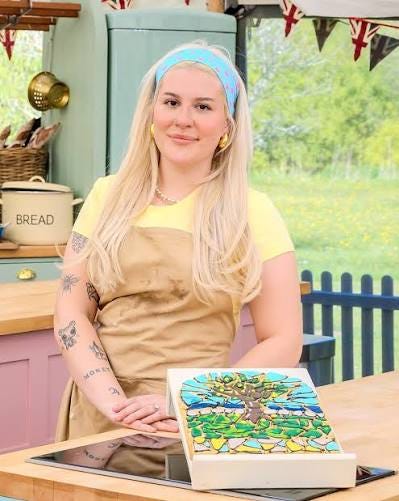
During the 2026 series, Clara Satchell-Silva discussed living with bipolar disorder.
She created a sun-and-moon Showstopper representing aspects of her experience.
She subsequently spoke publicly about her diagnosis. I felt quite a kinship with her. Because speaking openly about something that can carry considerable stigma is an incredibly vulnerable thing to do.
Bipolar disorder is not autism, and we shouldn’t treat different diagnoses as interchangeable.
But I think Clara’s decision to use her baking to communicate something personal is worth recognising. She used the opportunity she had been given to represent part of her experience. And I thought that was incredibly brave.
Bake Off is a place where people can be brave.
CLOSING THE EXCAVATION
When I began researching The Great British Bake Off, I thought I was examining a television programme that Autistic people might find comforting. But what I found was considerably more interesting. I found a programme built around an elaborate and recognisable system of rules. A world that returns to the same setting. Follows the same sequence of events. And uses a shared vocabulary.
I found a Technical Challenge that reminded me of trying to navigate an allistic world without being given the instructions. I found viewers who analyse the results, make predictions, build datasets and create communities around their knowledge of the programme.
I found presenters who challenged established industry practices because they believed kindness mattered. And I found an audience that became so concerned about fairness that hundreds of people complained to the BBC over a single dessert. But perhaps the most important discovery is how these things work together. Because Bake Off is comforting partly because we understand its rules. Those rules create a familiar world. And that familiar world gives us opportunities to recognise patterns, develop specialist knowledge and participate in shared rituals.
The programme also demonstrates that familiar structures don’t have to prevent creativity. They can provide the conditions in which creativity flourishes. And the kindness that has become central to its identity wasn’t inevitable. It was something people helped create by questioning the accepted practices of their industry. I think that’s a particularly important discovery.
Because a world built around predictable rules can still be a world in which those rules are questioned when they need to change. During our excavation, I described Bake Off as a regulation show. And I keep returning to that description. Because I don’t even bake. I’ve never watched another cooking programme in quite the same way.
But I understand why people return to this one. It gives us something familiar. Something recognisable.
Something we can become absorbed in without having to learn an entirely new world every time.
And sometimes, after everything else we’ve had to navigate during the day, that’s exactly what we need.
It looks like a baking show, but it’s really so much more.
That’s why I wanted to bring The Great British Bake Off into the Autistic Cultural Archive.
ACCOMPANYING EXCAVATOR’S NOTES
Simon Scott
One of the things I found particularly interesting about Angela’s excavation was how many different layers of culture existed within something that initially appears to be such a simple television programme.
There’s the world created by the producers.
There’s the knowledge and expertise brought into that world by the contestants.
And then there’s the culture created by the audience.
The Passionate Superfanning is particularly striking. I love the fact that people have created statistical models to analyse a baking competition.
The programme gives viewers a familiar environment, but it also provides enough variation to remain interesting. And the relationship between World Building and Predictably Comforting makes a great deal of sense to me.
But I think Angela’s discovery about Mel and Sue is perhaps even more significant!
Their willingness to challenge the production’s approach helped establish kindness as a defining part of the programme. And that kindness is something the audience now expects.
The world has rules.
And one of those rules is that people should be treated decently.
Looking at all this evidence together, I think Bake Off is a fabulous example of Autistic Culture. It belongs in the Archive.
And having heard Angela’s excavation, I suspect I’ll watch it with different eyes!
CLASSIFICATION
After examining the evidence, we’re filing The Great British Bake Off in the Autistic Cultural Archive. Not because we can establish that the programme was deliberately created for Autistic people, or because everyone who enjoys baking, recognises patterns or appreciates familiar television should be interpreted as neurodivergent, but because the programme’s structure, values, audience practices and cultural influence reveal substantial connections to the Ten Pillars of Autistic Culture.
Predictably Comforting appears in the familiar tent, the repeated sequence of Signature Bake, Technical Challenge and Showstopper, and the comforting experience of knowing what kind of programme we’re about to watch.
Justice Seeking appears in the extraordinary public response to Bingate, and the need to ensure that our concern for fairness extends to everybody involved.
Pattern Matching appears in the Technical Challenge and the statistical analysis undertaken by fans who examine performances, compare results and attempt to predict future outcomes.
The Archive also contains several important supporting traces. World Building appears in the tent, its traditions, familiar structure and recognisable atmosphere. Norm Challenging appears in Mel Giedroyc and Sue Perkins’ objections to production practices that prioritised emotional distress over kindness. Passionate Superfanning appears in the datasets, statistical models, fantasy competitions and shared expertise created by the audience. Bottom-Up Processing appears in the Technical Challenge and the process of assembling a solution from limited information.
Rhythmic Communicating appears in the repeated phrases, familiar exchanges and shared gestures of the programme, including the Hollywood Handshake. And Boldly Creating appears in the extraordinary ways contestants have used baking to express their personalities, interests and experiences.
The excavation also identifies the participation and contributions of Autistic and otherwise neurodivergent people associated with the programme. Their experiences provide additional cultural context, although they should not be treated as evidence that every participant shares the same neurotype or relationship with baking. Taken together, the evidence supports the classification.
ARTEFACT: THE GREAT BRITISH BAKE OFF (2010–PRESENT)
CLASSIFICATION: AUTISTIC CULTURE
PRIMARY PILLARS: Predictably Comforting · Justice Seeking · Pattern Matching
ADDITIONAL TRACES: World Building · Norm Challenging · Passionate Superfanning · Bottom-Up Processing · Rhythmic Communicating · Boldly Creating
ARCHIVE NO.: ACA-007-BAKEOFF
LEAD EXCAVATOR: Dr Angela Kingdon
ACCOMPANYING EXCAVATOR: Simon Scott
STATUS: Excavation Complete
The Great British Bake Off is an Autistic Culture Artefact.
SUBMIT YOUR EVIDENCE
An archive is never finished. So now we’re handing the brushes to you.
What did we miss?
Is The Great British Bake Off part of your weekly routine?
Does the familiar structure of the programme make it Predictably Comforting for you?
Have you ever found yourself analysing the contestants, predicting Star Baker or becoming completely absorbed in the smallest details of a bake?
And what about the kindness?
Do you think the way Bake Off treats its contestants makes it different from other reality television programmes?
Are there other contestants, moments or traditions that deserve a place in our evidence locker?
Leave your field notes in the comments and tell us: What’s your favourite Bake Off moment? The Archive is never finished.