


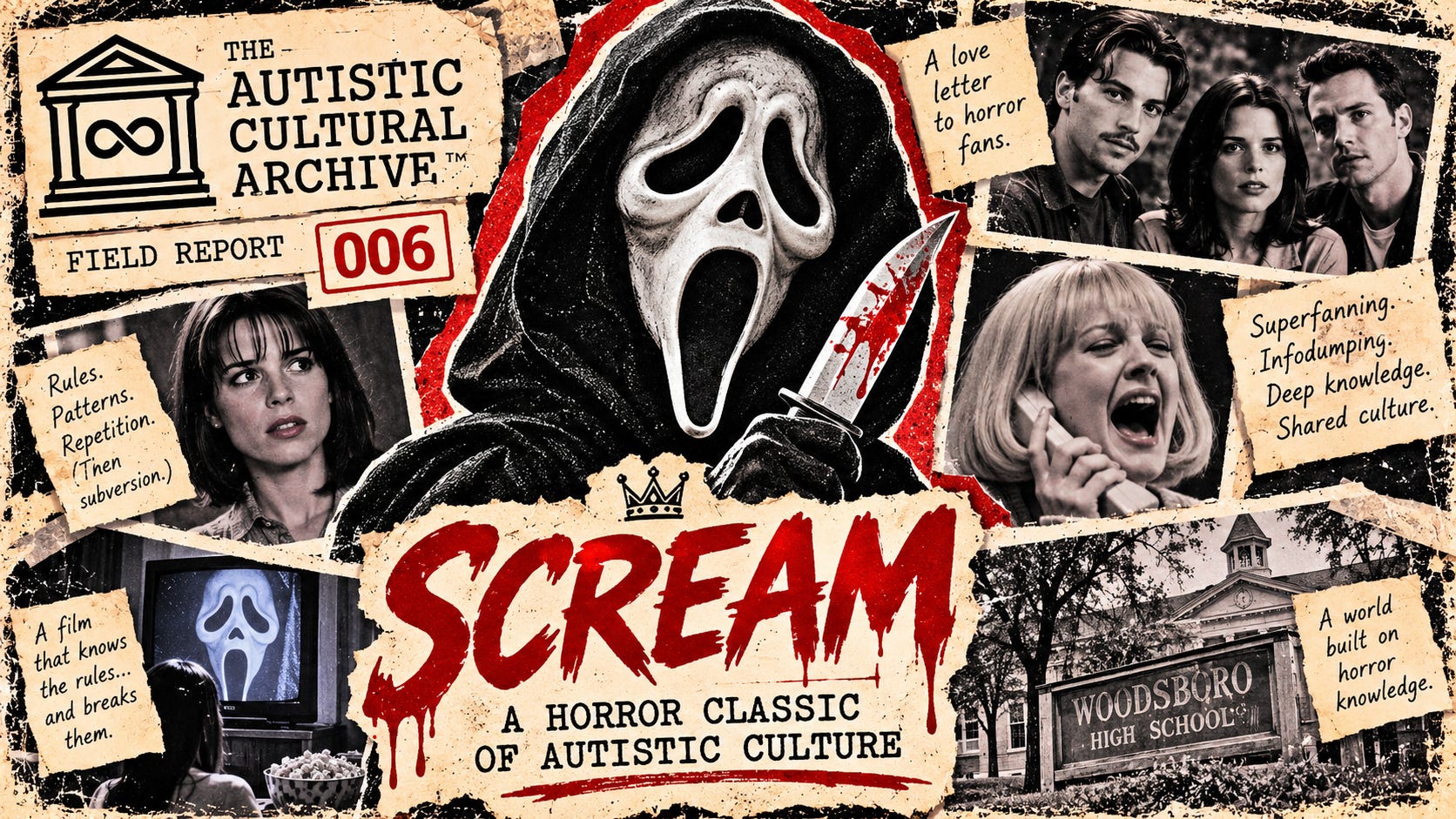
FIELD REPORT [006]
THE AUTISTIC CULTURAL ARCHIVE
ARTIFACT: Scream (1996)
ARCHIVE NO.: ACA-006-SCREAM
PERIOD: 1996 / Continuing Cultural Legacy
CLASSIFICATION: AUTISTIC CULTURE
PRIMARY PILLARS: Passionate Superfanning · Boldly Creating · Norm Challenging · Game Changing Innovation
ADDITIONAL TRACES: Pattern Matching · World Building · Rhythmic Communicating · Bottom-Up Processing · Predictably Comforting
LEAD EXCAVATOR: Simon Scott
ACCOMPANYING EXCAVATOR: Dr Angela Kingdon
LISTEN TO THE EXCAVATION
This Field Report accompanies our excavation of Scream (1996) on This Week in Autistic Culture.
The Archive segment presents the case.
The Field Report contains the evidence locker.
Listen to the full excavation on the Autistic Culture Podcast Network.
Watch the excavation on our YouTube channel.
Spoiler warning: This Field Report reveals the identities of the killers and discusses the endings of the film and its sequels.
THE DISCOVERY
What happens when somebody loves a particular kind of film so much that they understand every convention?
Every character type.
Every predictable death.
Every familiar piece of dialogue.
Every rule.
And what happens when they decide to make a film of their own? Do they simply recreate the films they love? Or can understanding something that deeply become the very thing that allows them to reinvent it?
Because that’s what I think happened with Scream.
Scream is a slasher film that knows an extraordinary amount about slasher films.
Its characters have watched all the classics.
They quote them.
They argue about them.
They know the rules.
Some characters believe that knowing those rules might keep them alive.
But Scream has another trick.
It teaches us the rules. And then it breaks them.
When I began researching the film for the Autistic Cultural Archive, I was particularly interested in its relationship with Passionate Superfanning.
But as the excavation developed, I began finding connections to several other Pillars.
Boldly Creating.
Norm Challenging.
Game Changing Innovation.
And beneath them, a fascinating relationship with Pattern Matching, World Building and the shared language of horror fandom.
I brought Scream into the Archive because I want to explore whether an intense love of a cultural form could become the very thing that transforms it.
And whether that process might reveal something important about Autistic Culture.
The strongest evidence begins with the horror fan who wrote the film.
THE ARTEFACT
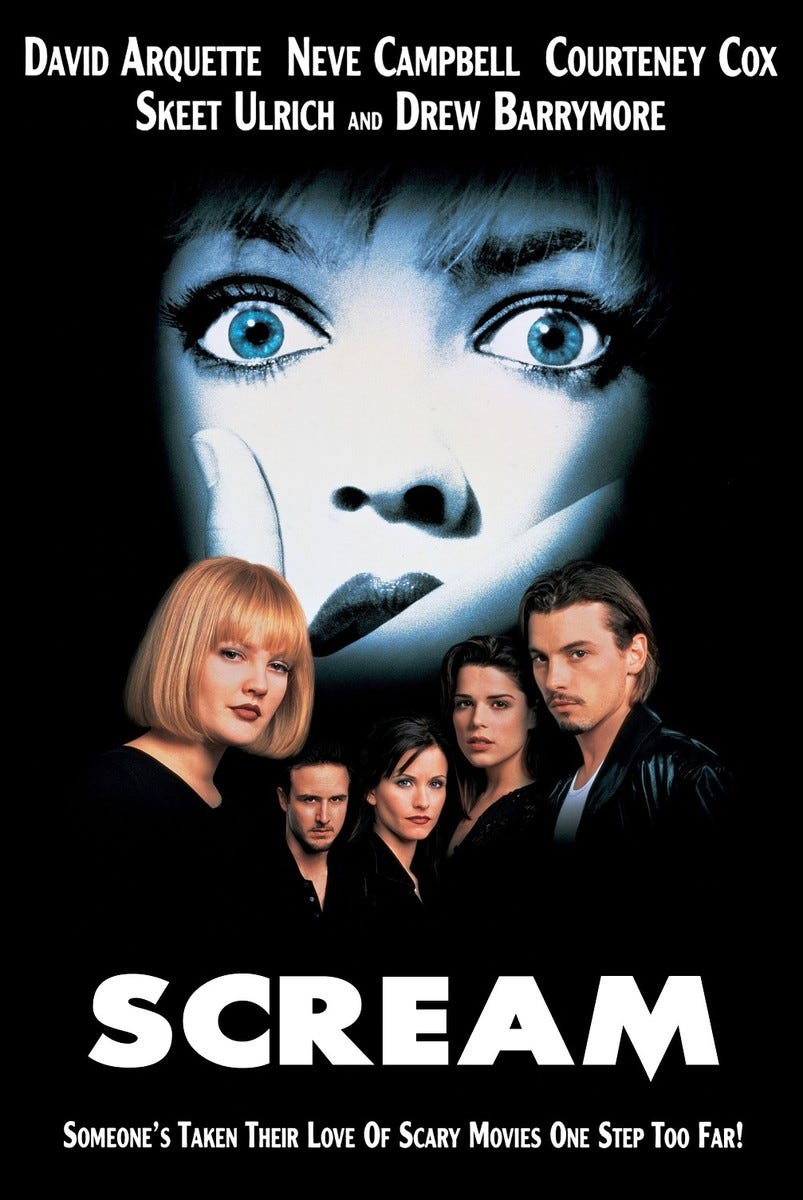
Scream was released in the United States on 20 December 1996.
It was written by Kevin Williamson and directed by horror legend Wes Craven.
The film starred Neve Campbell as Sidney Prescott, Courteney Cox as Gale Weathers, David Arquette as Dewey Riley, Skeet Ulrich as Billy Loomis, Matthew Lillard as Stu Macher, Jamie Kennedy as Randy Meeks, Rose McGowan as Tatum Riley and Drew Barrymore as Casey Becker.
The story takes place in Woodsboro, a fictional Californian town. On the 1st anniversary of Sidney's mother’s murder, a masked killer begins murdering local teenagers.
The killer wears a ghostly white mask and wields a knife, and contacts victims using a telephone and a voice-changing device.
But unlike many earlier slasher films, the characters in Scream are familiar with horror cinema.
They’ve watched Halloween.
They know Friday the 13th.
They recognise Freddy Krueger.
And they understand the conventions of the genre in which they appear.
That creates a fascinating relationship between the characters and the audience.
Both have watched horror films.
Both recognise familiar patterns.
Both attempt to use that knowledge to understand what is happening.
The film combines slasher horror with detective fiction, dark comedy, satire and self-referential storytelling.
It also arrived at an important moment in the genre’s history.
By the mid-1990s, slasher cinema had accumulated decades of recognisable conventions.
Halloween had introduced audiences to Michael Myers in 1978.
Friday the 13th followed in 1980.
And Wes Craven’s own A Nightmare on Elm Street arrived in 1984.
These films helped establish familiar structures.
The masked or recurring killer.
The vulnerable young people.
The chase.
The apparently unstoppable threat.
The final survivor, most often, a ‘Final Girl’.
Audiences had become accustomed to those patterns.
And increasingly, horror films were associated with familiar formulas and long-running sequels.
Scream arrived with a different approach.
Instead of pretending that audiences had never encountered those conventions, it made their familiarity central to the story.
The film was produced for approximately $15 million and became a major international box-office success, earning more than $170 million worldwide.
It helped renew mainstream interest in slasher cinema, and it launched a franchise that would continue developing its own mythology for decades.
But its commercial success isn’t the most important discovery here.
What interests me is how the film achieved it.
Because Scream didn’t reinvent horror by abandoning its traditions. It reinvented horror by understanding those traditions extraordinarily well.
THE EXCAVATION
THE HORROR FAN WHO WROTE THE FILM HE WANTED TO SEE
PASSIONATE SUPERFANNING · BOLDLY CREATING
One of the strongest connections I found during my research came from Kevin Williamson’s own explanation of why he wrote Scream.
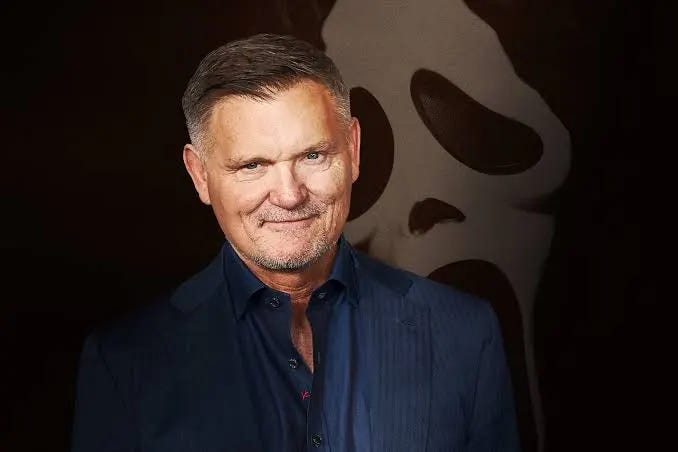
In a statement about the film’s origins, Williamson explained:
“I've always loved scary movies. They're my favorite. As a kid, I used to watch them over and over. I love the roller-coaster ride they can bring. Unfortunately, as I got older, they stopped making them. Or at least the ones I wanted to see. So, being the determined, starving, out-of-work screenwriter that I was, I sat down and wrote the movie I wanted to see. And, thus, Scream was born”
I think that’s an extraordinary example of Passionate Superfanning.
His frustration wasn’t that horror cinema existed; it was that the films being produced no longer delivered the experience he loved.
And rather than simply complaining about that, he created something.
That is where Passionate Superfanning begins to connect with Boldly Creating.
Williamson’s screenplay was originally titled Scary Movie, which is the name of the popular spoof series created by the Wayans Bros. that drew inspiration from Scream.
According to accounts of its development, he completed an initial draft in a concentrated period of approximately three days.
During our excavation, Angela immediately recognised the possibility of an intense period of focused creative attention.
She connected it with monotropism and the experience of becoming deeply absorbed in a particular interest.
We cannot establish Williamson’s neurotype from the speed at which he wrote a screenplay.
Intense creative concentration isn’t exclusive to Autistic people.
But the relationship between sustained interest, accumulated knowledge and creative production is worth examining.
THE HORROR FAN INSIDE THE HORROR FILM
PASSIONATE SUPERFANNING · PATTERN MATCHING
If Kevin Williamson represents Passionate Superfanning behind the camera, Randy Meeks represents it within the film.
Randy works in a video shop.
He loves horror cinema.
He knows the films.
The killers.
The sequels.
The conventions and the patterns that connect them.
When murders begin taking place in Woodsboro, Randy interprets events through his knowledge of horror films.
He effectively becomes the film’s resident expert, and he doesn’t hesitate to explain what he knows!
I find Randy particularly interesting because his expertise isn’t simply a collection of trivia.
It’s a system.
He has watched enough horror films to recognise recurring structures, and he believes those structures can help him understand what is happening around him.
That is where Passionate Superfanning connects with Pattern Matching.
Randy recognises similarities between individual films.
He identifies recurring character types.
He notices conventions.
He uses those patterns to make predictions.
But there’s another layer.
The film itself behaves like Randy.
It understands horror history.
It recognises conventions, and it constantly makes references in its dialogue.
And it uses specialist knowledge to communicate with the audience.
Randy isn’t simply a superfan who happens to appear in a horror film.
He represents the very cultural knowledge on which the film is built.
THE RULES OF HORROR
At Stu Macher’s house party, Randy explains the rules that supposedly determine whether somebody survives a horror movie.
There are three.
The first rule is that you can never have sex.
In many traditional slashers, sexually active teenagers are particularly vulnerable.
The surviving heroine is frequently portrayed as more sexually restrained.
The second rule is that you can never drink or take drugs.
Characters who become intoxicated are often less aware of danger and more vulnerable to attack.
The third rule is that you must never announce that you’ll be right back.
In horror cinema, a character who confidently promises to return may be inviting an unfortunate fate.
These aren’t universal laws of filmmaking.
They’re patterns Randy has identified from watching horror movies, and the film presents them as though they form a reliable system.
But that system is about to be challenged.
Sidney has sex with Billy and survives.
Randy drinks beer at the party and survives.
Stu announces that he’ll be right back, returns, and eventually dies in circumstances more complicated than the immediate consequence the rule suggests.
The rules are recognisable.
But they don’t reliably predict every outcome.
And that’s what makes the film so interesting!
It establishes the conventions.
It invites us to recognise them.
And then it demonstrates that those conventions aren’t necessarily true.
THE MUSICAL THAT HELPED INSPIRE A HORROR FILM
BOLDLY CREATING · NORM CHALLENGING
Another fascinating discovery came from Williamson’s interest in Stephen Sondheim’s Into the Woods.
The musical brings together familiar fairy-tale characters and challenges the assumptions audiences have developed about them.
Little Red Riding Hood.
The wolf.
Cinderella.
The princes.
The stories are familiar.
We think we understand the characters.
We know what roles they’re supposed to play.
But Into the Woods complicates those expectations.
Characters behave differently from the versions we remember.
The familiar stories become more complicated.
And the audience is invited to reconsider what it thought it knew.
Williamson’s reported admiration for that approach is particularly interesting because the same creative principle appears in Scream.
Take something the audience already understands.
Identify the assumptions that come with it.
Challenge those assumptions.
In Into the Woods, the familiar structures come from fairy tales.
In Scream, they come from slasher cinema.
The audience expects a masked killer.
A final girl.
A particular relationship between sex and survival.
A familiar set of character roles.
But the film begins questioning those expectations.
During our recording, Angela recognised the inversion immediately.
We think we know what a particular character is supposed to be, then the story demonstrates that the character doesn’t have to behave that way.
I think this is an extraordinary example of Boldly Creating.
Williamson wasn’t simply copying another horror film; he was drawing on different forms of storytelling.
Slasher cinema.
Detective fiction.
Musical theatre.
Satire.
Self-aware comedy.
Then combining those influences into something distinctive.
Originality doesn’t always mean creating something without precedent.
Sometimes it means recognising a connection between two things that other people haven’t thought to combine, and understanding how that connection might create something new.
WHEN HORROR KNOWLEDGE BECOMES A MATTER OF LIFE AND DEATH
PASSIONATE SUPERFANNING · PATTERN MATCHING
The opening sequence of Scream introduces the film’s relationship with specialist knowledge before Randy has even appeared.
Drew Barrymore plays Casey Becker.
She’s home alone.
The telephone rings.
A stranger begins asking her questions.
At first, the conversation seems playful.
He wants to know whether she likes scary movies.
Then the conversation becomes threatening.
And the questions turn into a horror trivia quiz.
The caller asks Casey about Halloween and Friday the 13th.
At one point, he asks her to identify the killer in the original Friday the 13th.
Casey answers Jason Voorhees.
But that’s incorrect.
In the original 1980 film, the killer is Jason’s mother, Pamela Voorhees.
Jason becomes the franchise’s central killer in the sequels.
It’s a wonderful detail.
Because Casey knows the popular image of Friday the 13th.
She recognises Jason.
But the killer is asking for a more precise understanding of the franchise’s history.
The difference between general familiarity and specialist knowledge becomes central to the scene.
And the audience is invited to participate.
If we know the answer, we recognise Casey’s mistake.
If we don’t, we discover that the film’s most famous killer wasn’t responsible for the original murders.
Either way, the scene turns horror knowledge into part of the suspense.
And then Scream challenges another expectation.
Spoilers for a 30-year-old movie…It kills Drew Barrymore.
The biggest star in the film’s initial marketing.
Within the opening sequence.
Audiences might reasonably have expected her to be the protagonist.
Instead, she becomes the first major victim.
This kind of narrative misdirection wasn’t entirely new.
Alfred Hitchcock had famously killed his apparent protagonist early in Psycho.
But Scream brings that technique into a film that is explicitly concerned with the audience’s knowledge of horror conventions.
The opening sequence establishes an important principle.
We may recognise the pattern.
We may understand the reference.
But that doesn’t guarantee we know what will happen.
THE AGATHA CHRISTIE MURDER MYSTERY
BOLDLY CREATING · BOTTOM-UP PROCESSING
One of my favourite discoveries in this excavation was Kevin Williamson’s relationship with detective fiction.
Williamson was also an enthusiastic reader of Agatha Christie.
Speaking about that interest, he said:
“I was a big Agatha Christie reader as a kid and I really enjoyed the reveals.”
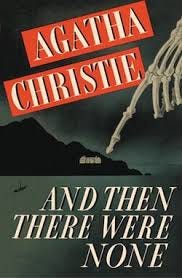
That influence helps explain something fundamental about Scream.
It isn’t simply a slasher film.
It’s a murder mystery.
The audience is encouraged to investigate.
Everybody becomes a potential suspect.
Apparently innocent details become clues.
And the final revelation changes our understanding of everything that has happened.
During our recording, Angela recognised the connection immediately.
She described the familiar Agatha Christie structure in which a detective gathers the suspects and explains how the evidence fits together.
The pleasure comes from the revelation.
Details that seemed unrelated suddenly become meaningful.
And the audience discovers whether its own interpretation was correct.
Angela connected that process with Bottom-Up Processing.
Individual pieces of information are gathered.
Connections are identified.
And a larger explanation emerges.
Scream uses that structure throughout.
THE TWO KILLERS
For most of the film, the audience is encouraged to identify the person behind the Ghostface mask.
We assume there is one killer.
One costume.
One identity.
(Again, Spoilers for a 30-year-old movie)
But the final revelation is that Billy Loomis and Stu Macher are working together.
There are two killers.
And that changes how we interpret earlier scenes.
At one point, Billy appears to be attacked by Ghostface.
That seems to eliminate him as a suspect.
After all, how could Billy be attacked by Ghostface if Billy is Ghostface?
But the attack is staged.
The apparent evidence of Billy’s innocence is actually part of the deception.
The audience hasn’t necessarily failed to notice a clue.
It has relied upon an assumption that turns out to be incorrect.
That is a fascinating relationship between Pattern Matching and Bottom-Up Processing.
We recognise a familiar structure.
We construct an explanation.
And we interpret new information through it.
But sometimes the discovery that changes everything isn’t another clue.
It’s the realisation that the framework itself needs reconsidering.
THE GIRL WHO REFUSED THE SCRIPT
NORM CHALLENGING · GAME-CHANGING INNOVATION
If Randy represents the rules of horror, Sidney Prescott represents the refusal to be governed by them.
Sidney understands horror films.
She knows their conventions.
And she openly questions the decisions characters make in them.
She recognises how absurd it can seem when somebody runs upstairs instead of escaping through the front door.
But as the film develops, Sidney finds herself in precisely the kind of story she has criticised.
And rather than simply accepting the role assigned to her, she begins challenging it.
THE FINAL GIRL WHO HAS SEX
Randy tells us that characters who have sex cannot survive a horror movie.
But Sidney has sex with Billy Loomis.
And she survives.
In fact, she becomes the person who defeats the killers.
This is one of the clearest inversions in the film.
The traditional slasher convention associates survival with sexual restraint.
But Scream rejects the idea that Sidney’s fate must be determined by her sexual behaviour.
There’s an additional reversal.
Billy, her boyfriend, turns out to be one of the murderers.
The romantic relationship that might ordinarily offer safety becomes part of the threat.
And Sidney survives despite breaking the rule that Randy presents as fundamental.
THE KILLER WHO ISN’T INVINCIBLE
There’s another convention that Scream challenges.
The unstoppable masked killer.
Think about Michael Myers, Jason Voorhees or Freddy Krueger.
These characters are frequently presented as extraordinarily powerful, relentless or supernatural.
Ghostface looks as though he belongs in that tradition.
The mask.
The knife.
The threatening presence.
But Ghostface behaves differently.
He falls over.
Gets knocked down.
Runs into obstacles.
And reacts to pain.
Underneath the costume is a vulnerable human being.
The film uses the familiar image of the unstoppable killer while repeatedly undermining the expectation that the person beneath the mask possesses extraordinary abilities.
THE HORROR EXPERT WHO MISSES THE DANGER
One of the film’s most memorable scenes involves Randy watching Halloween at Stu’s party.
On the television, Jamie Lee Curtis’s character is in danger.
Randy shouts warnings at the screen.
But behind him, Ghostface is approaching.
The audience can see what Randy cannot.
The horror expert understands the fictional danger perfectly.
But he fails to notice the danger in his own surroundings.
And yet Randy survives.
His specialist knowledge doesn’t make him invulnerable.
But neither does his momentary failure mean he must die.
The film complicates the relationship between expertise and survival.
THE FINAL GIRL BECOMES GHOSTFACE
Towards the end of the film, Sidney takes control of the killers’ own methods.
She puts on the Ghostface costume.
Uses the voice-changing device.
And turns the threatening telephone calls back against Billy and Stu.
The people who have been controlling the horror suddenly discover what it feels like to be frightened by it.
The hunted becomes the hunter.
Earlier final girls had fought back against their attackers.
But Sidney’s reversal is distinctive because she appropriates the killer’s identity and tools.
She doesn’t simply escape the story.
She begins controlling it.
NOT IN MY MOVIE
The film’s most important declaration comes during the final confrontation.
Randy warns that the apparently defeated killer may return for one last scare.
Billy suddenly rises.
Sidney shoots him.
And delivers the line:
“Not in my movie.”
I think this is one of the strongest pieces of evidence in the entire excavation.
Sidney isn’t simply refusing to let Billy hurt her again.
She’s refusing to let the conventions of horror cinema dictate what happens next.
She knows the expected ending.
She knows the killer is supposed to return.
And she decides that the rule doesn’t apply.
Not in her movie.
There’s something extraordinary about that.
A character who understands the rules of the genre refuses to accept that those rules determine her fate.
And in doing so, she becomes the clearest expression of Norm Challenging in the film.
A FIND FROM THE EXCAVATION
During our recording, Angela described Sidney’s transformation as becoming almost the final boss.
I loved that observation.
Sidney doesn’t simply survive. She takes control of the very imagery and techniques that have been used to terrify her.
And that raises a much larger question.
What happens when somebody recognises that the rules governing their experience aren’t inevitable?
That they are conventions.
That somebody created them.
That they can be changed?
For me, that’s what makes Sidney such an important part of this excavation.
THE FILMMAKER WHO HELPED CREATE THE RULES
GAME-CHANGING INNOVATION · PASSIONATE SUPERFANNING
There’s something particularly interesting about Wes Craven directing Scream.
Because Craven wasn’t an outsider approaching horror cinema for the first time.
He had already helped shape the genre.
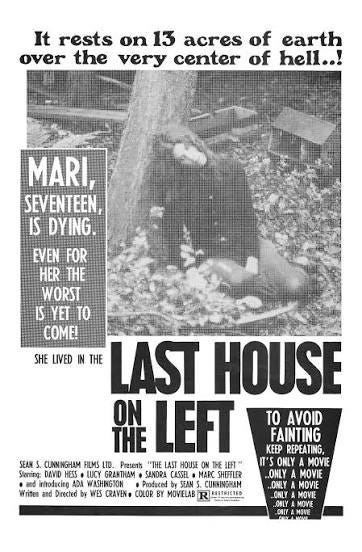
He directed The Last House on the Left in 1972.
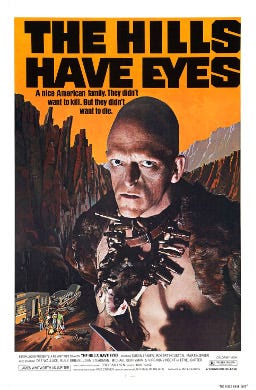
The Hills Have Eyes in 1977.
And A Nightmare on Elm Street in 1984.
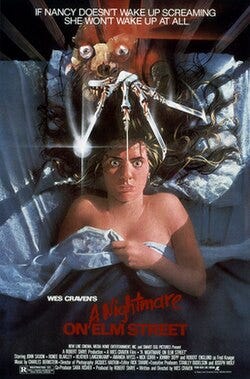
He helped create some of the most recognisable conventions of modern horror cinema.
And now he was directing a film that questioned those conventions.
But Scream wasn’t his first exploration of self-aware horror.
In 1994, Craven directed Wes Craven’s New Nightmare.
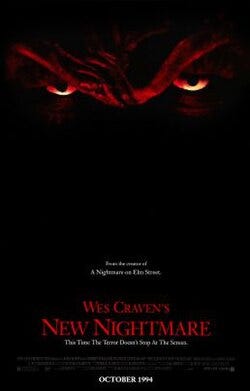
That film brought actors and filmmakers associated with the Nightmare on Elm Street franchise into a fictional story in which Freddy Krueger appeared to cross the boundary between fiction and reality.
It explored the relationship between horror films and the people who create them.
Scream approached the idea differently.
Instead of focusing on actors and filmmakers confronting their own fictional creation, it presented ordinary teenagers who understood horror cinema and attempted to use that knowledge to survive.
The difference is important.
In New Nightmare, horror fiction appears to enter the world of its creators.
In Scream, horror fans find themselves living through events that resemble the films they already know.
THREE LAYERS OF KNOWLEDGE
One of the strongest discoveries in this excavation is that Scream operates through three connected layers.
The filmmakers understand the conventions of horror cinema.
The characters understand those conventions because they’ve watched horror films.
The audience recognises the conventions being discussed and manipulated.
The film is communicating with all three levels simultaneously.
The filmmakers know the rules.
The characters know the rules.
The audience knows the rules.
And everybody is waiting to discover whether those rules will be followed.
That creates an extraordinary form of storytelling.
A moment of suspense can depend on recognising a familiar convention.
A joke can depend on understanding a reference.
And a revelation can force us to reconsider what we thought we knew.
The film doesn’t abandon suspense in favour of self-awareness.
It uses self-awareness to create new forms of suspense.
THE CULTURAL IMPACT
Scream became a major commercial success and helped renew interest in teen slasher cinema.
And it influenced a wave of horror films that embraced self-aware dialogue, youthful casts, murder mysteries and familiar genre conventions.
It would be inaccurate to suggest that Scream invented self-referential horror.
There were earlier examples, including Craven’s own New Nightmare.
But Scream brought this particular approach to a large mainstream audience.
And it demonstrated that horror audiences didn’t need to be treated as though they were unfamiliar with horror.
Their knowledge could become part of the experience.
That’s where I see Game Changing Innovation.
Not simply in the film’s commercial success, but in the way it demonstrated new creative possibilities within an established genre.
THE HORROR UNIVERSE THAT WATCHES ITSELF
WORLD BUILDING · PASSIONATE SUPERFANNING
One of the discoveries that deserves a permanent place in the Archive is the way the Scream universe develops beyond the original film.
The first Scream establishes a recognisable mythology.
Woodsboro.
Ghostface.
The mask.
The telephone calls.
The voice-changing device.
The mystery of who is responsible for the murders.
But the sequels begin expanding that mythology in an extraordinary direction.
THE FILM WITHIN THE FILM
In Scream 2, released in 1997, audiences are introduced to Stab.
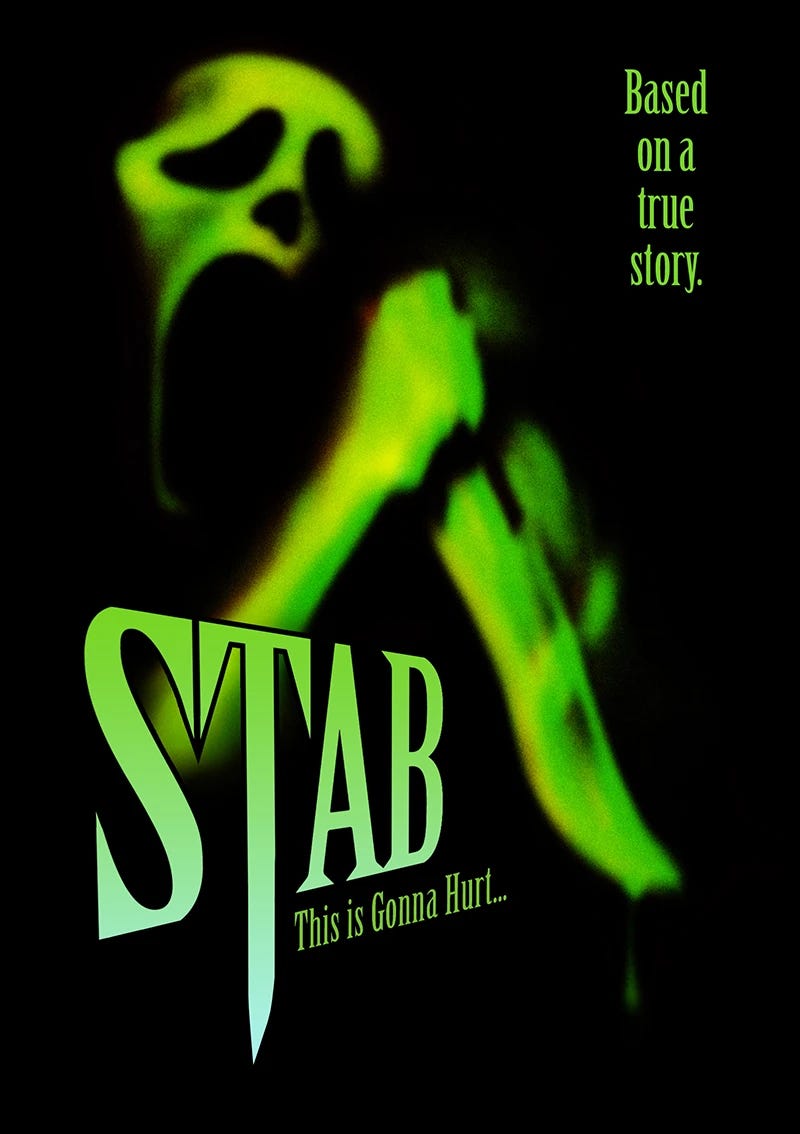
Stab is a fictional horror film based on the Woodsboro murders.
The sequel opens at a cinema screening of that film.
Characters are watching a dramatisation of events from the original Scream.
And people are murdered while watching it.
Think about the layers involved.
We are watching Scream 2.
The characters are watching Stab.
And Stab is a fictional adaptation of the events we watched in Scream.
The horror film has created a world in which its own events have become horror entertainment.
During our recording, Angela was astonished by this revelation.
And I think her reaction captures something important about the franchise’s world-building.
The story hasn’t simply continued.
Its fictional world has developed its own cultural products.
Its own films.
Its own audiences.
Its own representations of historical events.
THE FILM ABOUT MAKING THE FILM
Scream 3, released in 2000, develops the idea further.
The story takes place around the production of Stab 3.
Now the franchise is examining the making of a fictional film based on fictional murders from an earlier film.
Actors portray characters whose experiences have already been dramatised.
The boundaries between the original events, their fictional adaptations and the new murders become increasingly complicated.
It’s an extraordinary example of a fictional world developing its own mythology.
And it introduces another question.
What happens when somebody’s personal experiences become entertainment for other people?
Sidney’s trauma has become a commercially valuable story within the world of Scream.
Other people can reinterpret it.
Dramatise it.
And profit from it.
That raises questions about ownership, representation and the ethics of turning somebody else’s suffering into entertainment.
I wouldn’t elevate Justice Seeking to a principal Pillar on this evidence alone.
But it is an interesting question to preserve in the Archive.
Because the expanding Stab universe is about more than self-referential jokes.
It’s also about who controls a story once that story becomes part of popular culture.
SPEAKING THROUGH SCARY MOVIES
RHYTHMIC COMMUNICATING · PASSIONATE SUPERFANNING
One of the reasons Scream has remained culturally significant is its dialogue.
It’s an extraordinarily quotable film.
People imitate Ghostface.
They recreate the telephone calls.
They repeat Randy’s rules.
And they use references to the film as a form of shared cultural language.
But the film itself is also constantly communicating through references.
Randy uses horror films to interpret the murders.
Billy refers to other films when discussing his own experiences.
Stu participates in the same language of movie quotations and conventions.
And Sidney recognises those references even while questioning the behaviour of horror characters.
This is where Rhythmic Communicating becomes interesting.
A familiar quotation can communicate an entire scene.
A tone of voice.
A shared joke.
An emotion.
A reference that doesn’t need explaining to somebody who recognises it.
For people who share a passionate interest, those references can become a way of connecting.
You don’t need to explain the entire history of a film.
You say something recognisable. Somebody else understands.
That doesn’t mean quoting films is exclusively Autistic. It isn’t.
But shared scripts, repeated phrases and familiar cultural references can be important forms of communication within Autistic Culture.
And Scream is built around a world in which people communicate through their knowledge of other stories.
The references aren’t simply decorative.
They’re part of how the characters understand their experiences, and part of how the film communicates with its audience.
THE COMFORT OF KNOWING WHAT HAPPENS NEXT
PREDICTABLY COMFORTING · PATTERN MATCHING
There’s another connection I wanted to preserve in the Field Report, even though it didn’t make the final episode.
Because Scream is a film designed to surprise its audience.
But what happens when you’ve watched it enough times that there are no surprises left?
On a first viewing, Scream is a murder mystery.
We don’t know who Ghostface is.
We don’t know who will survive.
We don’t know when the next attack will happen.
But on a second viewing, the experience changes.
We know Billy and Stu are responsible.
We understand the significance of scenes that originally seemed innocent.
We recognise the misdirection.
We can appreciate the construction of the mystery in greater detail.
The film hasn’t changed. Our relationship with it has.
And I think something is fascinating about that.
Because a film designed to frighten us can also become familiar.
We know the dialogue.
We anticipate the scares.
We recognise the music.
We know how the story ends.
And for some people, that familiarity can become part of the pleasure.
There is a wonderful contradiction here.
Scream creates surprise by challenging familiar patterns.
But repeated viewing can transform those surprises into familiar patterns of their own.
The first viewing offers the pleasure of discovery.
Subsequent viewings can offer the pleasure of recognition.
That doesn’t mean horror is comforting for everybody.
And it doesn’t mean enjoying repeat viewings is exclusively Autistic.
But it raises an interesting question about Predictably Comforting.
Can something frightening become comforting precisely because we know what’s going to happen?
And can understanding the structure of a story make it more enjoyable rather than less?
For me, that’s a connection worth preserving in the evidence locker.
CLOSING THE EXCAVATION
When I began researching Scream after viewing a 30th anniversary screening with my fiancé, who is a Scream superfan, I thought I was going to be examining a horror film that broke the rules of horror.
But what I found was considerably more interesting.
But perhaps the most important discovery was the relationship between all these things.
Because the four principal Pillars aren’t separate observations.
They form a creative process.
Passionate Superfanning supplies the knowledge. That knowledge makes it possible to recognise patterns and conventions.
Boldly Creating allows those conventions to be combined, questioned and reimagined.
Norm Challenging demonstrates that the established rules don’t have to determine the outcome.
Game Changing Innovation becomes possible when those new ideas reshape what audiences expect from the genre.
And perhaps that’s what makes Scream such a compelling artefact of Autistic Culture.
It doesn’t simply celebrate knowing the rules.
It celebrates what becomes possible when somebody knows those rules well enough to question them.
I also keep returning to Sidney’s final declaration.
“Not in my movie.”
Because it’s a wonderful expression of somebody refusing to accept a predetermined narrative.
That’s the moment when the film’s central argument becomes visible.
The rules aren’t inevitable. They’re conventions.
And conventions can be changed.
And Scream offers an extraordinary example of how deep cultural knowledge can become the foundation of creativity and innovation.
Randy identifies the rules.
Sidney challenges them.
Williamson and Craven reinvent them.
That’s why I wanted to bring Scream into the Autistic Cultural Archive.
Not because it simply broke the rules of horror.
But because it demonstrated what becomes possible when somebody loves something enough to understand how it works.
ACCOMPANYING EXCAVATOR’S NOTES
Dr Angela Kingdon
I came into this excavation without having watched Scream.
I knew it was an important horror film.
I knew the Ghostface mask.
But I hadn’t experienced the story in the way Simon had.
And that made this a particularly interesting excavation for me.
I was also fascinated by the influence of Agatha Christie.
That connection to Bottom-Up Processing was particularly interesting.
The audience isn’t simply receiving an explanation.
It’s participating in constructing one.
And then discovering whether that explanation was correct.
The Into the Woods connection was another surprise.
I was particularly interested in Sidney Prescott.
Because she doesn’t simply survive the story; she begins taking control of it.
When Simon explained that Sidney eventually adopts Ghostface’s costume and methods, I recognised something almost like a final-boss reversal.
And perhaps that’s the most important thing I took from Simon’s excavation.
Sometimes understanding a system deeply is what allows somebody to recognise that the system could work differently.
CLASSIFICATION
After examining the evidence, we’re filing Scream (1996) in the Autistic Cultural Archive.
Not because we can establish that Kevin Williamson or Wes Craven were Autistic.
And not because every character who loves horror films or recognises patterns should be interpreted as neurodivergent.
But because the film’s creative origins, narrative construction, challenge to established conventions and cultural influence reveal substantial connections to the Ten Pillars of Autistic Culture.
Passionate Superfanning.
Kevin Williamson’s enduring love of horror cinema, his detailed knowledge of its conventions and his decision to write the film he wanted to watch.
That same specialist knowledge appears within the film through Randy Meeks and the shared language of horror fandom.
Boldly Creating.
The combination of slasher cinema, Agatha Christie-style detective fiction, satire and self-aware storytelling.
The influence of Into the Woods and the creative possibilities that emerge when familiar narrative structures are questioned and recombined.
Norm Challenging.
The film’s deliberate inversion of horror conventions.
Its rejection of the assumption that Sidney’s sexual behaviour must determine her survival.
And Sidney’s refusal to accept the narrative role that the genre appears to have assigned to her.
Game-Changing Innovation.
The way Williamson and Craven transformed specialist knowledge of horror cinema into a commercially successful and culturally influential film.
One that helped renew mainstream interest in slasher storytelling and demonstrated new possibilities for self-aware horror.
The Archive also contains several supporting traces.
Pattern Matching appears in Randy’s rules and the audience’s recognition of familiar horror conventions.
Bottom-Up Processing appears in the construction of the murder mystery and the way the final revelation reorganises the evidence.
World Building appears in Woodsboro, Ghostface and the expanding fictional mythology of the Stab franchise.
Rhythmic Communicating appears in the film’s quotations, repeated phrases and shared cultural references.
And Predictably Comforting offers an interesting secondary connection through the pleasure of repeat viewing and familiar narrative structures.
ARTEFACT: SCREAM (1996)
CLASSIFICATION: AUTISTIC CULTURE
PRIMARY PILLARS: Passionate Superfanning · Boldly Creating · Norm Challenging · Game Changing Innovation
ADDITIONAL TRACES: Pattern Matching · World Building · Rhythmic Communicating · Bottom-Up Processing · Predictably Comforting
ARCHIVE NO.: ACA-006-SCREAM
LEAD EXCAVATOR: Simon Scott
ACCOMPANYING EXCAVATOR: Dr Angela Kingdon
STATUS: Excavation Complete
Scream (1996) is an Autistic Culture Artefact.
SUBMIT YOUR EVIDENCE
An archive is never finished.
So now we’re handing the brushes to you.
What did we miss?
What about Randy?
Does his relationship with horror cinema remind you of your own passionate interests?
And what about Sidney Prescott?
Does her refusal to accept the rules of the story connect with your own experiences of Norm Challenging?
And are there other moments from Scream, its sequels or the wider history of horror cinema that deserve a place in our evidence locker?
Leave your field notes in the comments and tell us: What’s your favourite Scary Movie?
The Archive is never finished.
Watch the excavation on our YouTube channel.