


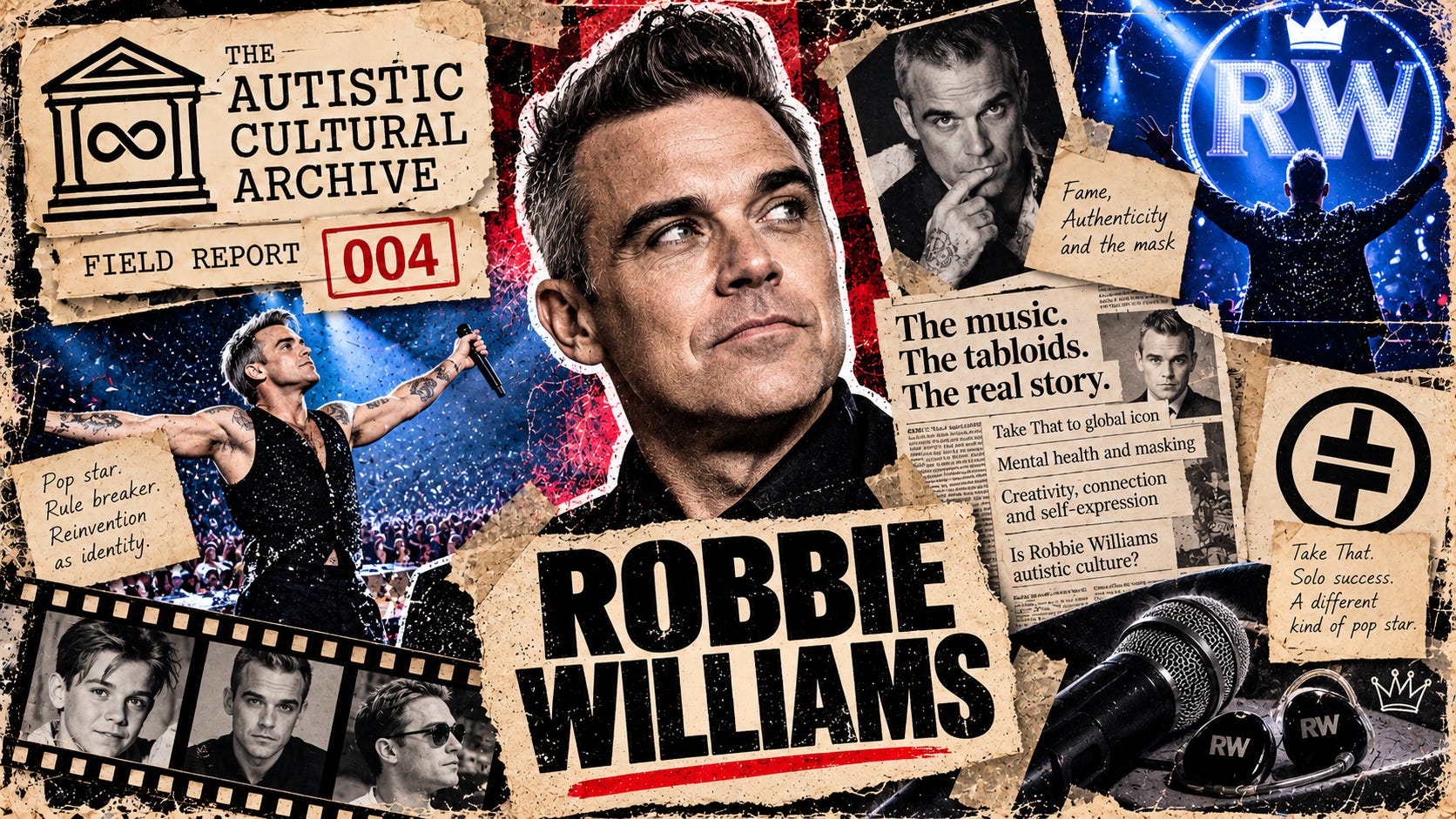
FIELD REPORT [004]
THE AUTISTIC CULTURAL ARCHIVE
ARTIFACT: ROBBIE WILLIAMS
ARCHIVE NO.: ACA-004-ROBBIE-WILLIAMS
PERIOD: 1990 / Present
CLASSIFICATION: AUTISTIC CULTURE
PRIMARY PILLARS: Rhythmic Communicating · Boldly Creating · World Building · Predictably Comforting · Passionate Superfanning
ADDITIONAL TRACES: Norm Challenging · Bottom-Up Processing · Pattern Matching · Game Changing · Justice Seeking
LEAD EXCAVATOR: Simon Scott
ACCOMPANYING EXCAVATOR: Dr Angela Kingdon
LISTEN TO THE EXCAVATION
This Field Report accompanies our excavation of Robbie Williams on This Week in Autistic Culture.
The Archive segment presents the case.
The Field Report contains the evidence locker.
Listen to the full excavation on the Autistic Culture Podcast Network.
Watch the excavation on our YouTube channel.
THE DISCOVERY
What happens when someone becomes one of the most recognisable entertainers in Britain, but that person the world recognises isn’t quite who they believe themselves to be?
The swagger.
The jokes.
The extraordinary confidence.
The outrageous performances.
The stadiums filled with tens of thousands of people singing every word.
The cheeky grin.
The carefully rehearsed banter.
And the character called Robbie Williams.
Because behind that character is somebody else. Robert Williams.
A man who has spoken about anxiety, agoraphobia, masking, difficulties with everyday social interaction and spending extended periods of his life finding the outside world profoundly uncomfortable.
And there’s something particularly interesting about that distinction.
Robbie Williams can stand in front of 80,000 people and command their attention.
Robert Williams has described struggling to leave his bed.
How do those two experiences exist within the same person?
That’s the question at the heart of this week’s excavation.
In August 2026, Robbie publicly disclosed that he had recently discovered he was Autistic.
And when I heard that, I began looking back through his music, performances, interviews and creative projects.
What I discovered was that Robbie Williams had been talking about identity, masking, belonging and the experience of feeling different for decades.
Sometimes directly. Sometimes through the characters he created.
And sometimes through songs that millions of people had been singing without necessarily considering what those songs were communicating.
When I brought Robbie Williams into the Autistic Cultural Archive, I wanted to examine something beyond his disclosure.
I wanted to know whether his work and the extraordinary cultural world surrounding it could be understood through the Ten Pillars of Autistic Culture.
And during our excavation, Angela identified something I hadn’t fully appreciated.
The connection wasn’t simply in the lyrics.
It was in the rhythm.
The performance.
The relationship between the entertainer and the audience.
And the way Robbie Williams had constructed an entire character through which to communicate.
There was also a discovery that connected this excavation directly to one of our previous artefacts.
The Rocky Horror Show.
Because it turns out that Robbie Williams has been telling us who he wanted to be since he was young.
We just needed to know where to look!
THE ARTEFACT
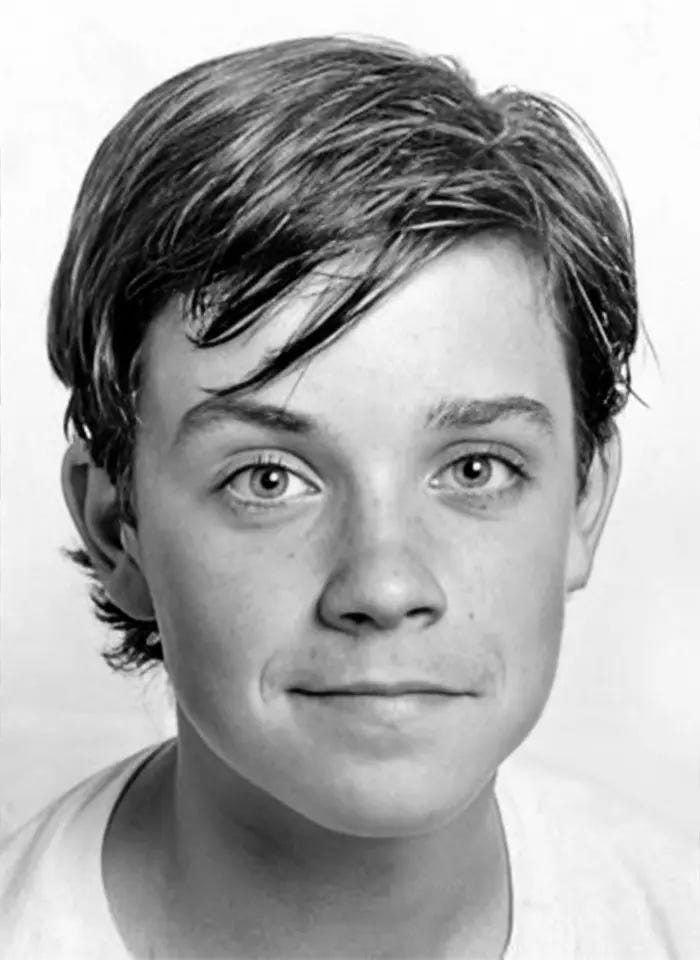
Robert Peter Williams was born on 13 February 1974 in Stoke-on-Trent, England.
His childhood was surrounded by entertainment.
His father, Pete Conway, worked as a singer and comedian on the cabaret circuit, and Robbie grew up with a particular appreciation for performers who could do more than simply sing.
People who could entertain.
Tell jokes.
Hold an audience.
Create a character.
And make an entire room feel as though it was participating in the performance.
In 1990, at just 16 years old, Robbie joined Take That.
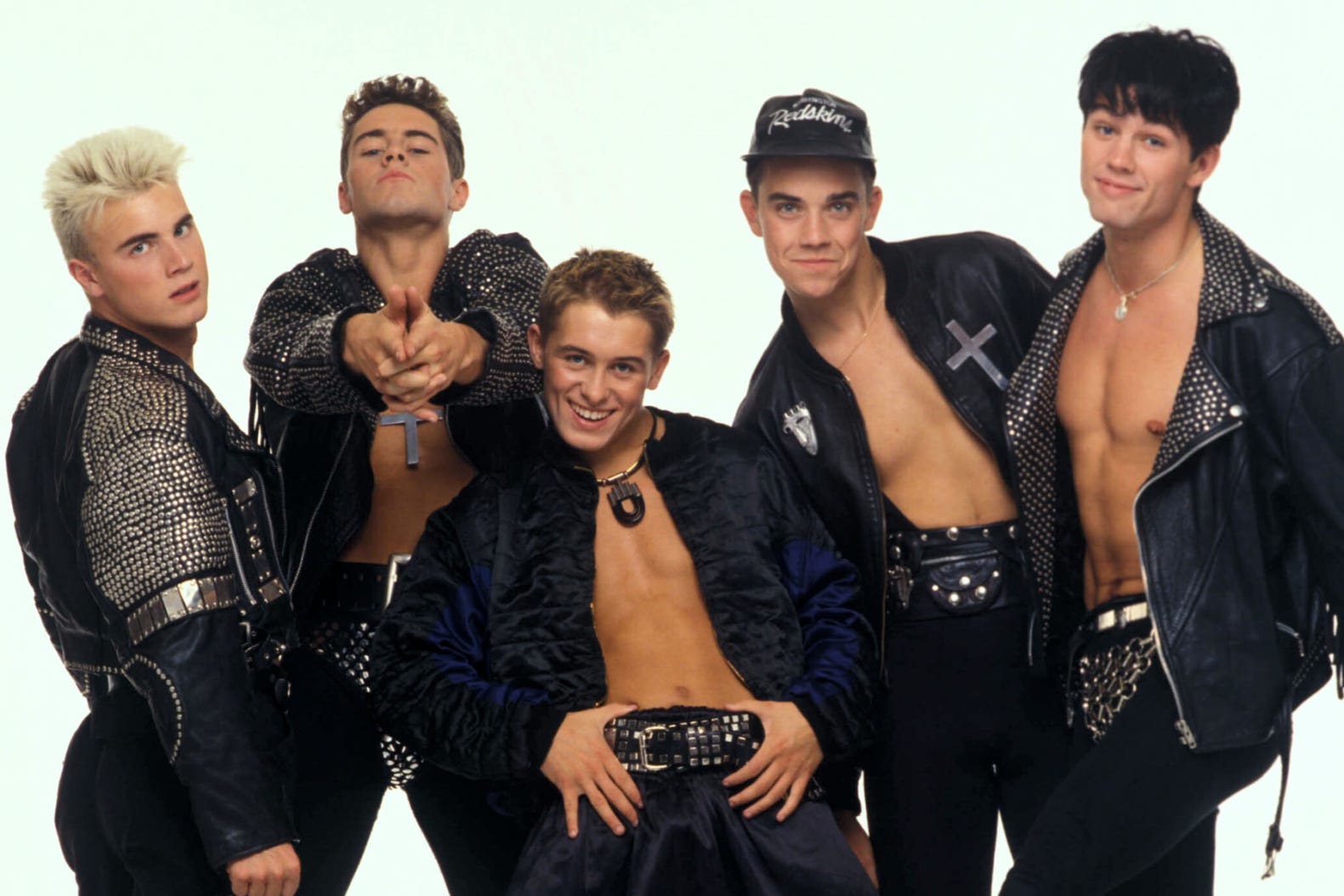
Alongside Gary Barlow, Mark Owen, Howard Donald and Jason Orange, he became part of one of Britain’s biggest pop groups.
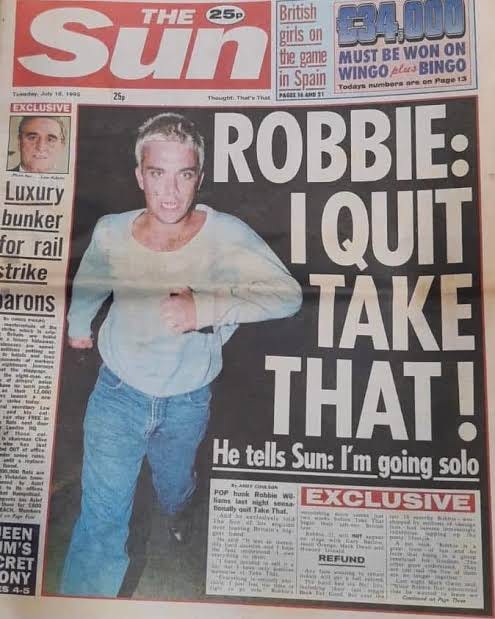
But in 1995, Robbie left the band.
His departure became an enormous story in British popular culture.
And it created something of a template for the boyband member who breaks away, develops a new identity and becomes an enormous solo star.
During our excavation, I mentioned how frequently British entertainment journalism has compared subsequent performers with Robbie.
Harry Styles, for example.
To do a Robbie Williams has become a recognisable cultural idea.
Leave the group.
Become the individual.
And establish a career on your own terms.
Robbie’s solo career began in 1996, and his breakthrough came with Angels.
That was followed by an extraordinary succession of records.
Let Me Entertain You.
Millennium.
Rock DJ.
Strong.
Feel.
Come Undone.
She’s the One.
And many more.
In 2003, he performed three concerts at Knebworth, attracting approximately 375,000 people across the weekend.
He became one of Britain’s defining entertainers.
Not simply because of his records.
But because of what happened when he walked onto a stage.
The audience became part of the show.
And that’s an important distinction for this excavation.
Because during the recording, Angela described watching footage of a huge crowd singing Angels at the Women’s Rugby World Cup.
She didn’t know Robbie’s catalogue particularly well.
But she knew what she was seeing.
Thousands of people communicating with one another through a song.
And she immediately recognised something in that collective experience.
Rhythmic Communicating.
But before we reach the music, we need to understand the person who created it.
THE EXCAVATION
ROBBIE WILLIAMS IS A CHARACTER
WORLD BUILDING · BOLDLY CREATING
One of the most revealing statements Robbie Williams has made about himself concerns his name.
Not his stage name.
His actual name.
“My name is Robert Williams, it’s not Robbie Williams. Robbie Williams gets on stage, Robert Williams raises his kids.”
That is an extraordinary distinction for somebody whose entire career has been built around being recognisable.
Robbie Williams is the entertainer.
Robert Williams is the person who goes home.
And the difference between those two identities is something he has discussed repeatedly.
In October 2025, Robbie described his ability to mask in particularly striking terms.
“I mask, like I’m an Olympian at masking.”
Now, this is where I became interested in World Building.
Because when we discuss World Building in Autistic Culture, we’re not only talking about fictional universes.
We’re talking about constructing environments, identities and systems that operate according to their own internal rules.
A character can be a world.
A performance can be a world.
And a stage can become a place where somebody knows precisely who they are supposed to be.
Robbie has described his stage persona as something approaching a superhero.
A version of himself capable of doing things that the private person finds much more difficult.
And that made me think about the distinction between confidence and performance.
We often assume that somebody who behaves confidently must feel confident.
But those are not necessarily the same thing.
A broadcaster can adopt a presenting voice.
An actor can step into a character.
A comedian can develop a stage persona.
And an Autistic person might learn a repertoire of behaviours that make particular social situations more manageable.
The fact that a behaviour is practised doesn’t necessarily make it dishonest.
It might simply make it possible.
A FIND FROM THE EXCAVATION
During our conversation, Angela made an interesting comparison with Taylor Swift.
She described the distinction between the public performer and the private individual, and the way a person experiencing enormous fame might construct a character to manage it.
That led us to a question.
What happens when the social world somebody inhabits becomes so overwhelming that they need to build another one?
Robbie Williams has spent much of his adult life in environments where people already have expectations about who he is.
They know the jokes.
They know the songs.
They know the character.
And they expect that character to appear.
But what happens when Robert Williams doesn’t feel like Robbie Williams?
What happens when the person the audience wants to see is somebody you have to become?
That’s where World Building and Boldly Creating begin to interact.
The character is the creation.
And the creation becomes a means of navigating the world.
THE MAN WHO WANTED TO BE FRANK-N-FURTER
PASSIONATE SUPERFANNING · BOLDLY CREATING
This was my favourite discovery in the research.
Because it connects Robbie Williams directly to another artefact already sitting in our Archive.
The Rocky Horror Show.
Robbie has spoken about seeing Tim Curry perform as Frank-N-Furter and being profoundly influenced by what he saw.
He didn’t simply admire the performance.
He wanted to become that kind of performer.
And he has described his own stage identity as an expression of Frank-N-Furter.
When I presented that discovery to Angela, her response was immediate.
She recognised the connection between the extravagant stage persona and the act of constructing a character.
She described Robbie as performing a version of what he imagined a rock star should be.
And suddenly, a great deal of his career began to make sense.
The costumes.
The theatrical gestures.
The exaggerated expressions.
The comedy.
The audience participation.
The enormous personality.
Robbie’s influences weren’t confined to Tim Curry.
He grew up admiring Frank Sinatra, Tommy Cooper, Morecambe and Wise, the Two Ronnies and the entertainers he encountered through his father’s work.
And he brought elements of those performers together.
Not simply copying one person.
But assembling a recognisable performance identity from an entire collection of cultural influences.
That is where I see a particularly strong connection with Passionate Superfanning.
WHEN THE THINGS YOU LOVE BECOME PART OF YOU
One of the ideas we return to regularly on the Autistic Culture Podcast is that a passionate interest doesn’t necessarily remain separate from somebody’s identity.
Sometimes it becomes part of who they are.
The films you watch.
The music you listen to.
The characters you admire.
The jokes you repeat.
The voices you imitate.
The performances you return to again and again.
Over time, those cultural artefacts can become part of your own way of communicating.
And Robbie Williams offers a particularly interesting example.
His admiration for entertainers didn’t simply lead him to become a fan.
It helped him become an entertainer.
He took the things he loved and made something new from them.
Which is why this connection is more interesting than simply saying Robbie likes Rocky Horror.
He has described Rocky Horror as part of the foundation of the person he becomes onstage.
And during the excavation, Angela recognised another important distinction.
The character itself belongs to Boldly Creating.
The familiar language, rhythms and interactions of the performance belong to Rhythmic Communicating.
They’re connected. But they’re not identical.
That distinction becomes particularly important when we reach the songs.
THE STADIUM BECOMES THE INSTRUMENT
RHYTHMIC COMMUNICATING
I have spent much of my working life around broadcasting, music and performance.
And one of the things I’ve always admired about Robbie Williams is his ability to make an enormous audience feel involved.
He doesn’t simply perform a song.
He creates an exchange.
A familiar introduction.
A recognisable rhythm.
A pause.
An invitation.
And then the audience responds.
Sometimes he barely needs to sing.
He can hold out the microphone and let thousands of people finish the song for him.
During our excavation, I talked about how his songs seem designed for that experience.
Not just for listening.
For singing together.
Angels is probably the clearest example.
But it appears throughout his catalogue.
And Angela took that observation somewhere I hadn’t expected.
She argued that I had undersold the connection to Rhythmic Communicating.
Because it wasn’t only about the words.
It was about the collective rhythm.
The way the audience knew what came next.
The way a musical phrase could carry meaning beyond its literal content.
And the way thousands of people could participate in a shared communicative experience.
THE COMMUNICATION IS IN THE RHYTHM
Angela connected this to the framework of gestalt language processing and echolalic communication.
In the excavation, she explained that familiar phrases and repeated rhythms can communicate something beyond their literal meaning.
The words might refer to one thing.
But the rhythm, repetition or cultural context might communicate something else.
And that gives us a different way of thinking about Robbie’s stadium performances.
When thousands of people sing Angels together, they aren’t simply reciting lyrics.
They’re participating in a familiar emotional and cultural experience.
They know the melody.
They know when the chorus arrives.
They know when the performer will step back.
And they know when their voices become the performance.
There is predictability within that exchange.
There is rhythm.
There is repetition.
And there is a shared understanding that doesn’t require every participant to explain what the song means to them.
That doesn’t establish Robbie’s own language-processing profile.
But it does make his performances an interesting artefact for examining Rhythmic Communicating.
A FIND FROM THE EXCAVATION
Angela also made a connection I found particularly interesting.
Football.
Robbie is a lifelong Port Vale supporter.
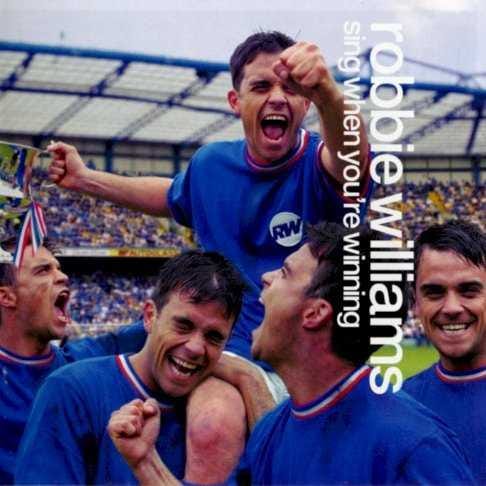
And football crowds have their own extraordinary tradition of collective rhythmic communication.
Chants.
Repetition.
Call and response.
Familiar melodies.
Thousands of people communicating belonging through a shared rhythm.
Once Angela mentioned it, I could hear the connection.
Many of Robbie’s biggest choruses have something of that quality.
They sound as though they belong to a crowd.
And perhaps that’s part of why they work so well in stadiums.
A football terrace and a Robbie Williams concert are very different cultural environments.
But both can turn a collection of individuals into a group communicating through rhythm.
YOU THINK THAT I’M STRONG
RHYTHMIC COMMUNICATING · PREDICTABLY COMFORTING
During my research, I returned to Robbie’s 1998 song Strong.
It’s a song I’ve known for years.
But this time I found myself listening to it differently.
The central refrain is simple.
“You think that I’m strong, you’re wrong.”
It’s a remarkable thing to sing in front of an enormous audience.
Because the audience is watching somebody who appears to have everything.
Fame.
Success.
Confidence.
Money.
Recognition.
And he’s telling them that their perception of him is wrong.
During the recording, I talked about the way the song builds towards its chorus.
The verses are full of detail.
Everyday experiences.
Contradictions.
A sense of life becoming increasingly difficult to manage.
And then the chorus arrives.
Suddenly the song becomes enormous.
The audience joins in.
The words are repeated back to him.
And the apparent confession becomes a stadium anthem.
Angela recognised something painful in that contradiction.
WHEN A CRY FOR HELP BECOMES A COMPLIMENT
During our excavation, Angela spoke about experiences of being in serious distress and trying to communicate that she needed support.
And being told that she was strong.
That she would get through it.
That everything would be fine.
Even when that wasn’t what she was trying to communicate.
She recognised something similar in Strong.
Here was a performer telling an audience that the confident person they believed they were seeing wasn’t necessarily how he experienced himself.
And the audience loved it.
They sang along.
They celebrated him.
They told him how wonderful the song was.
But what if the words were also communicating something much more difficult?
What if the performer was trying to explain that he wasn’t coping?
That doesn’t mean we can establish Robbie’s private intention from a song.
But it raises an important question.
How often do we mistake somebody’s ability to communicate distress beautifully for evidence that they don’t need help?
And how often does visible competence prevent people from recognising invisible difficulty?
That question took us to another song.
I JUST WANT TO FEEL
RHYTHMIC COMMUNICATING · BOLDLY CREATING
Feel was released in 2002 on the album Escapology.
And it’s one of Robbie’s most recognisable songs.
During the recording, I explained that this was the song that had particularly affected me during my research.
Because I’d known it for years.
I knew the words.
I knew the melody.
I knew exactly when the chorus arrived.
But I wasn’t sure I’d ever properly considered what it was saying.
It’s a song about loneliness.
Uncertainty.
Wanting connection.
Trying to understand your own thoughts.
And wanting to experience love without the fear and confusion that can accompany it.
What struck me was how closely some of those themes resonated with my own experience of being highly masked during my twenties.
Always preparing.
Always anticipating.
Always imagining how an interaction might unfold before it had even happened.
A FIND FROM THE EXCAVATION
Angela asked me about one particular line in Feel.
The idea of seeing yourself arriving somewhere before you’ve actually arrived.
What did that mean to me?
My answer was scripting.
Because I recognised the experience of mentally rehearsing a situation before entering it.
Imagining the conversation.
Anticipating the response.
Planning what I might say.
And sometimes preparing for a relationship or interaction to go wrong before it had even begun.
That was how I experienced much of my twenties.
And hearing those themes in a song I’d grown up with was unexpectedly emotional.
But there was another part of the discovery.
When I sing along to Feel, I’m not simply listening to Robbie Williams express something.
I’m expressing something too.
The song becomes a shared language.
He sings about an experience.
I recognise something of my own experience.
And we meet somewhere in the middle.
That’s cultural evidence.
Not diagnostic evidence.
Not proof of what Robbie was thinking when the song was written.
But evidence of how a piece of culture can provide a language for experiences that might otherwise be difficult to communicate.
THE CASHMERE KAFTAN AND THE KETTLE CHIPS
PREDICTABLY COMFORTING
Now we come to one of the more unusual items in the evidence locker.
A cashmere kaftan.
A packet of Kettle Chips.
And a bed.
For somebody associated with enormous stadium performances and extravagant public behaviour, Robbie has spoken remarkably openly about finding ordinary life difficult.
He has experienced severe agoraphobia.
He has described spending extended periods away from public life.
And he has talked about the extraordinary comfort of remaining in familiar surroundings.
One of his descriptions of that period involved wearing a cashmere kaftan, eating Kettle Chips, growing a beard and staying indoors.
He has also described his bed as his comfort zone.
And the world outside it as his discomfort zone.
There is something very recognisable here.
Familiar clothes.
Familiar food.
Familiar surroundings.
Reduced uncertainty.
A place where the demands of the outside world become more manageable.
And I immediately saw a possible connection with Predictably Comforting.
But Angela complicated that interpretation.
WHEN COMFORT BECOMES COMPLICATED
During the recording, Angela described Robbie’s relationship with comfort and predictability as something shaped by trauma.
That distinction matters.
Because the purpose of Predictably Comforting isn’t to celebrate distress.
It’s to recognise the importance of familiarity, repetition and reliable environments within Autistic Culture.
There can be genuine pleasure in eating the same food.
Wearing the same clothes.
Returning to the same place.
Knowing exactly what to expect.
But there is a difference between choosing a familiar environment because it brings you joy and feeling unable to leave that environment because the world outside has become overwhelming.
Robbie’s agoraphobia is a significant part of his publicly described experience.
We shouldn’t simply reclassify it as an Autistic preference for staying home.
And we shouldn’t assume that every familiar behaviour has the same motivation.
But his story does invite us to consider what happens when somebody’s need for comfort becomes entangled with anxiety, fame, public scrutiny and the extraordinary pressure of maintaining a character.
THE STADIUM AND THE STRANGER
This is perhaps the strangest contrast in the entire excavation.
Robbie Williams can perform for tens of thousands of people.
Yet Robert Williams has described finding ordinary social interaction profoundly difficult.
And I think part of the answer may lie in the structure of performance.
A concert is rehearsed.
There is a set list.
There are familiar musical cues.
There are repeated jokes.
There are recognisable audience responses.
And everybody knows why they’re there.
An unexpected encounter with a stranger offers none of those guarantees.
During our conversation, I mentioned Robbie’s return to Take That.
He described initially being able to hide in plain sight, behind the other members of the group.
That is a particularly interesting description.
Because returning to an enormous stage might seem like an unlikely way to escape social pressure.
But the structure of a group performance could also provide something that an individual performance doesn’t.
Other people sharing the attention.
Familiar roles.
A predictable format.
A way to participate without always being the sole focus.
Once again, the question isn’t whether these experiences establish autism.
Robbie has already spoken about discovering he is Autistic.
The question is what his experiences tell us about the relationship between public confidence, private difficulty and the importance of predictable environments.
THE POP STAR WHO BECAME A CHIMPANZEE
WORLD BUILDING · BOLDLY CREATING · NORM CHALLENGING
In 2024, Robbie Williams’s life became the subject of the film Better Man, directed by Michael Gracey.
But this wasn’t a conventional musical biopic.
Because Robbie wasn’t represented onscreen by an actor who looked like him.
He was represented by a CGI chimpanzee throughout the film.
Now, I find that an extraordinary creative decision.
Robbie Williams is one of Britain’s most recognisable entertainers.
His face.
His mannerisms.
His expressions.
His public persona.
All of those things have been central to his career.
And yet the film tells his story through a character that doesn’t look human.
During our excavation, Angela was immediately interested in that choice.
Because the experience of feeling different from the people around you can be profoundly familiar to Autistic people.
Feeling as though everybody else understands a social world that you somehow missed the instructions for.
Feeling like an outsider.
Or feeling as though you are performing humanity rather than simply participating in it.
The film offers an extraordinary visual metaphor through which to explore those feelings.
But there’s another part of this discovery.
Robbie has described finding it difficult to see himself represented directly in his own story.
The chimpanzee created a degree of separation, and that distance became part of the storytelling.
THE MONKEY WAS ALREADY THERE
One of the discoveries that fascinated me was that more than twenty years before Better Man, Robbie released a song called Me and My Monkey.
It’s on Escapology.
And it is a wonderfully strange piece of storytelling.
A man.
A monkey.
A journey to Las Vegas.
A collection of detailed images, characters and increasingly surreal events.
It isn’t a conventional three-minute pop song.
It’s an extended narrative with its own internal world.
And that makes it a particularly interesting example of World Building.
Robbie takes a strange premise and follows it.
He creates characters.
Places them in a setting.
Gives them dialogue.
And builds an entire story around the relationship between them.
Then, two decades later, a chimpanzee becomes the central visual device in the film about his life.
The two works aren’t necessarily intended to form a single narrative.
But the connection is too interesting to ignore.
And it offers a particularly useful reminder about the Archive.
Sometimes an artefact becomes more interesting when we place it beside another artefact.
A song from 2002.
A film from 2024.
And a performer who has spent decades exploring the difference between himself and the characters he creates.
A FIND FROM THE EXCAVATION
During the conversation, Angela connected the film to the experience of feeling fundamentally different.
And that led us into a discussion about the cost of living without understanding why the world feels so difficult.
There is a temptation to look at an unusual creative decision and immediately celebrate its originality.
And Better Man certainly deserves attention as an unconventional piece of filmmaking.
But the emotional material behind the story is considerably more complicated.
Which is why Boldly Creating doesn’t necessarily mean that the person doing the creating is happy.
Sometimes the art is a way of expressing something difficult to live with.
And sometimes the most imaginative work emerges from an attempt to make sense of experiences that don’t yet have an adequate explanation.
THE PASSIONS THAT NEVER WENT AWAY
PASSIONATE SUPERFANNING
There were several pieces of research I couldn’t explore in detail during the recording.
And this is where the Evidence Locker becomes particularly useful.
Because Robbie’s passionate interests extend well beyond the entertainers who influenced his stage persona.
PORT VALE
Robbie grew up in Stoke-on-Trent.
And his relationship with Port Vale Football Club has remained an important part of his life.
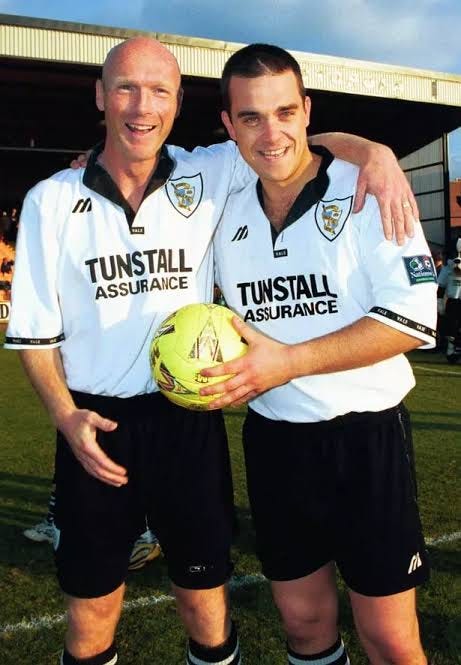
He has supported the club since childhood.
He became a shareholder.
He has held an honorary position with the club.
And he has continued to celebrate its place in his life.
One of the most revealing things he’s said about Port Vale concerns the Railway Paddock at Vale Park.
He has described it as part of the community that raised him.
And I think that tells us something important.
Because a passionate interest isn’t always simply a hobby.
Sometimes it is connected to memory.
Identity.
Belonging.
A particular place.
And the person you were before the rest of your life changed.
Robbie Williams has experienced extraordinary fame.
He has lived a life that most people can barely imagine.
But Port Vale connects him to Stoke-on-Trent.
To his childhood.
And to a community that existed before the enormous public character of Robbie Williams was created.
UFOs AND THE UNUSUAL
Robbie has also spent years exploring UFOs, unexplained phenomena and paranormal subjects.
This isn’t simply a passing celebrity interest.
He has pursued the subject through research, interviews and involvement in discussions about unusual experiences.
He has described himself as a student of the unusual.
And this gives us another example of Passionate Superfanning.
A sustained curiosity.
A desire to investigate.
An interest that continues despite other people’s expectations about what a famous pop star should be interested in.
We don’t have to share somebody’s conclusions about unexplained phenomena to recognise the intensity of their interest.
And we don’t have to assume that every intense interest is Autistic.
But taken alongside Robbie’s relationship with performers, football and other cultural artefacts, it adds another dimension to the picture.
THE THINGS THAT GROUND US
During our excavation, I suggested that Robbie’s childhood cultural influences might provide a connection to the person he was before fame.
The comedians.
The cabaret performances.
The music.
The football.
The places.
The familiar voices.
And the people whose work he admired.
Those things didn’t disappear when he became famous.
They became part of the character.
And perhaps part of what helped him remain connected to Robert Williams while the world became increasingly interested in Robbie.
THE EVIDENCE WE DIDN’T FULLY EXCAVATE
BOTTOM-UP PROCESSING · PATTERN MATCHING · JUSTICE SEEKING
There are several additional items worth keeping in the archive.
THE BOY WHO THOUGHT HE WAS STUPID
Robbie has spoken about growing up with dyslexia, dyscalculia and ADHD.
He has described leaving school believing that he wasn’t intelligent.
And he has discussed wanting to return to education and demonstrate that those early judgements didn’t define his abilities.
I find this particularly interesting.
Because the experience of being misunderstood by an educational system can remain with somebody long after they have demonstrated extraordinary abilities elsewhere.
Robbie Williams has achieved things that very few people in the world will ever achieve.
But that doesn’t necessarily erase the experience of being a child who believed he was stupid.
This raises questions about Bottom-Up Processing, different learning styles and the assumptions we make about intelligence.
It also raises a possible connection to Justice Seeking.
Not necessarily in the sense of a public campaign.
But in the desire to challenge a judgement that has followed somebody for decades.
THE NETFLIX DOCUMENTARY
In 2023, Netflix released the documentary series, Robbie Williams.
The production drew on a vast archive of footage documenting his career.
And one of its most interesting features is the way Robbie revisits his own history.
Watching.
Remembering.
Reconsidering.
Trying to understand what happened.
The production reportedly had access to approximately 30,000 hours of archive material. That does not mean Robbie personally watched 30,000 hours.
What interests me is the process.
Returning to individual experiences.
Looking for connections.
Examining how events that once seemed isolated might fit into a larger story.
There are possible connections here to Bottom-Up Processing and Pattern Matching.
But there’s also a rather wonderful parallel with what we’re doing.
Robbie is excavating his own past.
Looking through the evidence.
And attempting to make sense of the person he became.
THE ART BEYOND THE MUSIC
Robbie’s creative work also extends into visual art, different musical genres and projects outside the conventional expectations of a mainstream pop career.
There are connections worth exploring here to Boldly Creating and Norm Challenging.
He hasn’t remained inside a single artistic identity.
And perhaps that’s another important part of the Robbie Williams story.
The character might be familiar.
But the creative work has never been entirely predictable.
FIELD NOTE — THE ROSETTA STONE
During our previous excavations, we’ve begun to recognise that the Ten Pillars don’t always appear in isolation.
They interact.
One cultural pattern can support another.
And sometimes the interaction produces something we wouldn’t have recognised by examining the individual Pillars separately.
Robbie Williams gives us a particularly interesting example.
Passionate Superfanning provides the influences.
Tim Curry.
Frank Sinatra.
British comedians.
His father’s cabaret performances.
Those influences help create a character.
That’s Boldly Creating.
The character becomes an entire performance identity.
That’s World Building.
And the performance relies on familiar rhythms, musical structures and audience participation.
That’s Rhythmic Communicating.
Then we find something else.
The person behind that character has spoken about needing familiarity, comfort and predictable environments.
That’s where Predictably Comforting enters the picture.
But Angela identified a complication.
What happens when the familiar environment is no longer simply a source of pleasure?
What happens when it becomes a refuge from a world that feels impossible to manage?
And what happens when the character somebody has created is capable of extraordinary things, but the person maintaining it is struggling?
That was the discovery I found most significant.
Because the Pillars don’t simply help us identify familiar cultural behaviours.
They also help us distinguish those behaviours from the pain that may surround them.
Boldly Creating isn’t the same thing as masking out of fear.
Predictably Comforting isn’t the same thing as being unable to leave the house.
Rhythmic Communicating isn’t the same thing as having no other way to ask for help.
And Passionate Superfanning isn’t simply a distraction from distress.
Those cultural experiences can exist independently of suffering.
But for somebody who has spent much of their life without understanding their neurotype, the two can become entangled.
Angela described Robbie’s relationship with comfort as something shaped by trauma.
And that led us towards the most important finding of the excavation.
Trauma is not a Pillar of Autistic Culture.
The culture is the creativity.
The communication.
The passion.
The world-building.
The familiar rituals.
The joy of recognising something that makes sense to you.
The pain may be part of somebody’s experience.
But it isn’t what makes that experience Autistic Culture.
And perhaps the Rosetta Stone helps us separate those things.
Not perfectly.
Not in every case.
But enough to ask a different question.
What might Robbie Williams’s life have looked like if the person behind the character had understood himself earlier?
And what might the next chapter look like now that he does?
THE AUDIENCE BECOMES PART OF THE ARTEFACT
RHYTHMIC COMMUNICATING · PASSIONATE SUPERFANNING
There’s one more part of this story that deserves attention.
The audience.
Because Robbie Williams isn’t simply somebody who creates cultural artefacts.
He’s somebody whose work has become part of other people’s lives.
During the recording, I realised how deeply his music was connected to my own childhood.
I had been researching his songs for days.
Listening.
Reading.
Watching performances.
And repeatedly finding myself knowing every word.
Even songs I hadn’t consciously thought about for years.
Eventually, I spoke to my mum.
And she reminded me that Robbie’s CDs had been part of our journeys to school.
His music had been there all along.
In the car.
In the background.
Part of the everyday culture I grew up with.
I’d forgotten the circumstances. But I hadn’t forgotten the songs.
And I found that unexpectedly moving.
Because I began the excavation by researching somebody else’s cultural identity.
And ended up discovering something about my own.
THE SONG BECOMES YOUR SONG
This is one of the things I find particularly interesting about music.
A song begins with its creators.
But once it enters the world, it becomes part of other people’s experiences.
They attach memories to it.
Relationships.
Places.
Emotions.
Different stages of their lives.
And sometimes the meaning they find in the song is not identical to the meaning its creators intended.
That doesn’t necessarily make their interpretation wrong.
It makes the song part of a shared culture.
When I listen to Feel, I recognise something about my twenties.
When Angela hears Strong, she recognises the pain of telling people you need help and being told how strong you are.
And when thousands of people sing Angels, they participate in a collective experience that belongs to all of them.
That is what I meant during the recording when I described Robbie’s music as collaborative.
He’s expressing something.
We’re expressing something.
And the song gives us a shared language.
There is also Passionate Superfanning on the audience’s side.
I mentioned an Autistic friend from Stoke-on-Trent for whom Robbie is a significant interest.
Someone who follows his career and attends his concerts.
And that made me think about the extraordinary relationship between the person creating the culture and the people who find themselves within it.
Robbie’s passion for other performers helped create Robbie Williams.
And Robbie Williams has become a passionate interest for other people.
The cultural influence continues.
One generation of performers inspires another.
One artefact becomes part of another person’s identity.
And the archive keeps growing.
WHAT THE EVIDENCE DOESN’T TELL US
There are important distinctions to preserve.
Robbie Williams has publicly described discovering he is Autistic.
That is different from our previous excavation of Elizabeth Holmes, where we had no evidence that the person we were discussing identified as Autistic.
But Robbie’s disclosure doesn’t mean every aspect of his life can be explained through autism.
We cannot assume that his agoraphobia was caused by autism.
We cannot establish the precise motivation behind his stage persona.
We cannot know whether a particular performance routine was developed for emotional regulation, artistic effect, professional convenience or some combination of those things.
We cannot determine his language-processing profile from the structure of his songs.
And we cannot treat lyrics as direct evidence of the private experiences of their performers.
Songs are creative works.
Many have multiple writers.
They can contain autobiographical material, invented characters, metaphors and perspectives that don’t necessarily belong to one person.
Nor can we assume that unusual artistic decisions, intense interests or a preference for familiar environments are exclusively Autistic experiences.
The Pillars are a cultural framework.
They are not diagnostic criteria.
There is also an important distinction between recognising distress and celebrating culture.
Robbie has spoken about addiction, anxiety, depression and agoraphobia.
Those experiences deserve to be taken seriously on their own terms.
We shouldn’t romanticise them because they appear in the life of an extraordinary artist.
And we shouldn’t suggest that suffering is necessary for creativity.
The purpose of the Archive isn’t to turn somebody’s pain into a cultural achievement.
It’s to examine the culture that exists alongside that pain.
And to ask what might become possible when the two are no longer treated as inseparable.
CLOSING THE EXCAVATION
When I began researching Robbie Williams, I thought I was going to be examining the life of a British pop star who had recently spoken about discovering he was Autistic.
I expected to find some interesting connections.
Perhaps some familiar routines.
A few intense interests.
Some unusual creative decisions.
And songs that might resonate differently when considered through the Ten Pillars.
What I found was considerably more complicated.
I found somebody who had spent decades creating a character.
A character influenced by the entertainers he loved growing up.
A character who could command an enormous audience.
A character who could make thousands of people sing together.
And a character whose extraordinary confidence existed alongside a private life that Robbie has described very differently.
I found The Rocky Horror Show hiding inside Let Me Entertain You.
I found the collective rhythm of football crowds inside stadium choruses.
I found a song about apparent strength that Angela recognised as a possible expression of distress.
I found a song about loneliness that reminded me of my own twenties.
I found a cashmere kaftan, Kettle Chips and a bed.
And I found a chimpanzee.
But perhaps the most important thing I found was the distinction Angela made towards the end of our conversation.
She could see the Pillars.
Clearly.
Rhythmic Communicating.
Boldly Creating.
World Building.
Predictably Comforting.
Passionate Superfanning.
But she could also see the pain.
And she didn’t want us to confuse the two.
That is an important distinction for this Archive.
Because we are trying to understand Autistic Culture.
Not simply collect examples of Autistic suffering.
Robbie Williams has created an extraordinary body of work.
And his music has become part of the lives of millions of people.
But perhaps the most interesting chapter of his story is the one that comes after understanding himself.
When Robbie spoke publicly about discovering he was Autistic, he described loving that discovery because it explained so much.
I hope that explanation brings him more than an understanding of the difficult experiences.
I hope it brings him the opportunity to recognise the joy in the culture he’s already been creating.
Because perhaps Robert Williams doesn’t need to stop being Robbie Williams.
Perhaps he can simply understand the relationship between them differently.
And perhaps the next chapter doesn’t need to involve quite so much pain.
ACCOMPANYING EXCAVATOR’S NOTES
Dr Angela Kingdon
What struck me most about Robbie Williams wasn’t simply the number of Pillars Simon identified.
It was the way they interacted.
The character.
The performance.
The music.
The audience.
And the enormous difference between the person the world sees and the person Robbie has described himself as being.
I was particularly interested in Rhythmic Communicating.
Because when Simon showed me the stadium performances, I could see something that went beyond ordinary audience participation.
The communication wasn’t simply in the lyrics.
It was in the rhythm.
The repetition.
The familiar musical phrases.
And the way thousands of people were communicating together.
That is a powerful cultural experience.
I also saw Boldly Creating in the construction of Robbie Williams himself.
The accents.
The characters.
The theatricality.
The influence of Tim Curry.
The decision to take elements of admired performers and create a new identity from them.
And I could see Predictably Comforting in Robbie’s relationship with familiar environments.
But that was where I became uncomfortable.
Because I don’t want us to confuse the things that make Autistic Culture joyful with the things that happen when Autistic people spend their lives feeling misunderstood.
There is a great deal of trauma in Robbie’s story.
And I think that matters.
Not because trauma is a Pillar.
It isn’t.
But because the experience of living without understanding your neurotype can have enormous consequences.
I would love to see Robbie embrace the cultural parts of himself.
The creativity.
The passions.
The communication.
The things that make him who he is.
Because when I look at his story, I see so much pain.
And I would love to see more Autistic joy.
CLASSIFICATION
After examining the evidence, we’re filing Robbie Williams in the Autistic Cultural Archive.
Not because every aspect of his career can be explained through autism.
And not because every song contains a hidden Autistic message.
But because his performances, creative work, cultural influences and publicly described experiences reveal substantial connections to the Ten Pillars of Autistic Culture.
The strongest evidence isn’t a single behaviour.
It’s the way the connections interact.
Passionate Superfanning.
The performers who shaped his understanding of entertainment.
Boldly Creating.
The character he built from those influences.
World Building.
The identity and performance environment in which that character exists.
Rhythmic Communicating.
The songs, familiar phrases, musical structures and extraordinary collective communication of his audiences.
Predictably Comforting.
The importance of familiarity and the complicated relationship between comfort, withdrawal and distress.
And through all of it, a person who has spent decades trying to understand the difference between how the world sees him and how he experiences himself.
The archive also contains a complication.
Autistic Culture and Autistic trauma can exist within the same story.
But they are not the same thing, and recognising that distinction may be the most important discovery we’ve made.
ARTIFACT: ROBBIE WILLIAMS
CLASSIFICATION: AUTISTIC CULTURE
PRIMARY PILLARS: Rhythmic Communicating · Boldly Creating · World Building · Predictably Comforting · Passionate Superfanning
ADDITIONAL TRACES: Norm Challenging · Bottom-Up Processing · Pattern Matching · Game Changing · Justice Seeking
ARCHIVE NO.: ACA-004-ROBBIE-WILLIAMS
LEAD EXCAVATOR: Simon Scott
ACCOMPANYING EXCAVATOR: Dr Angela Kingdon
STATUS: Excavation Complete
Robbie Williams: An Autistic Culture Artefact.
SUBMIT YOUR EVIDENCE
An archive is never finished.
So now we’re handing the brushes to you.
What did we miss?
Were you a Robbie Williams fan growing up?
Have you watched Better Man or the Netflix documentary?
Did either change the way you understood Robbie Williams?
Have you ever felt as though you needed to create a character to navigate a particular part of your life?
Do you recognise the distinction between somebody who can perform confidently and somebody who finds everyday social interaction difficult?
Have you ever used music to communicate something you couldn’t explain in ordinary conversation?
And what about Robbie’s songs?
Does Strong resonate with your experience of being told you’re coping when you’re actually struggling?
Does Feel remind you of a particular time in your life?
Do you hear something different in those songs after listening to our excavation?
What do you make of the connection between Robbie Williams and The Rocky Horror Show?
And do you see the relationship between Passionate Superfanning, Boldly Creating and World Building in the character he created?
There’s also a more difficult question.
How do we recognise Autistic Culture in somebody’s life without confusing it with the trauma they may have experienced?
And what might Autistic joy look like in the next chapter of Robbie Williams’s story?
Which Pillar do you think appears most strongly here?
And is there another Robbie Williams song, performance or cultural artefact that belongs in our evidence locker?
Leave your field notes in the comments.
The Archive is never finished.