
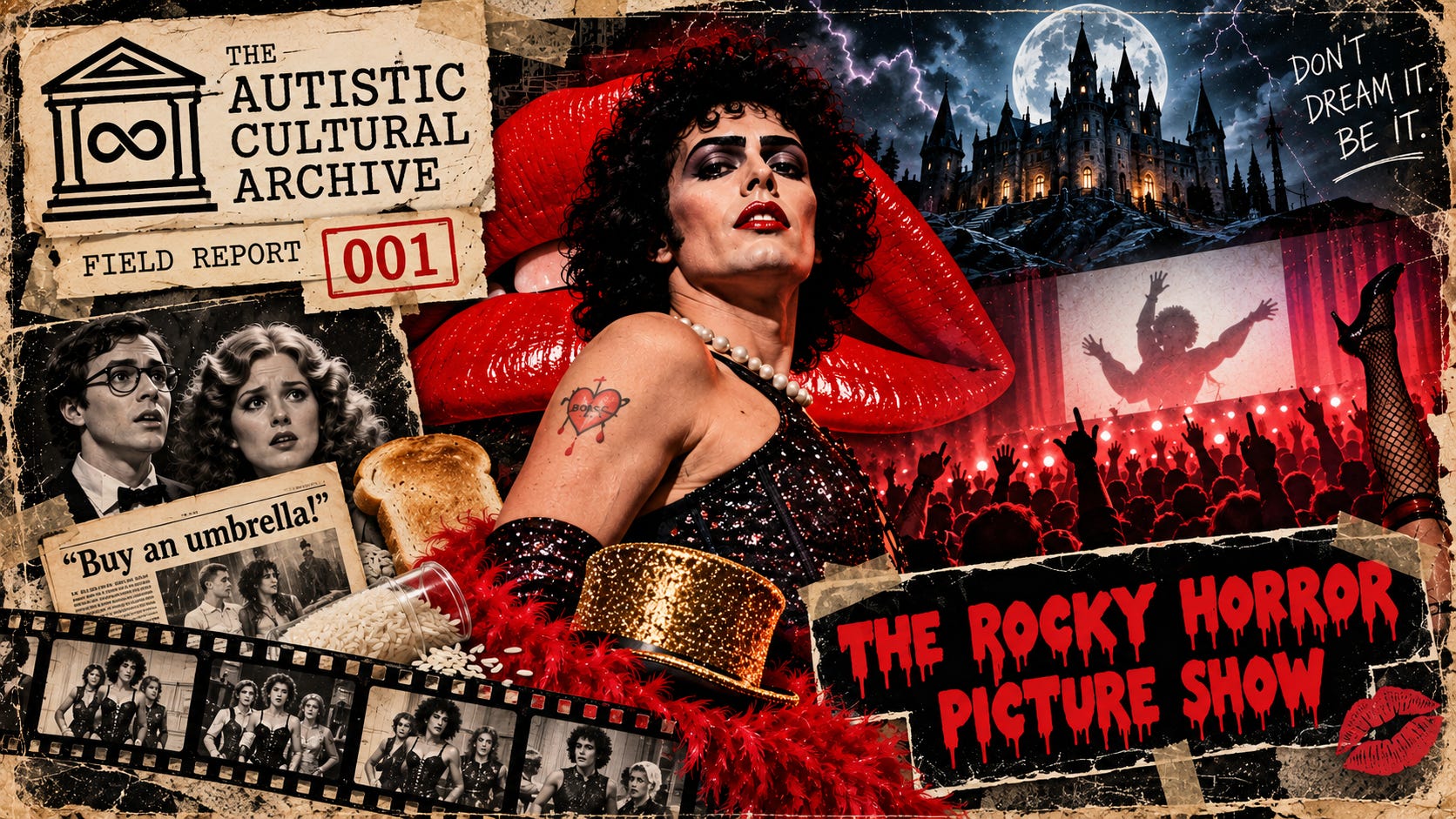
FIELD REPORT [001]
AUTISTIC CULTURAL ARCHIVE
ARTIFACT: ROCKY HORROR
ARCHIVE NO: ACA-001-ROCKY-HORROR
PERIOD: 1973 / Present
CLASSIFICATION: AUTISTIC CULTURE
PRIMARY PILLARS: Rhythmic Communicating · Predictably Comforting · Passionate Superfanning
ADDITIONAL TRACES: Pattern Matching · Norm Challenging · World Building · Boldly Creating
LEAD EXCAVATOR: Dr Angela Kingdon
ACCOMPANYING EXCAVATOR: Simon Scott
LISTEN TO THE EXCAVATION
This Field Report accompanies our excavation of Rocky Horror on This Week in Autistic Culture.
The Archive segment presents the case.
The Field Report contains the evidence locker.
Listen to the full excavation on the Autistic Culture Podcast Network.
Watch the full excavation on our YouTube channel: https://www.youtube.com/@AutisticCulturePodcast
THE DISCOVERY
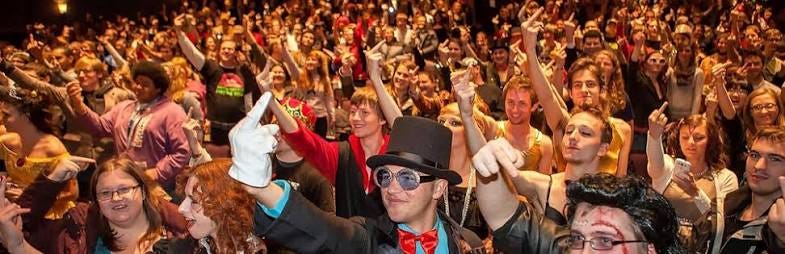
From the outside, a midnight screening of The Rocky Horror Picture Show looks like absolute chaos.
People shout at the screen.
They dress as the characters.
They throw rice and toast around the cinema.
People perform the film underneath the film.
Everyone gets up and dances.
There are people in fishnets.
There are people who have been coming every Friday night for years.
And somewhere in the middle of all of this, somebody will shout something apparently nonsensical at exactly the right moment and an entire cinema full of people will know precisely what they’re talking about.
But that’s the first clue.
Because once you start excavating Rocky Horror, you discover something strange.
The chaos has rules.
There are established callbacks.
There are expected responses.
There are costumes.
There are props.
There are specific moments when those props are used.
There are recurring screenings at recurring times.
There are shadow casts.
There are instructions for first-timers.
There are rules about what can and cannot be thrown.
There are local traditions.
There are international traditions.
There are lines which have been repeated for decades.
And there are even rules telling you that you don’t have to participate if you don’t want to.
What appears from the outside to be an environment in which everybody is doing whatever they like turns out to contain an extraordinarily elaborate social script.
And that script has been constructed not primarily by the people who created Rocky Horror.
It was constructed by the audience.
Over fifty years, the people who loved Rocky Horror built something around it.
A language.
A ritual.
A set of traditions.
A way of communicating.
A way of participating.
And, for many people who had struggled to find one elsewhere, a community.
So perhaps the most interesting thing recovered during this excavation isn’t simply evidence of Autistic Culture inside Rocky Horror.
It’s what happened around it.
Because the audience didn’t simply become fans of Rocky Horror.
They built a culture.
THE ARTEFACT
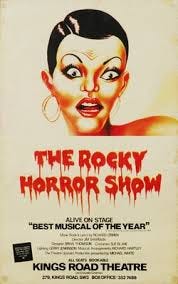
Rocky Horror begins with Richard O’Brien.
Born in Cheltenham, Gloucestershire, O’Brien spent part of his childhood in New Zealand before eventually returning to Britain as a young adult. Before becoming a writer, his working life included a collection of apparently disconnected attempts at finding somewhere he fitted: farming, barbering, driving lorries, stunt work and acting classes.
Then, at thirty, he wrote a small musical.
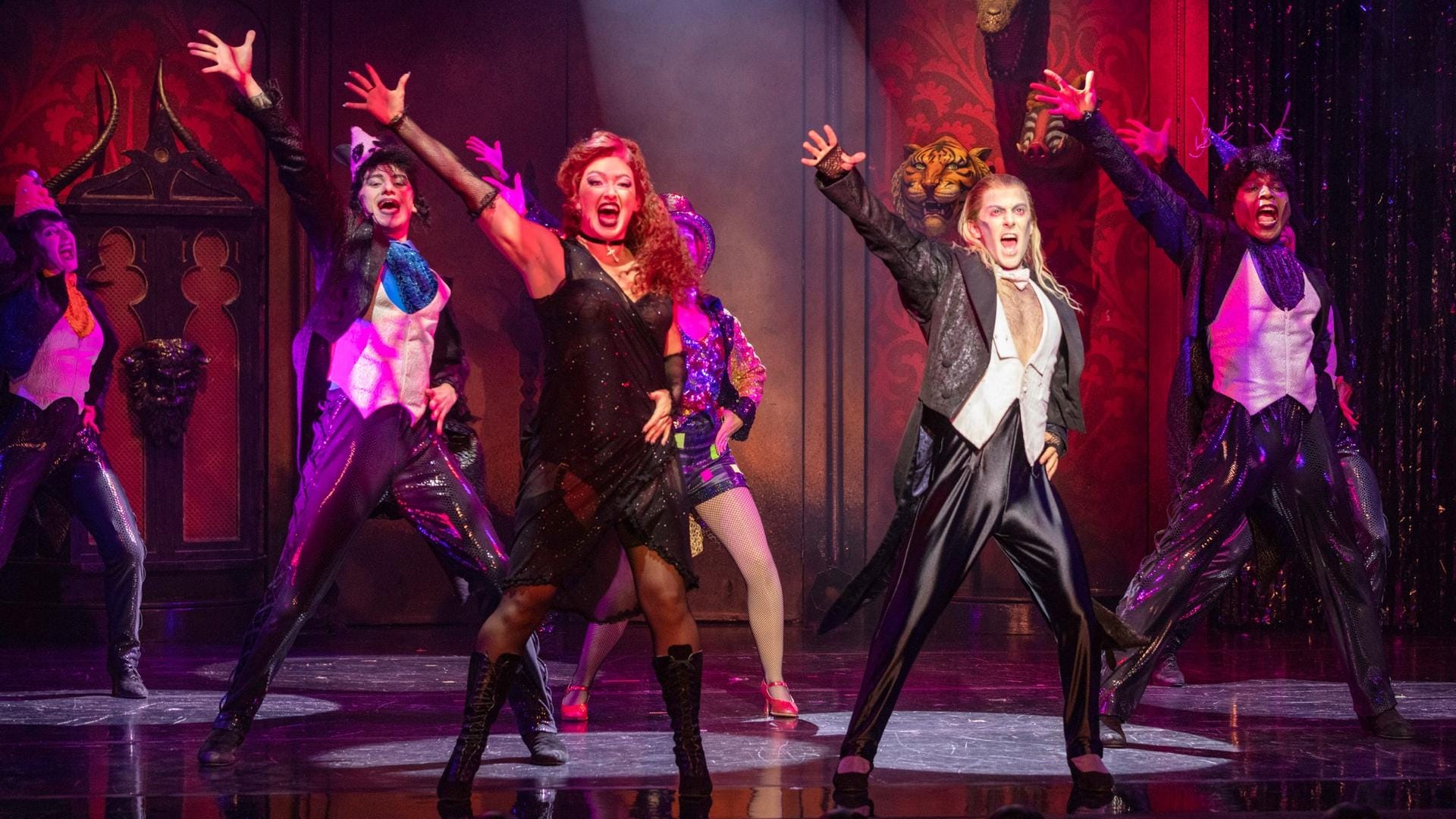
The Rocky Horror Show opened in London in 1973 in a tiny 63-seat space at the Royal Court Theatre.
Two years later, it became The Rocky Horror Picture Show.
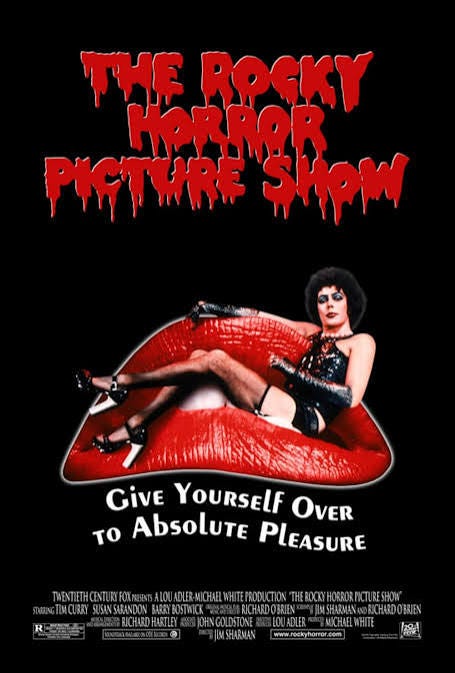
The story itself is gloriously ridiculous.
Brad and Janet, an extraordinarily conventional young couple, suffer a breakdown on a dark and stormy night and seek help at a nearby castle.
Inside, they encounter Dr Frank-N-Furter and the Transylvanians.
There are aliens.
There is sex.
There is murder.
There is a man being created in a laboratory.
There is Meat Loaf.
There is a floor show.
There is an inexplicable amount of lingerie.
And there is, obviously, the Time Warp.
But the plot eventually became almost secondary to what happened around it.
The film initially struggled. Yet audiences began returning. And returning. And returning.
What developed around those screenings became a participatory culture which would survive for decades.
Shadow casts performed beneath the screen.
Audiences dressed as characters.
Props became incorporated into screenings.
People developed responses to lines in the film.
Local clubs emerged.
And a film that could have disappeared became something else entirely.
Not simply a movie people watched. A ritual people performed.
ARTEFACT RECOVERED: ROCKY HORROR
THE EXCAVATION
THE CHAOS HAS A SCRIPT
One of the first pieces of evidence recovered from Rocky Horror is a contradiction.
It is simultaneously one of the least conventional cinema experiences imaginable and one of the most structured.
Midnight screenings developed repeated scripts, callbacks, costumes and rituals.
There are rules.
The official fan guidance discussed during our excavation explicitly tells newcomers that there is no expectation to participate if they are uncomfortable. Other groups have developed protocols governing what audiences can throw and how they should throw it.
That matters. Because the apparent chaos isn’t actually unpredictable.
If you know Rocky Horror, you know what’s coming.
The same film.
The same songs.
The same moments.
The same dance.
The same characters.
The same cues.
Often the same theatre.
Often at the same time.
And increasingly, the same responses.
That gives us our first major finding.
AUTISTIC CULTURE FINDINGS
PREDICTABLY COMFORTING
Rocky Horror demonstrates that predictability doesn’t have to mean quietness.
Predictability can be loud.
It can involve fishnets and rice and people screaming at a cinema screen at midnight.
The comfort doesn’t necessarily come from the environment being calm.
It comes from knowing the pattern.
You know when the song begins.
You know when the audience responds.
You know when everyone stands up.
You know the dance.
You know what you’re allowed to do.
You know what everyone else is about to do.
And because the framework is predictable, something apparently contradictory becomes possible: the structure creates room for freedom.
You can be ridiculous because there are rules governing the ridiculousness.
You can participate without having to invent the social interaction from scratch.
And once you understand the system, you can play inside it.
SOMEBODY SHOUTS AT THE SCREEN
Perhaps the most extraordinary part of Rocky Horror culture is that nobody originally designed this audience language.
It emerged.
During the excavation, we traced one of the earliest famous callbacks to Louis Farese Jr., a Staten Island kindergarten teacher attending a screening in 1976.
Brad and Janet are stranded in the rain.
Janet is protecting herself with a newspaper.
Farese later described feeling compelled to speak to the characters.
So he shouted:
“Buy an umbrella.”
And people laughed.
Then something important happened.
It happened again.
The response was repeated.
Other responses appeared.
When a piece of repartee worked, audiences retained it.
Different cinemas developed their own lines. Some responses appeared independently in different communities. Others spread between them.
Eventually, what had begun as spontaneous interruptions became established callbacks.
Today there are published callback scripts.
There are lines shared internationally.
There are local variations.
The scripts continue to evolve as new references enter the culture.
During the excavation, Angela described what had happened with a phrase that deserves preserving in the Archive:
“gestalt language acquisition at a community scale.”
That might be one of the most important pieces of evidence we recovered.
Because Rocky Horror didn’t simply create fans.
Its fans collectively developed a language.
Someone notices something.
Someone responds.
The response lands.
Other people repeat it.
The repetition acquires meaning.
The community learns where the response belongs.
Eventually the phrase becomes part of the ritual.
And knowing the phrase identifies you as someone who understands the culture.
AUTISTIC CULTURE FINDINGS
RHYTHMIC COMMUNICATING + PATTERN MATCHING
Rocky Horror turns forms of communication frequently associated with Autistic experience into the mechanism through which a community communicates.
Repetition.
Scripting.
Quoting.
Echolalia.
Call-and-response.
Shared references.
Timing.
Pattern recognition.
And instead of repeating the same phrase making you socially unusual, repeating the phrase correctly demonstrates that you belong.
The pattern is the communication.
HOW DO THEY KNOW?
There is a wonderful moment in Angela’s own Rocky Horror story which demonstrates exactly how this system works.
As a teenager, she attended a screening in New Haven.
Everyone around her was shouting things at the screen.
Angela didn’t understand what was happening.
More importantly, she wanted to know:
How do they know?
So she did what any sensible cultural archaeologist would do.
She found the documentation.
Angela went to the record shop beside the cinema and bought Say It! The Rocky Horror Picture Show Audience Participation Album on vinyl.
Then she listened to it.
And read the liner notes.
And began learning the audience participation.
Encounter incomprehensible social ritual.
Realise there is a pattern.
Acquire documentation.
Study documentation.
Learn script.
Return equipped to participate.
It’s almost too perfect.
What initially appears to be an inaccessible social environment turns out to contain something incredibly useful: instructions.
Later, when Angela moved to George Washington University, one of the things she did was find her new Rocky Horror group. Friday at midnight became part of her life.
The confusing ritual had become a community.
THE FOURTH WALL IS AT THE DOOR
Rocky Horror’s World Building is unusual.
Because the audience doesn’t merely observe the fictional culture.
Eventually, it enters it.
The Transylvanians have their own behaviour, clothing, sexuality and cultural assumptions.
Tim Curry’s famous rule for understanding Frank-N-Furter makes the point beautifully:
“Never think about it as drag, because it’s not. It’s just what people wear in Transylvania.”
Within the culture of the story, the supposedly transgressive thing isn’t transgressive.
It’s normal.
But Rocky Horror audiences take this further:
They wear the clothes.
They learn the songs.
They learn the dances.
They speak the language.
They bring the correct objects.
They perform the characters.
They reproduce the story beneath the story through shadow casts.
During our excavation, Simon described it like this:
“The fourth wall doesn’t stop at the stage. It stops on the door on the way when you walk in.”
That’s World Building becoming participatory.
When you enter a Rocky Horror screening, you aren’t simply entering a cinema showing a fictional world.
You’re entering a temporary extension of that world.
The audience becomes part of Transylvania.
AUTISTIC CULTURE FINDINGS
WORLD BUILDING + BOLDLY CREATING
Most fictional worlds ask audiences to imagine themselves inside them.
Rocky Horror gives them something more practical.
A costume.
A script.
A dance.
A role.
The audience doesn’t simply consume the world.
It performs it into existence.
THE RULES ARE THERE TO BE PLAYED WITH
This produces another apparent contradiction.
Rocky Horror has an established script. But the script changes.
Callbacks evolve.
New jokes appear.
Contemporary references get incorporated.
Local casts develop their own traditions.
Successful improvisations can eventually become established parts of the ritual.
So the culture manages to hold two things simultaneously:
Everybody knows the script.
And:
Everybody is allowed to mess with the script.
This is where Predictably Comforting meets Boldly Creating.
The repetition preserves the ritual.
The improvisation keeps it alive.
In effect, audiences have spent fifty years collaboratively modifying Rocky Horror.
The original work remains recognisable.
But the participatory culture around it belongs to thousands of people.
Rocky Horror became open-source theatre.
DON’T DREAM IT. BE IT.
Then we reach the most obvious excavation site.
Norm Challenging.
Rocky Horror is filled with characters who disregard conventional expectations around gender, sexuality, clothing and behaviour.
But the deeper evidence isn’t simply that Rocky Horror is queer or transgressive.
It is the way the culture treats categories themselves.
Richard O’Brien has spoken publicly about wishing forms offered an “other” option rather than simply male and female and has described himself as a “third sex.”
Frank doesn’t treat his clothes as an act of transgression.
They’re simply his clothes.
The Transylvanians aren’t spending the film anxiously comparing themselves with the social expectations of Brad and Janet’s world.
They have their own culture.
And then there is the phrase which has become almost inseparable from Rocky Horror:
Don’t dream it. Be it.
Tim Curry later described that idea as extending beyond sexuality: permission to become whatever it is you dream of becoming, provided doing so doesn’t harm you.
AUTISTIC CULTURE FINDINGS
NORM CHALLENGING
Rocky Horror doesn’t merely challenge individual norms.
It constructs an environment in which the categories imposed by the outside world temporarily lose some of their authority.
The question stops being:
How successfully can I fit myself into the available category?
And becomes:
Why does that category get to define me in the first place?
For people who have spent their lives being told they move incorrectly, communicate incorrectly, socialise incorrectly, dress incorrectly, love incorrectly or simply exist incorrectly, that is an enormously powerful proposition.
THE OUTSIDERS FIND EACH OTHER
And this is where Rocky Horror stops being merely interesting.
Because for many people, the culture around Rocky Horror became somewhere they belonged.
The screenings provided a place where people who felt unusual elsewhere could enter a room filled with other unusual people.
The difference wasn’t merely tolerated.
It was expected.
Jessa Blackthorne described encountering the Broadway revival at seven years old:
“As an autistic kid who struggled to find community, the second I went to see Rocky Horror, I knew I was at home.”
That word matters.
Home.
Because Rocky Horror fandom didn’t simply give people something to like.
It gave people somewhere to go.
Every theatre could have its own club.
Every club could develop its own lines.
People met through performances.
They joined shadow casts.
They travelled to conventions.
They found friends.
They found partners.
They found other outsiders.
AUTISTIC CULTURE FINDINGS
PASSIONATE SUPERFANNING
Passionate Superfanning here isn’t simply intense enthusiasm.
It becomes infrastructure for belonging.
Fans maintain the culture.
Fans preserve the language.
Fans teach newcomers.
Fans perform the work.
Fans modify the traditions.
Fans keep the screenings alive.
Fans document its history.
Fans create communities around it.
At some point, “fandom” doesn’t seem like quite a large enough word for what has happened.
The fans haven’t merely surrounded the artefact.
They have become part of it.
THE ARCHIVIST
And then we found another piece of evidence.
Richard O’Brien has described the creative process behind Rocky Horror in unusually appropriate terms.
Speaking about the American cultural references, advertisements, pulp fiction and imagery incorporated into the show, O’Brien said:
“I wasn’t so much a writer as I was an archivist.”
That immediately resonated during the excavation.
Because Rocky Horror itself is assembled from fragments.
Science fiction.
Horror films.
Rock and roll.
Advertising.
Pulp imagery.
Glam.
Camp.
Theatre.
Popular culture.
O’Brien collects the pieces.
Recognises connections between them.
Recombines them.
Creates something new.
AUTISTIC CULTURE FINDINGS
PATTERN MATCHING + RHYTHMIC COMMUNICATING + BOLDLY CREATING
And then something wonderfully recursive happens.
The archivist creates Rocky Horror.
Rocky Horror attracts an audience.
The audience begins collecting phrases and references from Rocky Horror.
They repeat them.
Recombine them.
Add their own material.
Preserve the resulting culture.
Publish scripts.
Record albums.
Document traditions.
In other words:
The archivist created an artefact which created thousands of other archivists.
We feel strangely at home here.
THE FANDOM BECOMES THE EVIDENCE
This is perhaps the most important distinction uncovered during this excavation.
If we were only examining the text of The Rocky Horror Picture Show, we could make a perfectly reasonable Autistic Culture case.
There is repetition.
Pattern.
World Building.
Norm Challenging.
Bold creation.
But the strongest evidence doesn’t exist entirely on the screen.
It exists in what people did with it.
They turned repetition into ritual.
They turned quotes into language.
They turned costumes into participation.
They turned screenings into recurring gatherings.
They turned fandom into community.
And they did it without a central authority deciding what the culture should become.
The culture emerged through participation.
Which means that the true artefact we’re excavating isn’t only:
The Rocky Horror Picture Show.
It’s:
The Rocky Horror Picture Show and the fifty-year participatory culture that grew around it.
That is the complete artefact.
AND THEN WE FOUND THIS
Near the end of the excavation, we uncovered one final piece of evidence.
Richard O’Brien’s son Linus has spoken publicly about neurodivergence within his family.
He described members of the family as neurodivergent “to some degree” and said this was something he had only come to understand in recent years.
But then he went further.
Linus said he believes many Rocky Horror fans are highly neurodivergent.
And when people describe feeling different or alienated from society, he argued that they may not only be talking about gender or sexuality:
“…but also about how their brains operate.”
That quote is significant precisely because we don’t need it to make the case.
By this point in the excavation, the cultural evidence is already lying all around us.
The scripts.
The repetition.
The callbacks.
The patterns.
The rituals.
The rules.
The intense fandom.
The shared language.
The outsiders finding one another.
The predictable framework allowing unconventional behaviour.
Then someone from inside the O’Brien family arrives at the excavation and effectively says:
We’ve noticed these people too.
CLOSING
Maybe that’s why Rocky Horror has lasted.
Not simply because people love the film.
But because eventually the film became something you could belong to.
You could learn it.
You could quote it.
You could repeat it.
You could dress as it.
You could perform it.
You could find other people who knew the same lines.
And if you didn’t know the lines yet?
There were people who would teach you.
Rocky Horror took people who often felt like outsiders and created a place where being different wasn’t merely tolerated.
Being different was the culture.
And then those outsiders did something extraordinary.
They built their own traditions around it.
They developed their own language.
They established their own rituals.
They created their own rules.
They passed those rules between generations.
They changed them.
They preserved them.
And fifty years later, people are still gathering in dark rooms and doing the Time Warp again.
Which, when you think about it, may be the most Predictably Comforting thing imaginable.
ACCOMPANYING EXCAVATOR’S NOTES
Simon Scott
The thing that changed for me during this excavation was realising that the Autistic Culture case for Rocky Horror isn’t really about whether Frank-N-Furter seems Autistic, or Richard O’Brien might be neurodivergent, or whether Autistic people disproportionately like the film.
It’s the structure people built around it.
I hadn’t understood before Angela explained just how much you’re expected to learn in Rocky Horror.
From outside it looks completely anarchic. Then you discover people know exactly when to shout, what to shout, what to throw, when to stand up and what everybody else is about to do.
And somehow that structure doesn’t make the experience less free. It seems to make people more free.
I think that’s the bit I’ll carry away from this one.
The fourth wall isn’t really the screen.
It’s the door of the theatre.
Once you’ve walked through it, you’re not simply watching Transylvania anymore.
For a couple of hours, you’re one of the Transylvanians.
And apparently there are instructions.
Which helps!!!
CLASSIFICATION
After examining the evidence, we’re filing Rocky Horror in the Autistic Culture Archive.
What began as a tiny stage musical became a film, and what began as a film became something much larger.
A community learned it.
Repeated it.
Quoted it.
Performed it.
Modified it.
Created rules around it.
Developed a shared language around it.
And passed those traditions between generations.
The strongest evidence isn’t simply what Rocky Horror contains.
It’s what Rocky Horror invites people to do.
Learn the script.
Notice the detail.
Recognise the cue.
Repeat the phrase.
Sing the song.
Do the dance.
Wear the costume.
Return next week.
Find the other people who know the words.
And if you don’t know them yet? Someone will teach you.
ARTEFACT: ROCKY HORROR
CLASSIFICATION: AUTISTIC CULTURE
PRIMARY PILLARS: Rhythmic Communicating · Predictably Comforting · Passionate Superfanning
ADDITIONAL TRACES: Pattern Matching · Norm Challenging · World Building · Boldly Creating
ARCHIVE NO: ACA-001-ROCKY-HORROR
LEAD EXCAVATOR: Dr Angela Kingdon
ACCOMPANYING EXCAVATOR: Simon Scott
STATUS: Excavation Complete
Rocky Horror Is Autistic Culture.
SUBMIT YOUR EVIDENCE
An archive is never finished.
So now we’re handing the brushes to you.
What did we miss?
If Rocky Horror has been part of your life, what brought you into the culture?
Was it the music?
The costumes?
The callbacks?
The repetition?
The community?
Did somebody teach you the rituals — or did you arrive at your first midnight screening with absolutely no idea why everyone was shouting at Janet?
And if you’re Autistic or otherwise neurodivergent, did Rocky Horror give you something you struggled to find elsewhere?
Which Pillar do you think appears most strongly here?
Leave your field notes in the comments.
The Archive is never finished.