

Led by Grant Bruno, a member of Samson Cree Nation and a researcher at the University of Alberta, the study explores how families understand Autism through their own cultural traditions, including kinship, spirituality, language, and ceremony.
The research was grounded in wâhkôtowin, a nêhiyaw (Plains Cree) concept concerning kinship, interconnectedness, and the responsibilities people have toward one another.
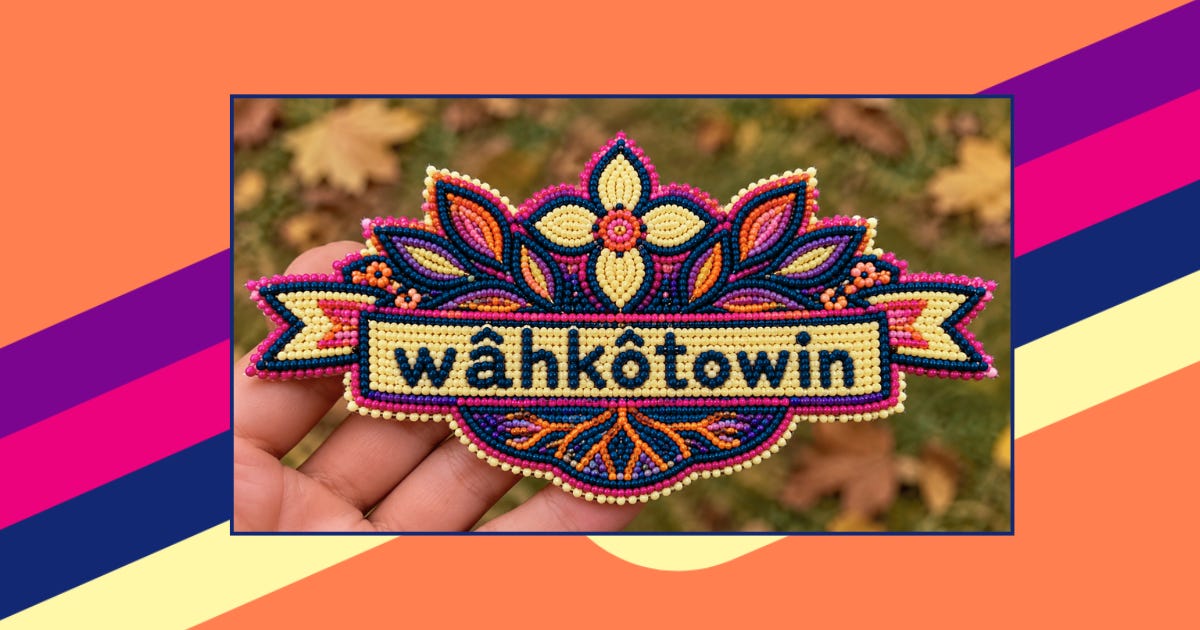
This framework shaped the questions the researchers asked, the people involved in interpreting the answers, and the understanding of Autism that emerged from the work.
One First Nations parent described taking her Autistic son to a longhouse ceremony. She had brought him only once. The singing, dancing, and the number of people had overwhelmed him.
For the family, the difficulty extended beyond managing a sensory environment. The longhouse was a place of cultural belonging. Its ceremonies connected the child to a community, a history, and traditions that his family wanted him to inherit.
The account appears in a study published July 28, 2026, in the journal Autism, examining the experiences of 14 caregivers in two Canadian First Nations communities: Maskwacîs in Alberta and Six Nations of the Grand River in Ontario.
The researchers found that families were navigating familiar difficulties with diagnosis, education, and healthcare. They also documented understandings of Autism that rarely appear in conventional clinical research.
In some families, Autistic children were understood as gifts from the Creator, with spiritual connections and responsibilities to their communities.
Research rooted in community
Maskwacîs comprises four First Nations in Treaty 6 territory: Samson Cree Nation, Ermineskin Cree Nation, Louis Bull Tribe, and Montana First Nation.
Six Nations of the Grand River is a Haudenosaunee community in southern Ontario, comprising Mohawk, Seneca, Onondaga, Cayuga, Oneida, and Tuscarora peoples.
These communities have distinct languages, histories, and cultural traditions. The researchers were careful to preserve those differences.
The project was co-led by an Autism Community Research Circle that included Autistic people, caregivers, Elders, educators, clinicians, and community researchers.
The circle helped develop the research question, recruit participants, interpret interviews, and decide how findings would be shared.
The research team also participated in ceremonies in Maskwacîs, following community protocols and seeking guidance from Elders and knowledge keepers.
These practices reflected the study’s underlying principle: research about a community should be accountable to that community.
Eight caregivers from Maskwacîs and six from Six Nations participated in interviews. All 14 children represented in the study were recorded as boys, and most were between seven and twelve years old. The small sample limits how widely its findings can be generalised.
The interviews nevertheless provide detailed accounts of how cultural knowledge influences the ways families understand their children.
Autism as a gift from the Creator
Several caregivers described teachings that placed Autistic children within a spiritual understanding of human difference.
In some nêhiyaw accounts, children were understood as having a particular connection to the Creator. Caregivers described Autistic children as possessing spiritual insight and bringing something valuable into the community.
One participant recalled being taught that young children remain especially connected to the Creator and that their words should be taken seriously because they may possess wisdom adults have lost.
These accounts are culturally specific. They do not establish a universal First Nations understanding of Autism, and the researchers found differences between the participating communities.
The idea of Autism as a gift appeared more frequently in interviews from Maskwacîs than in those from Six Nations.
It is also worth distinguishing this understanding from the familiar popular claim that Autism is a superpower.
The caregivers were describing spiritual relationships, cultural responsibilities, and teachings about the place of children within their communities. Their accounts emerged from Indigenous traditions with histories and meanings of their own.
The study’s participants also described exhaustion, uncertainty, and difficulties accessing services. A spiritual understanding of Autism did not eliminate practical support needs.
What it offered some families was a way to understand their children that included identity, relationships, and cultural belonging.
When ceremony becomes inaccessible
The study’s most revealing accounts concern the difficulty of participating in cultural life.
Families wanted their children to experience ceremonies, drumming, dancing, language learning, and community gatherings. These were important ways of maintaining relationships with their cultures.
Yet some of the environments presented significant sensory challenges.
Longhouse gatherings could involve sustained singing, dancing, crowds, and expectations about remaining seated. Other ceremonies could be difficult for children who needed movement, quiet, or opportunities to leave and return.
The families described uncertainty about whether their children would be welcomed or whether the events could accommodate their needs.
These experiences complicate a familiar assumption about cultural inclusion.
A child may belong to a community through family, ancestry, and identity while still encountering barriers to participating in its traditions.
The researchers argue that accessible cultural spaces should allow for different sensory needs, communication methods, movement, and flexible participation.
That might mean considering the length and structure of gatherings, creating quiet spaces, or allowing children to participate without meeting conventional expectations about sitting still.
The issue is especially consequential because cultural participation can be part of how knowledge passes between generations.
When an Autistic child cannot comfortably attend a ceremony, the family may lose an opportunity to share language, relationships, and teachings that are central to their identity.
The study also identified positive experiences. Families described children enjoying drumming, dancing, cultural education, and helping roles within their communities.
The question for those families was how to maintain those connections as their children grew.
Two communities, different experiences
The researchers found meaningful differences between Maskwacîs and Six Nations.
Caregivers in Six Nations generally described greater access to formal Autism services. Several had used applied behaviour analysis, or ABA, which has been a significant component of Ontario’s publicly funded Autism service system.
None of the Maskwacîs caregivers in the study reported accessing ABA.
The researchers connected some of these differences to provincial policies and geography. Families in rural Maskwacîs described substantial barriers to obtaining assessments and services.
One caregiver who had used ABA described discontinuing it because the approach felt oppressive. The participant objected to the commanding language used with children and the way practitioners spoke to them.
Other caregivers reported helpful experiences with professionals, including occupational therapists and speech-language therapists who supported alternative communication.
These differences matter because the families were seeking practical support while evaluating whether that support respected their children and their cultural values.
The study also documents the consequences of Canada’s divided responsibilities for First Nations services.
Federal and provincial governments have overlapping responsibilities for healthcare, education, and disability supports. Families described difficulty navigating those divisions, particularly when services required travel or were unavailable locally.
Some families faced a difficult choice between obtaining specialised services and remaining close to the people and traditions that sustained them.
Travel or relocation could improve access to clinical support while weakening connections to extended family, language, ceremony, and community.
Racism added another layer of difficulty.
Caregivers described professionals who appeared uncomfortable visiting reserves and school systems that failed to recognise their expertise. Several participants also reported bullying, discrimination, and misunderstanding of their children’s communication or behaviour.
The researchers argue that these experiences cannot be separated neatly into disability issues and Indigenous issues. They occur together in the lives of the families involved.
Who gets to define Autism?
The study makes an important contribution to a growing body of research examining Autism through Indigenous knowledge systems.
Clinical descriptions of Autism are generally organised around diagnostic characteristics, support needs, and functional differences.
Those categories remain consequential for accessing services. The caregivers in this study frequently wanted earlier diagnosis, better assessments, and more reliable professional support.
Their accounts also described dimensions of Autistic life that diagnostic categories alone could not capture.
A child’s relationship with Elders, participation in ceremony, knowledge of language, connection to land, and place within a family all contributed to how that child’s life was understood.
The research team made a deliberate choice about language, using identity-first terminology such as Autistic while also respecting the cultural language of the participating communities.
That decision reflects a wider development in Autism research: growing recognition that Autistic people and their communities should participate in defining the concepts used to describe their lives.
For First Nations researchers, that question also involves Indigenous self-determination and the long history of research conducted on Indigenous communities without adequate community authority.
Bruno and his colleagues describe their approach as relationally accountable. The community research circle was involved throughout the project, including the interpretation of findings.
The study’s conclusions call for First Nations-governed Autism services, culturally appropriate diagnostic pathways, local support, and greater recognition of caregiver knowledge.
Those recommendations emerge from specific communities and should be understood within their distinct traditions.
The researchers also identify questions that remain unanswered. Their interviews focused on caregivers, and the study included a small group of families whose children were all recorded as boys. Further research could explore the perspectives of Autistic girls, adults, and people with different communication and support needs.
For now, the study preserves accounts that are rarely represented in Autism research.
Among them is a caregiver describing the expectations she communicated to her son’s teacher. She wanted his comfort and stress levels respected, and she wanted him taught within his limits.
The teacher listened. The caregiver remembered that her son learned a great deal during that year.
She had also explained something she considered fundamental to his education: he was in charge of his own life.
Primary source: Bruno, G., Ahmad, M., Cutknife, C., Littlechild, H., Ertman, T., Smith, J., Zwaigenbaum, L., & Nicholas, D. (2026). Exploring the experiences of First Nations caregivers of Autistic children in Canada: A qualitative community-based participatory research study. Autism, 30(9), 2288–2300. https://doi.org/10.1177/13623613261464661