
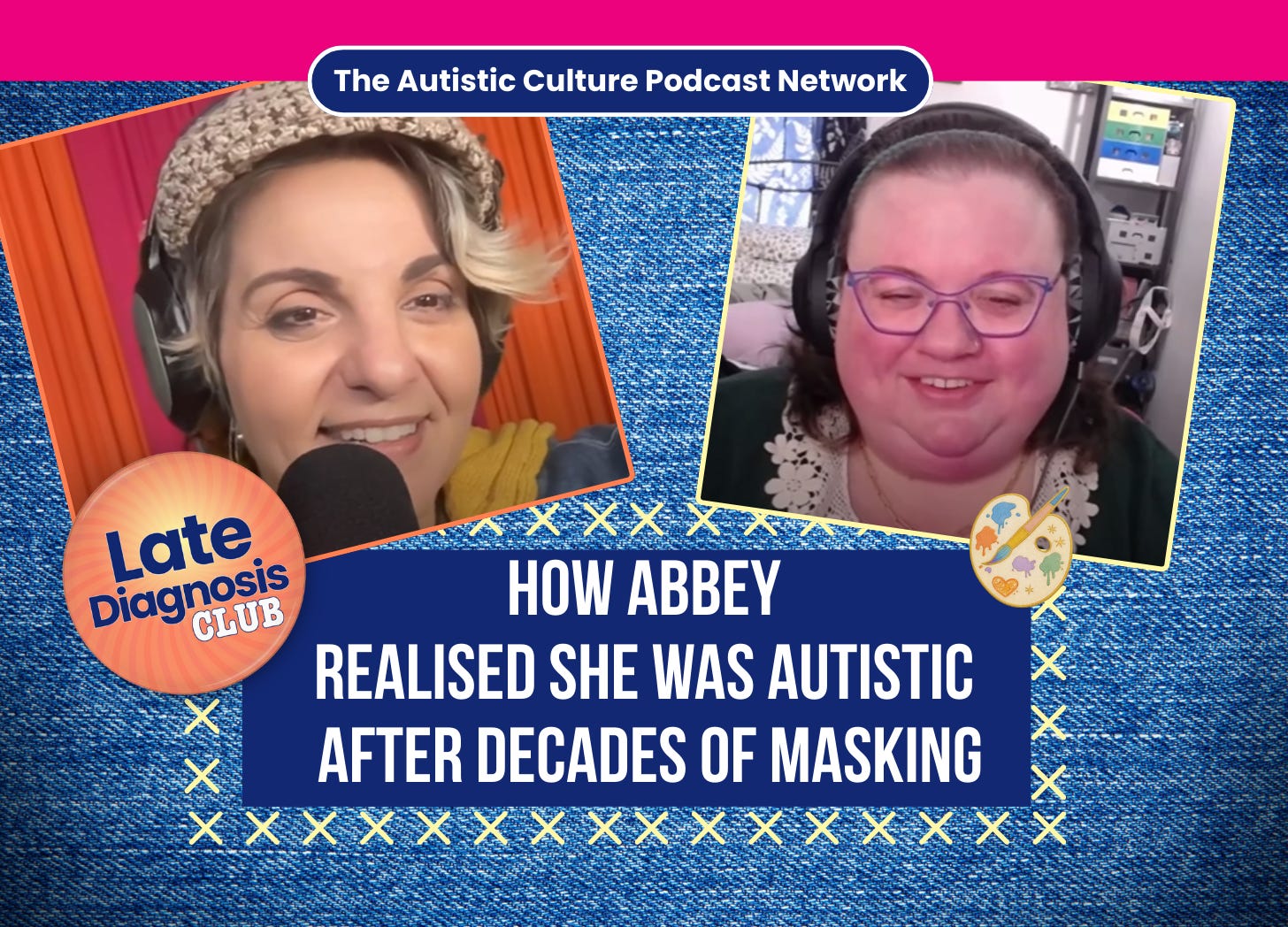
In this meeting of The Late Diagnosis Club, Dr Angela Kingdon welcomes Abbey Thompson — a librarian, classically trained vocalist, prize-winning baker, gamer, social justice bard, and self-described random fact machine.
Abbey is a fat, queer, neurodivergent woman living in Los Angeles with two orange cats and a deep commitment to creativity without perfection.
Diagnosed with ADHD in her 40s and later recognising she was also Autistic, Abbey describes how finally naming her neurodivergence didn’t just bring understanding — it brought permission. Permission to be loud, to be big, to be joyful, to be mediocre, and to exist without apology.
Together, Angela and Abbey explore late identification, fatness and bullying, perfectionism, burnout, AuDHD, creativity as regulation, and the radical act of letting go of shame. This episode is an invitation to stop fixing yourself — and start living.
🎧 Listen to this episode:

🪑 Attendees
Chair: Dr Angela Kingdon — Author, community-builder, and Autistic advocate
Guest: Abbey Thompson — AuDHD librarian, vocalist, baker, and creator of the Mediocre Arts and Crafts Club
You: The Listener!
🗒️ Meeting Agenda
Opening remarks from the Chair
Member introduction: Masking, bullying, and being “too much”
Discussion: Late diagnosis, burnout, friendship, fatness, queerness, and shame
Sensory processing, burnout, animals, justice sensitivity, and belonging
Key learnings
Club announcements
🧾 Minutes from the Meeting
1️⃣ Opening Remarks
Angela introduces Abbey as someone whose life defies neat categories — librarian, opera singer, baker, gamer, and cat enthusiast — all in one person. From the outset, this conversation sets aside productivity and leans into permission: to be multifaceted, messy, and fully yourself.
2️⃣ Member Introduction: Abbey’s Story
Abbey describes growing up as a high-achieving, compliant student who internalised bullying and othering — largely attributing friendship difficulties to being fat in a culture that relentlessly punished difference.
Early signs of neurodivergence, including hyperfocus, rigidity, gullibility, sensory sensitivity, and being “too loud,” were reframed for decades as personal flaws. Only later did Abbey come to understand these traits through an Autistic and ADHD lens — one that offered compassion instead of criticism.
3️⃣ Discussion Highlights
Late diagnosis: ADHD and autism identified in Abbey’s 40s
Burnout: Years of overachievement, graduate school, and unrecognised exhaustion
Masking: Being capable on the outside while struggling internally
Fatness & bullying: How body stigma obscured neurodivergence
Creativity as regulation: Singing, baking, crafting, and making for joy
Mediocre Arts and Crafts Club: Creating without perfection or monetisation
Shame: Letting go of self-policing and internalised judgment
Community: Belonging as protection and healing
4️⃣ Key Learnings
Competence can hide profound struggle
Shame is not a motivator — it’s a barrier
Creativity doesn’t need to be perfect to be meaningful
Late diagnosis can offer forgiveness, not just answers
Community helps return shame to where it belongs
You don’t need permission to exist — but it helps when you finally give it to yourself
📌 Notice Board
📣 Club Announcements
🎧 The Late Diagnosis Club is available on Spotify, Apple Podcasts, and all major platforms.
💬 Join our online meetups and community at latediagnosis.club.
📌 Check the LDC Notice Board for Member Contributions
💜 There is a small charge — but no one is turned away for lack of funds.
💌 Want To Be Our Next Guest?
If you’ve been nodding along and thinking, “That could be my story,” we want to hear from you.
We’re always looking for late-diagnosed or self-identified neurodivergent adults who are ready to share their story on The Late Diagnosis Club.
Tell us a little about yourself and your diagnosis journey here:
💜 Whether you’ve just realised you’re Autistic, ADHD, dyslexic, or you’re still figuring it out — your story belongs here. We’ve saved you a seat.
💫 Why Your Support Matters
When you join Autistic Culture Plus or pitch a show to the Autistic Culture Podcast Network, you’re doing more than subscribing to a podcast —
You’re investing in Autistic-led media.
Included with Autistic Culture Plus
• Ad-free listening (sensory-friendly)
• Early access to every episode
• Exclusive archive of ~100 classic episodes
Every pound, dollar, or share helps:
🎙️ Fund neurodivergent creators — paying Autistic hosts, editors, and producers for their work
🌍 Amplify Autistic voices and stories that mainstream media too often overlooks
💡 Build an ecosystem of culture, not pathology — where being Autistic is celebrated, not “treated”
🤝 Support accessible, sensory-friendly storytelling made with our community in mind
For less than the price of a coffee, you help sustain a growing network that’s 100% by and for neurodivergent people — ensuring that Autistic stories, creativity, and brilliance reach the audiences they deserve.
Joining isn’t just a subscription.
It’s solidarity. Visibility. Community in action.
💜 With Gratitude
A huge thank-you to our founding supporters of Autistic Culture Plus, who believed in this network before it even launched.
Our Executive Producers and Producers make this work possible — funding neurodivergent creators, amplifying Autistic voices, and helping build a media ecosystem rooted in pride, creativity, and community.
These members form the foundation of the Autistic Culture Podcast Network, and you’ll see their names credited at the end of our shows and on our website.
🎙️ Executive Producers
Amy Burns, Anamaria B Call, Andrew Banner, Anna Goodson, Ashley Apelzin, Audrea Volker, Ben Coulson, Brian Churcek, Cappy Hamper, Carley Biblin, Charlene Deva, Chloe Cross, Clay Duhigg, Clayton Oliver, Danny Dunn, Daria Brown, David Garrido, Emily Burgess, Eric Crane, Erik Stenerud, Fiona Baker, Grace Norman, Helen Shaddock, Jaimie Collins, Jason Killian, Jen Unruh, Jennifer Carpenter, Julia Tretter, Kathie Watson-Gray, Kenneth Knowles, Kira Cotter, Kristine Lang, Kyle Raney, Llew P Williams, Laura Alvarado, Laura De Vito, Laura Provonsha, Lily George, Nelly Darmi, Nigel Rogers, Rachel Miller, Tim Scott, Tyler Kunz, Victoria Steed, Yanina Wood.
🎧 Producers
AJ Knight, Bobby Simon, Da Kovac, Eleanor Collins, Emily Griffiths, Hannah Hughes, Jennifer Kemp, Jonas Fløde, Kate F, Katie N Benitez, Kendra Murphy, Lisa Dennys, Logan Wall, Louise Lomas, Melissa Nance, Nicola Owen, Rebecka Johansson, Sam Morris, Sarah Hannah Morris.
This is such a powerful reframing of late diagnosis. The idea that naming neurodivergence brings permission rather thanjust understanding is something I lived through too. Abbey's Mediocre Arts and Crafts Club concept really captures how liberation comes from rejecting perfection, not achieving it. The link between body stigma and missed neurodivergance is underexplored.