

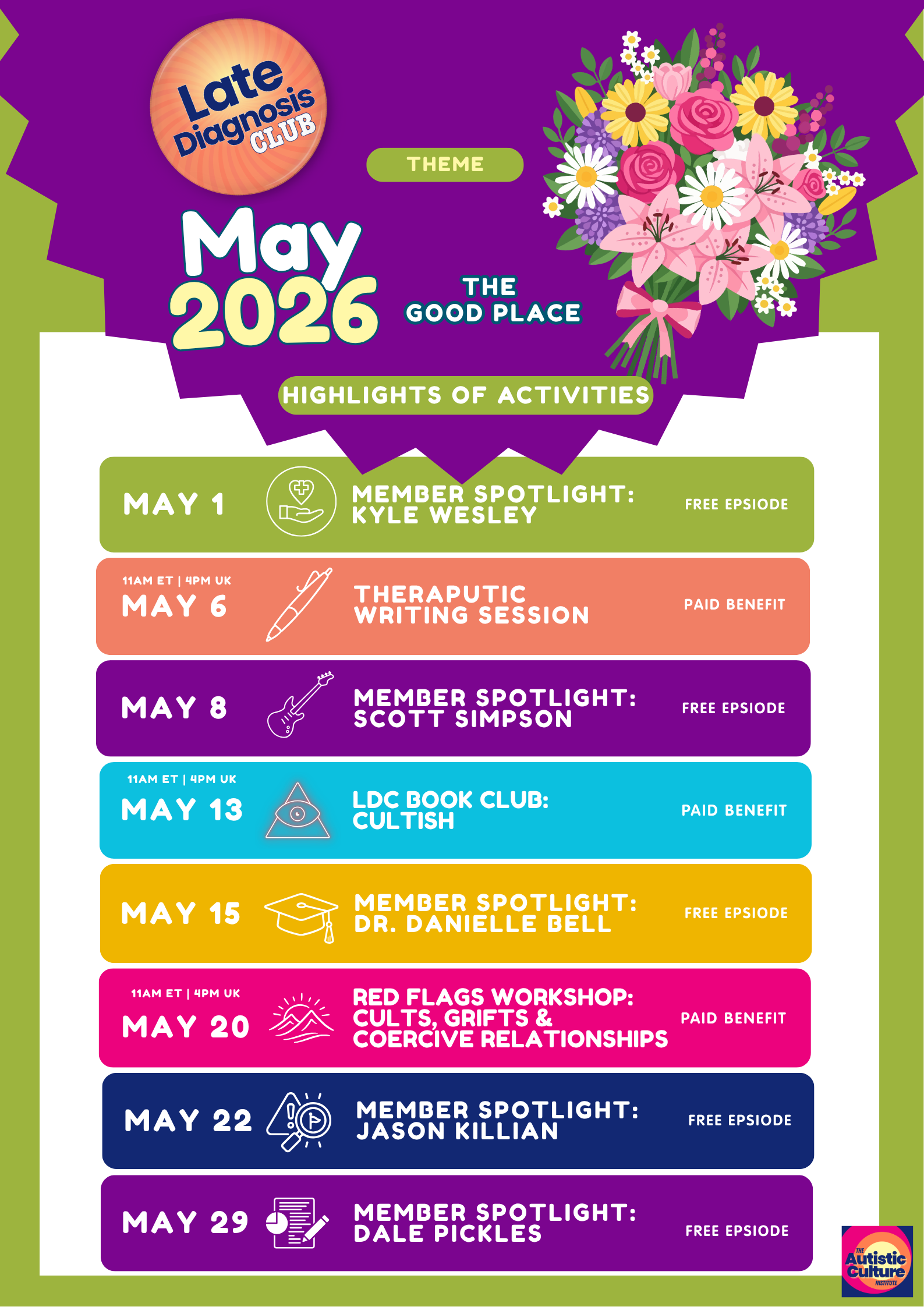
This month in the Late Diagnosis Club, we are exploring the Good Place, the spaces and people and rituals that actually fit, the relationships where we do not have to translate, and the slow, deliberate work of recognizing safety when we finally land in it.
The Good Place Was Never the Default
Most late-diagnosed neurodivergent adults know a Good Place when they experience it, even if they did not have words for it at the time. A friendship where the silences were not awkward. A job where a manager genuinely meant it when she said to take the time off. An online community where the unspoken rules of small talk had been replaced with the unspoken permission to info-dump. A partner who learned, without making it a project, that the kitchen lights needed to stay off after eight.
What late diagnosis tends to surface, among many other things, is the realization that those moments were not lucky accidents. They were data. They were evidence of what our nervous systems had been asking for the entire time, often without our conscious awareness, certainly without language we could use to advocate for it.
The Good Place is rarely a place we are handed. For most of us, it is a place we have to learn to recognize, then learn to claim, then learn to build when no one else is going to build it for us. That work is slower than the wellness industry would have us believe, and it almost never looks like the bright, branded version of self-care being sold back to us. It looks more like saying no to one more invitation. It looks like keeping the same routine on a Saturday because the routine is the rest. It looks like a Tuesday afternoon spent doing exactly the thing that regulates us, with no productive outcome to show for it.
What also tends to surface, once we start paying attention to what genuine safety feels like, is a sharper sense of what it does not feel like. The contrast becomes legible. The relationships that required us to perform begin to stand out. The communities that demanded loyalty in exchange for belonging begin to look less like home and more like the kind of place we should probably leave. This is part of the same skill set, the same growing fluency in our own needs. The Good Place and the Bad Place are recognized by the same instrument, just calibrated in opposite directions.
That instrument is what we are sharpening this month. Not by tidying ourselves up. Not by performing growth. Writing from inside the spaces that fit, and learning to see clearly the ones that do not, so that we can tell the difference more quickly the next time it matters.
This is what we will explore together in the Late Diagnosis Club in May. We meet live four times on Zoom, with cameras always optional, for a member infodump session, a workshop with a survivor of a particularly toxic relationship, a book club discussion of Cultish, and it all starts with a therapeutic writing session with Neurodivergent Narratives editor Lindsee Garlock-Thornton guiding us to connect with the comfort of home.
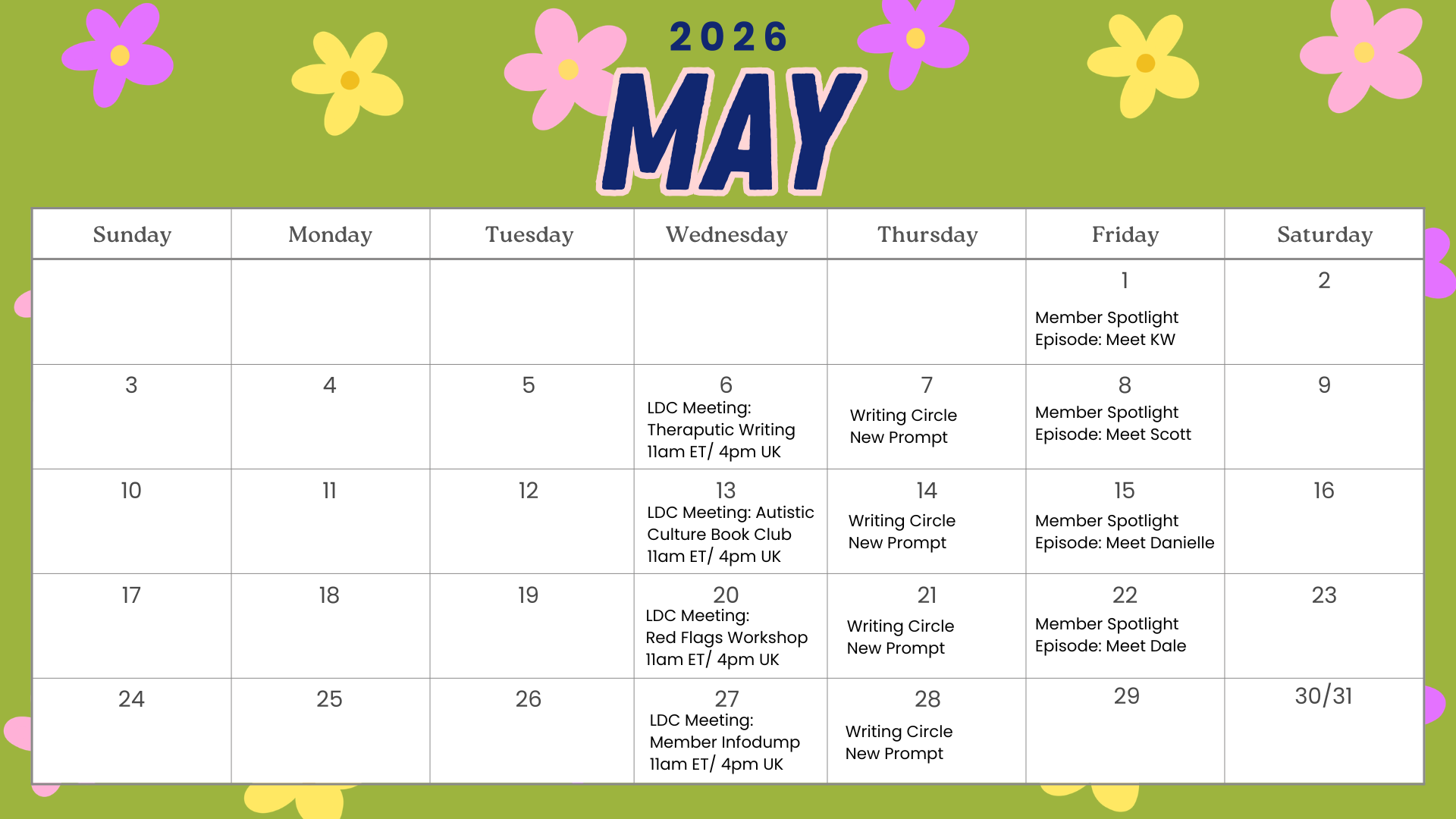
If you are not already a supporting member, just click “upgrade” in the top right-hand corner on the AutisticCulture.substack.com page. No one is ever turned away who wants to join and cannot afford it. Paid members also get to participate in our Virtual Writing Circle, Book Club, monthly workshops, and our Member Infodump. We would love to have you check it out. Come for a week and stay for the fun and friendships.
If you are already a member, keep reading for the members’ only schedule for the month.
