

This week at the University of New South Wales in Sydney, students, scholars, disabled people, and allies are gathering to watch Deaf President Now!, the documentary about the 1988 student uprising at Gallaudet University.
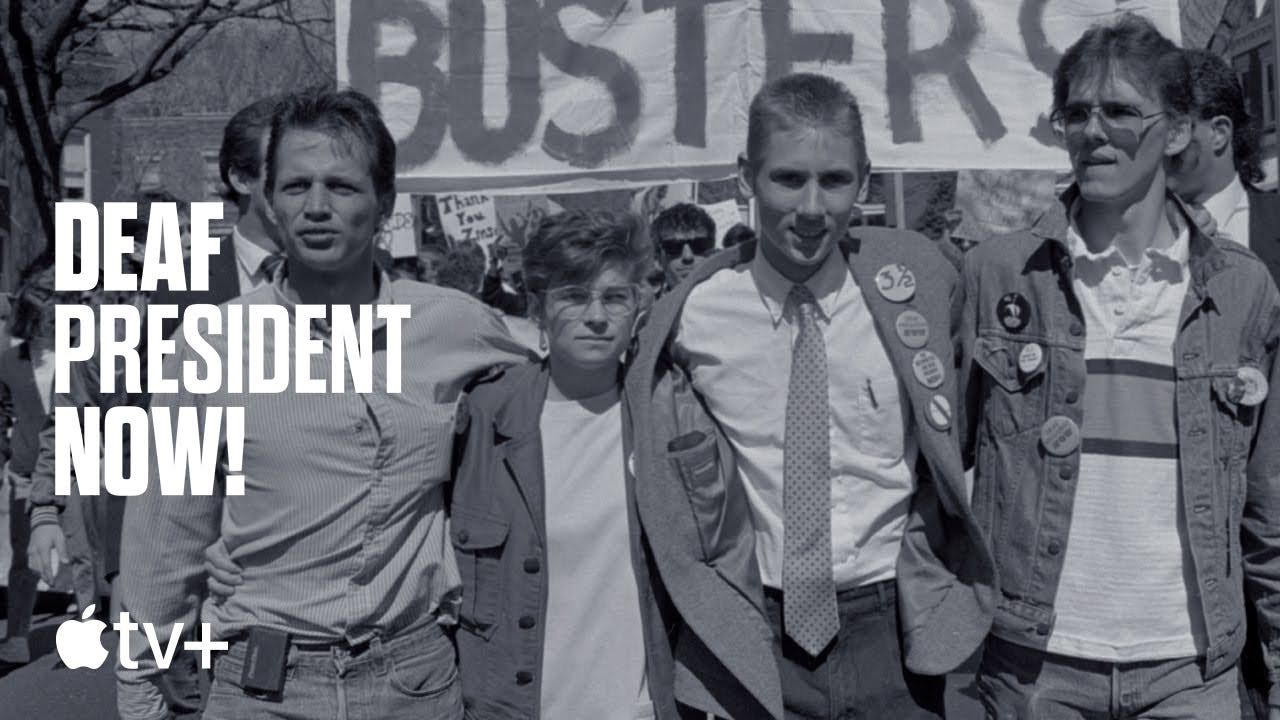
UNSW is holding the screenings as part of its annual Diversity Festival and are followed by conversations with d/Deaf, disabled, and allied participants about leadership, representation, and equity. UNSW’s event listing is here. If you haven’t seen this yet and have a way to get Apple TV, I highly recommend viewing it. This film captures the event that is the greatest inspiration for my founding of the Autistic Culture Institute.
Deaf President Now! was a student campaign that “transformed a university and helped reshape disability rights around the world.”
If you aren’t familiar with this story, it was back in March of 1988, that the all-hearing Gallaudet University Board of Trustees selected another hearing president. Imagine a school of Autistic kids with a non-Autistic Board of Trustees, (it’s not so hard to imagine, because that’s most of them) selecting a neurotypical school principal or head teacher.
In this case, the Gallaudet students had had enough.
They shut down the campus and demanded a Deaf president. The protest became known as Deaf President Now.
For much of the twentieth century, Deafness (like autism) was framed primarily as a medical deficit to be corrected. Most people had hearing, those who didn’t were broken.
From the outside looking in, that could seem extremely difficult to argue with. Many people, including many deaf people, did not argue with it for a long time.
Clinical and educational systems treated hearing loss as a disorder, and the treatment was speech training, lip-reading, and technological intervention, often at the expense of sign language and Deaf social life. Deaf people were encouraged to understand themselves as having an impairment rather than as members of a linguistic or cultural minority.
That medical framing shaped institutions - as it does for Autistic people, too.
Back in 1988, however, the evidence began to catch up with what Deaf people already knew. Linguists demonstrated that American Sign Language is a fully developed natural language, with its own grammar, syntax, and expressive capacity, independent of spoken English. Deaf scholars and advocates increasingly articulated something larger: Deafness involved participation in a shared linguistic and cultural world.
Deaf Culture came to be understood through shared norms, values, histories, and social practices transmitted through language and community. Deaf identity was no longer defined exclusively by the absence of hearing. It could also be understood through participation in a Deaf social world organized around visual communication and collective experience.
The students were making a claim larger than one personnel decision. Gallaudet existed primarily to educate Deaf and hard-of-hearing students, yet hearing people remained in control of the institution.
The students were asking who possessed the authority to lead a Deaf institution.
They demanded Deaf leadership and institutional self-determination. The protest drew national attention and the Deaf students won. After days of demonstrations, the university appointed I. King Jordan as Gallaudet’s first Deaf president.
In Autistic Culture, I describe the movement as a critical moment in Deaf cultural reclassification because Deaf people asserted cultural authority over an institution that had long defined them through a medical or paternalistic lens.
Our essence has almost always been defined through the lens of the neurotypical. We are the “Others.”
Our culture includes practices and norms that foster safety, joy, and belonging in environments where sensory, social, and cognitive differences can be recognized and supported rather than suppressed. It includes direct communication, individuality, authenticity, stimming, scripting, echolalia, deep connections around special interests, and ways of understanding one another that often become visible only when Autistic people are together.
In many cultures, cultural knowledge moves vertically from one generation to the next. Parents teach children the language, stories, rituals, foods, expectations, and history of their people.
Autistic Culture, like Deaf culture, often travels horizontally.
We encounter other Autistic people and suddenly discover that something we thought was an individual eccentricity has a name. Someone explains masking. Someone else talks about scripting. We hear another person describe the way they experience sound, food, justice, routines, friendship, or special interests and recognize ourselves.
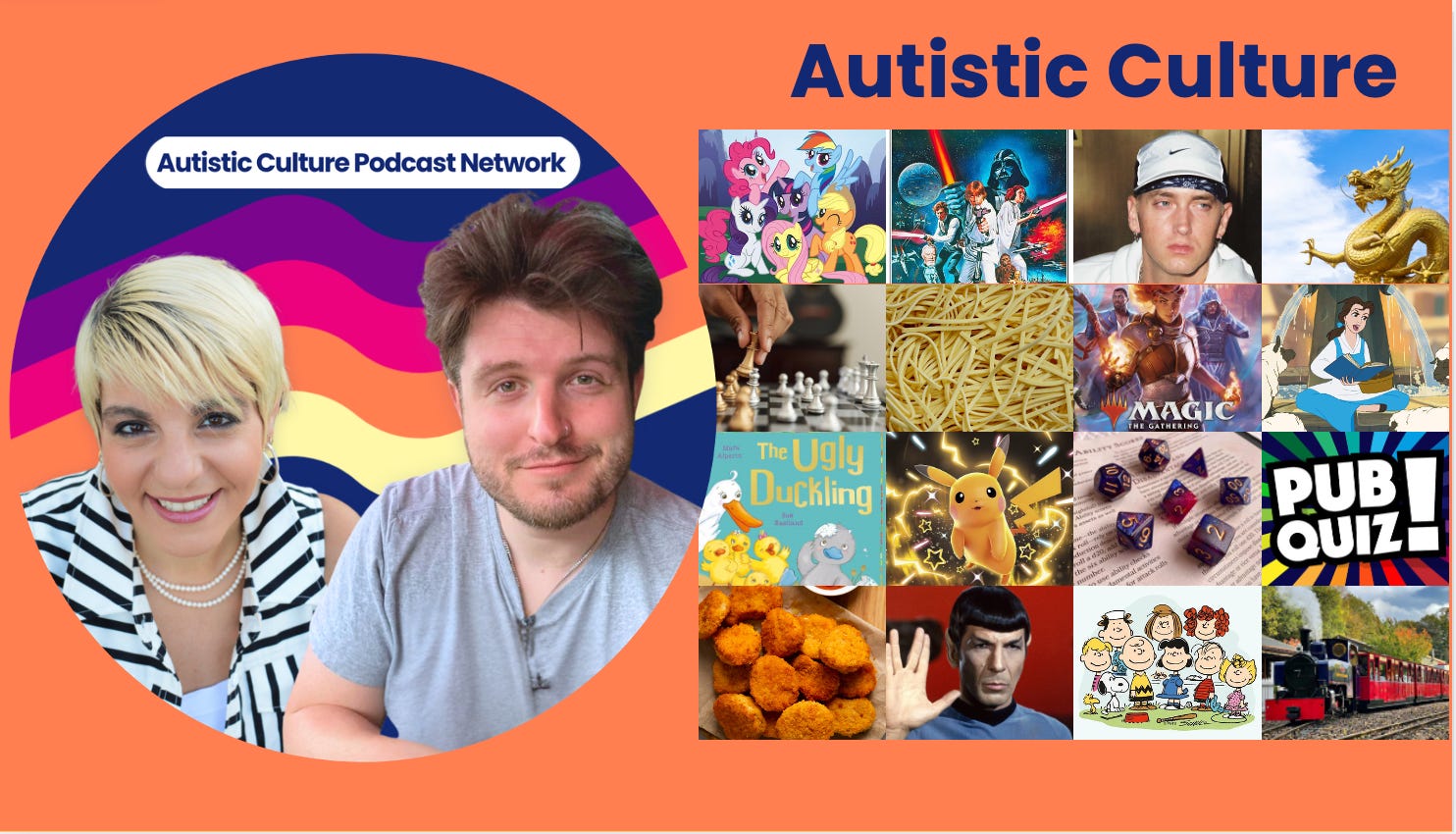
Autistic advocates, writers, musicians, researchers, podcasters, and artists become transmitters of Autistic Culture. We articulate shared experiences, name common practices, and make cultural knowledge available to people who may have spent decades without access to it.
The cultural recognition of Deaf people did not make deafness disappear. It did not eliminate medical care. It did not settle every disagreement within the Deaf community. It did not remove every structural barrier Deaf people faced, but it changed who possessed the authority to explain what Deafness meant.
Cultural recognition allowed Deaf people to understand themselves as members of a cultural minority rather than exclusively as patients or recipients of accommodations. Deaf studies scholars have documented the consequences for education, advocacy, identity formation, and community cohesion.
The cultural shift I am interested in does not require pretending that autistic people do not need support. Autistic people have widely varying support needs. Some of us require substantial medical, educational, communication, or daily-living assistance.
Cultural recognition asks a different question: Who gets to define us?
Autistic people have spent generations being described as obsessive, rigid, antisocial, rude, detached, impaired, and disordered.
Ask Autistic people to describe ourselves and different language begins to appear: passionate, systematic, precise, principled, detail-oriented, direct, thorough, connected, observant, sensitive, and, quite often, traumatically misunderstood.
The outsider and insider are looking at the same people.
They are interpreting what they see through different cultures.
Recognizing Autistic Culture creates space for Autistic people to participate in defining what our traits mean. It does not require declaring allistic ways of living wrong. Italian culture does not require Japanese culture to be wrong in order to exist. Recognition of difference allows each culture to become more visible, including the dominant culture that previously appeared simply to be “normal.”
The students who occupied Gallaudet in 1988 were not asking hearing people to understand them a little better.
They were demanding the authority to lead an institution built around their own lives. It’s the same demand we are making at the Autistic Culture Institute. By sharing our message, you can help us do just that.
I have just been reading the third essay in SEEING VOICES by Oliver Sacks which is all about the Deaf Prez Now.
ALso Ron Johnson was a legend.