


Look at the corner of almost any city pavement and you will find a small piece of disability history.
The curb slopes down to meet the street.
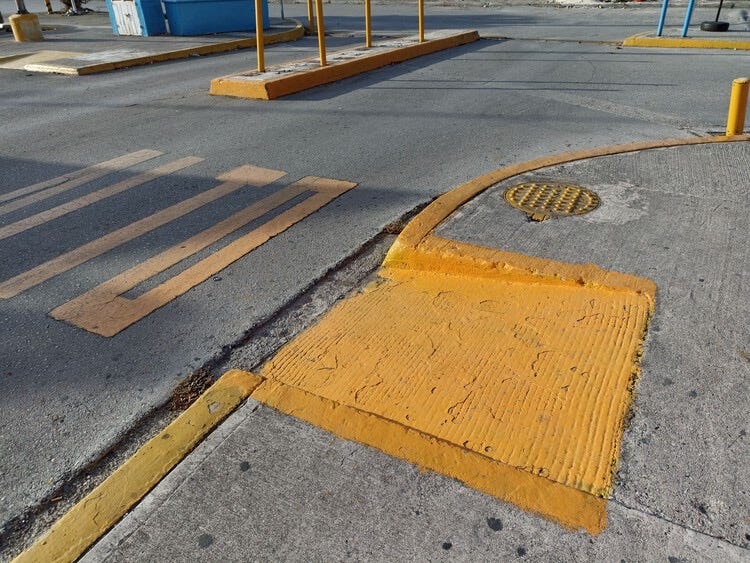
Curb cuts became widespread because wheelchair users needed them. Disabled activists in Berkeley, California, campaigned for them in the late 1960s and early 1970s, when a few inches of concrete could determine whether someone using a wheelchair could cross a street independently.
Then other people started using them.
Parents pushed prams over them. Travelers rolled suitcases across them. Delivery workers used them for carts. Cyclists used them. People who found steps difficult used them.
The phenomenon became known as the curb-cut effect: remove a barrier for disabled people and the resulting environment may work better for people who were never considered its intended beneficiaries.
The curb cut became one of the most familiar examples of universal design, an approach that considers accessibility when something is being designed instead of modifying it afterward for people who cannot use the original version.
We still do an extraordinary amount of the latter.
We create the standard workplace, classroom, hospital, website, event, or performance. A disabled person encounters a barrier. Then we create an exception.
A new theatre production coming to Oxford this month offers a small example of what happens when you reverse that order.
The relaxed performance is the performance
On September 30, A Small Enclosed Room with Alfie Murphy opens at Oxford Playhouse.
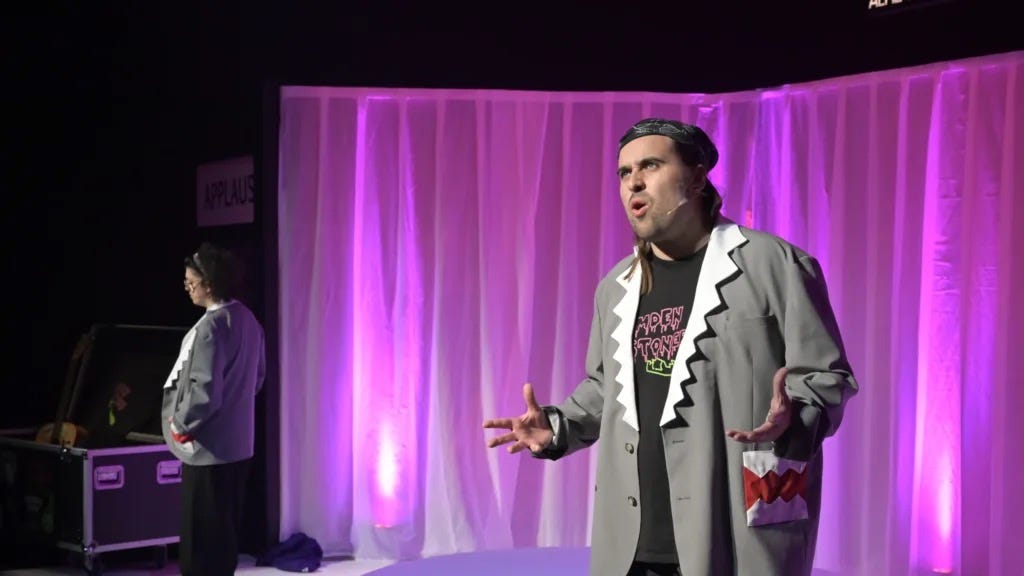
Created and performed by Autistic artists Cian Binchy and Anna Constable, the 65-minute dark comedy follows Alfie through a world in which reality, fantasy, and masking blur. Oxford Playhouse promises rock stars, gurus, cardboard cut-outs, a shark, and a rap about Devon.
With Alfie Murphy, there is no separate autism-friendly performance.
Every performance is autism friendly.
Audience members can arrive late, leave and return as needed, and make noise or move during the show. The production also provides visual guides and programs for people with access needs.
This is What Theatrically Authentically Looks Like
That makes particular sense for a piece created by Autistic theatre-makers. It also connects with questions Sarah Atherton-Knight and Simon Scott explored throughout the first season of our Autistic Culture Podcast Network show Theatrically Authentic.
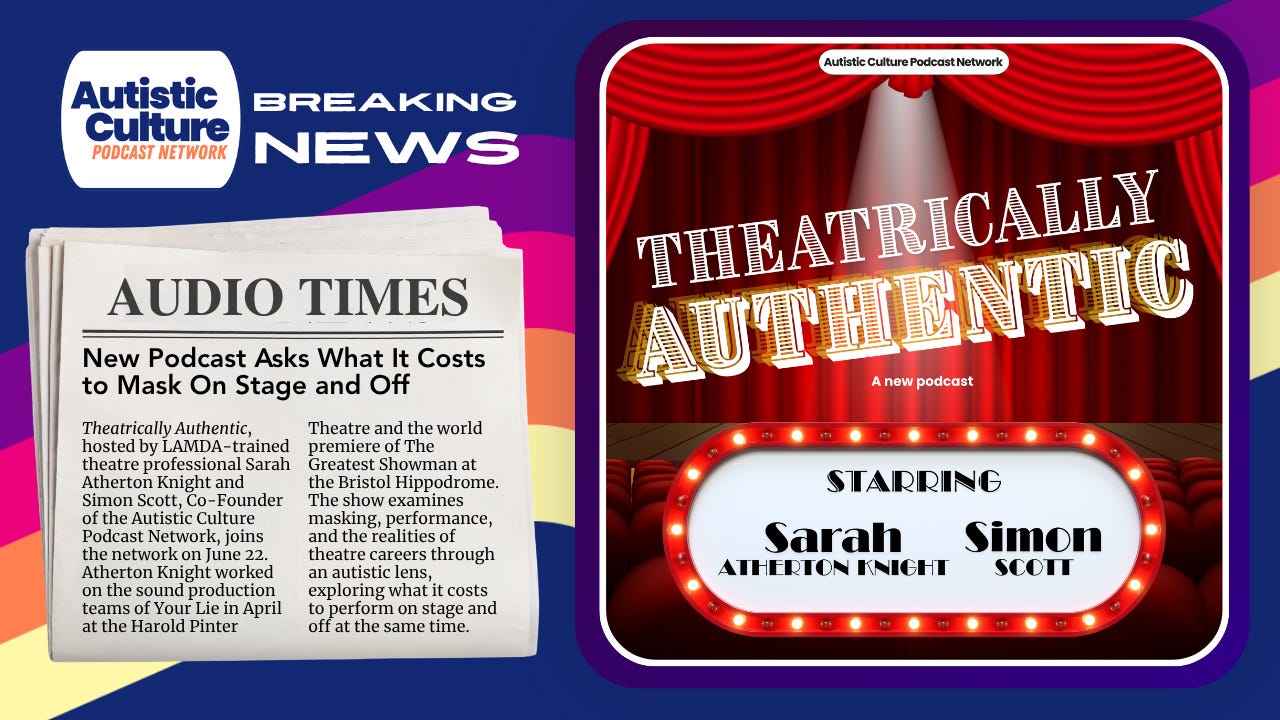
Theatre can be intensely attractive to Autistic people while theatre culture can also demand masking, rapid social interpretation, sensory endurance, and adherence to unwritten rules. Across eight episodes, Sarah and Simon examine performance, backstage life, fandom, auditions, masking, hyperfixation, and what it is like to make a life in theatre as an Autistic person.
What if We Did this Elsewhere?
The same principle could be applied without redesigning civilization.
A workplace could make written instructions, advance meeting agendas, flexible communication, and consideration of noise and lighting ordinary practice. A school could use explicit instructions, predictable schedules, advance warning of changes, opportunities for movement, and quiet spaces without waiting for a child to acquire a diagnosis. A hospital could provide important information in writing as well as verbally, explain procedures before touching patients, communicate what happens next, and provide quieter places to wait.
Autistic people would use those things. Plenty of other people would use them too.
An employee working in a second language may appreciate written instructions. An anxious child may benefit from knowing that Tuesday’s timetable has changed. A frightened patient may remember very little of a doctor’s verbal explanation. Someone with a migraine may need the quiet waiting room.
Which version is the normal one?
The accessibility is part of a larger shift in who gets to make theatre and whose assumptions determine how theatre works.
Cian Binchy and Anna Constable are Autistic artists making a piece about identity, masking, and mental health. On Theatrically Authentic, Autistic theatre-makers examine the culture of their own industry. Autistic people are participating in theatre as artists, workers, critics, fans, and audiences, with enough authority to question some of its inherited rules.
Sometimes that changes what happens on the stage.
Here, it has changed what is expected of the people sitting in front of it.