

In 1973, the American Psychiatric Association removed homosexuality from the Diagnostic and Statistical Manual of Mental Disorders. The decision followed years of activism, argument, and accumulating challenges to the psychiatric assumptions that had classified homosexuality as a sickness.
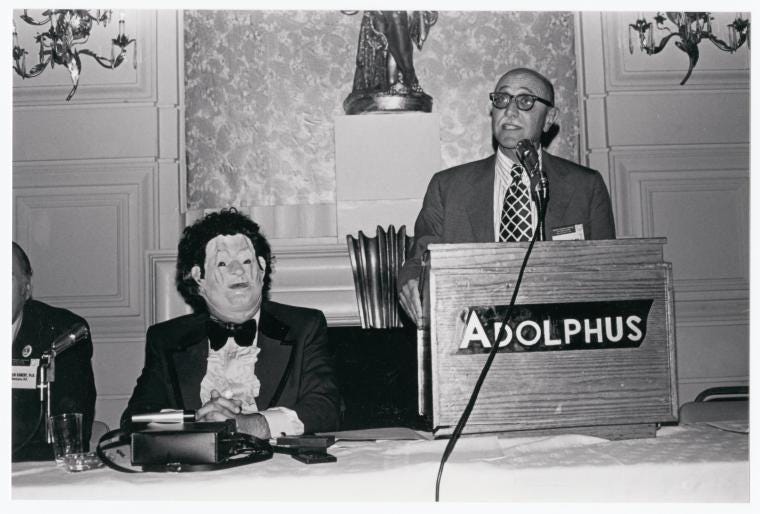
The World Health Assembly followed 17 long-ass years later on May 17, 1990, when it stopped classifying homosexuality as a mental disorder in the international disease classification system. WHO now commemorates that date. (American Psychiatric Association)
Yesterday was that day for Autistic people.
On September 15, 2026 the National Autistic Society said something it had never said definitively in its 64-year history:
“Autism is genetic. You’re born autistic and you’re autistic for life.”
At the Autistic Culture Institute, our first reaction was an eye roll. None of that research suddenly appeared this week. The heritability of Autism has been documented for decades. This is something we have been screaming from the rafters. But our second reaction was relief.
We have needed the structures in power to say this loudly, clearly, and definiatively and finally, thank sweet baby Jesus, they have.
The National Autistic Society reached its new position after its research team reviewed the evidence on the causes of Autism, including 83 research papers. Its conclusion is straightforward:
Most Autistic people are Autistic because of genes inherited from their parents. There is no single Autism gene; thousands of genes may be involved. Less commonly, other factors may contribute, usually in combination with inherited genetics. (National Autistic Society)
What happened this week is that an institution finally decided the evidence justified saying plainly what Autistic people and researchers have been saying for years.
And, whether we like it or not, that institution is important. Journalists (at least in the UK) now can no longer say we don’t know what causes autism, and I, for one and over the moon with gratitude because defending something that has literally thousands of studies supporting it is just exhausting.
The National Autistic Society was founded in Britain in 1962, when Autistic children were still routinely misunderstood by medicine and education. It established what it describes as the world’s first school specifically for Autistic children. Lorna Wing, one of its founding members, later worked with Judith Gould on research that developed the concept of the autism spectrum and helped transform who could be recognized as Autistic.
Today, NAS is the UK’s largest Autism charity. It works with government, schools, local authorities, employers, families, professionals, and Autistic people. For generations of British families, its information has helped define what Autism is.
I hate that their opinion matters so much because they aren’t always great advocates for our people, but we have to take this much-needed win.
As a Queer woman born in 1973, I find myself today thinking about my brave gay ancestors who had to fight from the year I was born until I was 17 - the first 17 years of my life (and of course, long before 1973 as well) - to convince the World Health Organization that being gay was not a disease or disorder. I guess I want to know, is it 1973 for Autistic people or is this our 1990 moment. Somehow, I’m pretty sure we still have a long, hard fight ahead of us. And it’s a fight I can’t help but be angry about because it’s such a dumb use of our limited energy.
Spend any time in late-diagnosed Autistic communities and the family patterns are difficult to miss.
A child is diagnosed. Mum starts researching Autism so she can understand her child. The descriptions sound familiar. She gets assessed herself. Then somebody mentions Dad. Someone remembers Grandad. A sibling starts reading.
I call it the child-to-parent pipeline and it’s not a coincidence. The National Autistic Society can now explain why that happens without resorting to euphemism. Autism often runs in families because most Autistic people inherited the relevant genetic variations from their parents. (National Autistic Society)
Families can remain unaware of this for generations because they establish their own definition of normal. It’s why every family member should be tested once a child is identified as Autistic.
Families pass down autism, and they also pass down habits, language, rituals, expectations, interests, accommodations, jokes, and rules for how life should be organized. These are part of what we call Autistic Culture. It’s the same way making Sunday sauce (gravy if you are a Jersey girl) or talking with your hands and shouting over each other is passed down in Italian-American families.
That intersection is one reason we founded the Autistic Culture Institute.
We study Autistic culture as the values, norms, traditions, language, and creative expressions that emerge among Autistic people. An inherited neurotype means Autistic people did not suddenly arrive when psychiatrists learned how to diagnose us. We have been living together, raising children, making things, developing relationships, and creating ways of navigating the world for generations.
Often, nobody involved knew they were Autistic.
For years, however, public discussion about autism’s origins has left space for a very different and frankly ignorant story.
Something happened.
A vaccine.
A medicine taken during pregnancy.
A food.
A chemical.
A parenting practice.
Some modern environmental insult that could explain why a previously ordinary child became Autistic.
The National Autistic Society says its decision to review the evidence was prompted partly by the persistence of false claims about Autism in British and American media and politics. Dr. Judith Brown, the Head of Autism Knowledge and Expertise, has written that organizations cannot spend their time rebutting individual theories about what causes Autism without giving people an evidence-based account of what actually does. (National Autistic Society)
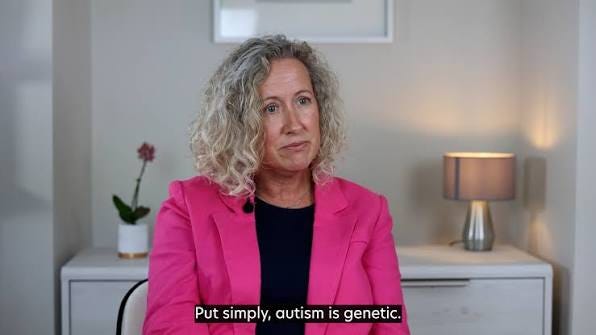
I know the announcement may not end arguments about vaccines or paracetamol. Scientific evidence has not accomplished that so far. It does change the information available to a British parent who types “What causes autism?” into a search bar and lands on the country’s largest Autism charity.
There is historical precedent for institutions taking too long to catch up with the people they describe.
When the American Psychiatric Association changed its position on homosexuality in 1973, gay people did not become different people. The APA changed its account of them. One of the world’s most influential psychiatric institutions could no longer credibly support the proposition that homosexuality itself constituted mental illness. The APA now describes the decision as a watershed in the history of psychiatry and LGBTQ rights. (American Psychiatric Association)
The National Autistic Society’s announcement changes a different proposition.
Autistic people are not the product of something that went wrong.
We are a recurring part of human populations.
Autistic people do not need curing. Autism is a natural variation in how people’s brains work. (National Autistic Society)
For 64 years, Britain’s largest Autism charity stopped short of saying definitively that Autism is genetic.
Yesterday, finally, it stopped.
As small of a victory it is, it’s one I think we should celebrate.
Great news!