


My best friend and I have a book club for two (highly recommended), and this week she recommended a book that came out about 6 months ago that I totally missed: Upward Bound by Woody Brown, a non-speaking Autistic man who uses spelling to communicate.
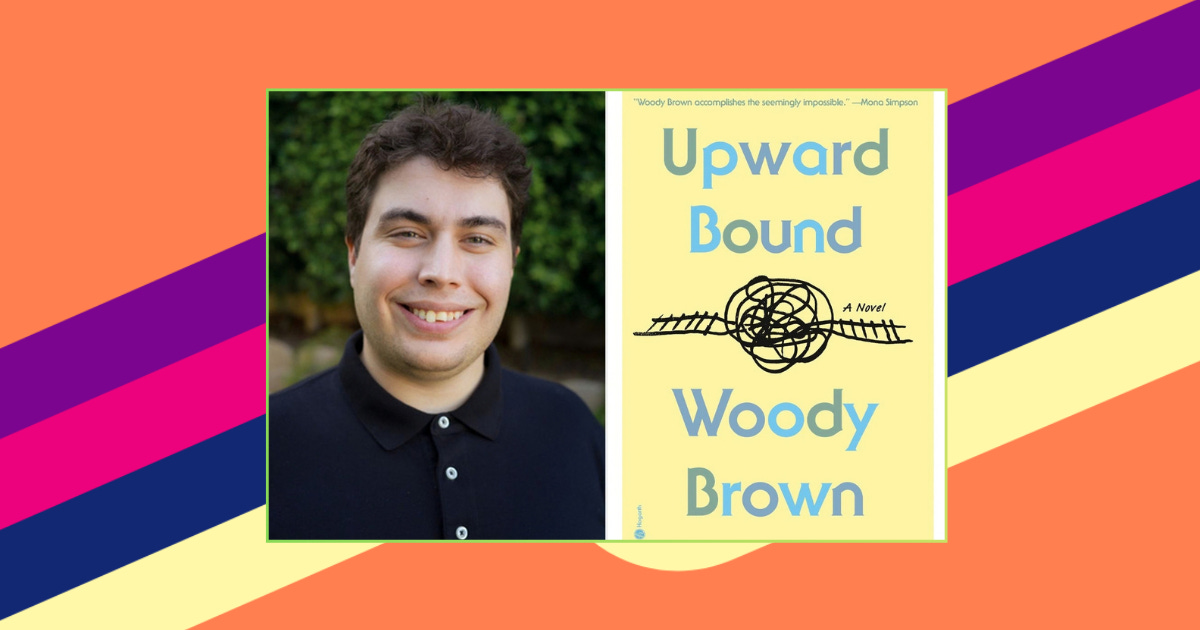
First of all, I just want to say I loved this book. It is just really well-produced and beautifully written. The pacing is good. The characters are incredibly well developed. They are funny and lonely and complicated, and nobody seems to exist merely to teach the reader something about autism. I found myself caring about these people as people, which sounds like an embarrassingly low bar until you consider how often Autistic and intellectually disabled characters in books exist primarily to facilitate somebody else’s character development. I listened to the audiobook and the acting was just incredible.
Upward Bound takes place largely inside a California adult day program for people with developmental disabilities. Its central character, Walter, is nonspeaking and Autistic, and, like Woody Brown, he attends college and communicates through spelling. Brown has said that the book is loosely autobiographical, and I found myself constantly wondering how much of what I was reading came from actual people he knew in day programs. I do not know the answer to that, but the characters certainly feel observed rather than invented from stereotypes.
What broke my heart was how bored they were.
There is something particularly awful about imagining a person with a complicated intellectual life spending day after day in an environment where other people have drastically underestimated what they understand. For nonspeaking Autistic people without intellectual disabilities, that mismatch can be enormous. Someone can be thinking about literature, sex, politics, another person in the room, what happened yesterday, what they want to do tomorrow, or how much they hate the activity somebody has just put in front of them, while everyone around them assumes they are content because they cannot easily say otherwise.
The part that got me the most was the locked cabinet.
There are toys, craft materials, and other objects kept in locked cupboards at the program. The participants know they are there. Some of them desperately want particular things inside. One character has a love for Mr. Potato Head, I could feel in my spleen. Being separated from Mr. Potato Head left him with such an ache.
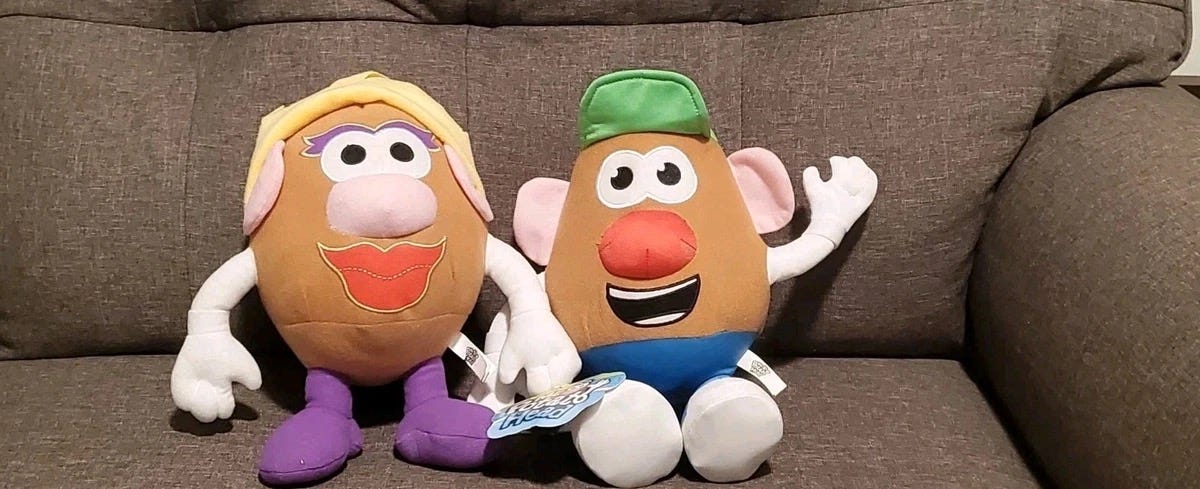
These are their comfort items, their interests, the things they want to hold or play with or have near them, and another adult has decided when they are allowed to have them.
In the Ten Pillars of Autistic Culture, we talk about Passionate Superfanning and Predictably Comforting. Autistic people can have extraordinarily deep relationships with things other people consider insignificant. It might be a character or a collection or a stuffed animal or a television show or a particular object you have carried around for years. It might look completely irrational to somebody else, but it is familiar and predictable and yours, and sometimes having it with you is the thing that allows your nervous system to settle down.
There is just no reason to deny us our comfort items. Ever.
If an Autistic adult has something that makes them feel safe or regulated or simply happy, I do not understand why another adult should get to decide when they can have it. I especially do not understand taking that thing away as a means of managing someone’s behavior and then returning it when they behave the way you want them to behave. Once you understand how important predictably comforting objects can be to Autistic people, that starts to feel unbelievably cruel.
And the cruelty in Upward Bound is rarely cinematic. Nobody needs to be a monster. Somebody just has the key.
That is what I kept thinking about after I finished the book. We spend a lot of time in Autistic advocacy talking about schools and employment and healthcare and representation, while there are Autistic adults living entire lives inside systems where other people control hundreds of tiny decisions every day. Someone else decides where they go, what activity they are doing, when they eat, when they leave, who they spend their day with and whether they can get the thing they know will make them feel better.
I think Autistic advocates should be fighting for the liberation of these people.
And Upward Bound made me think about the nonspeaking Autistic adult sitting in a day program who may understand far more than anyone around them realizes. They may be bored out of their mind. They may hate the activity. They may be listening to the staff talk about them. They may have a crush on the person sitting across the room. They may have elaborate opinions about everybody there. They may desperately want to go home.
And they may really, really want the thing somebody has locked in that cabinet.
Start with the cabinet.
Give us our things.
This resonates with me. I work in a 3rd party provider after school program. We have squishies and stuffies for the kids. BUT, most of the workers treat them as rewards for completing the required activities. If a child is getting dysregulated, they are rarely given the thing that would allow them to tolerate the program requirements. They have to earn it. 😡